|
2000 • 2001 • 2002 • 2003 • 2004 • 2005 • 2006 • 2007 • 2008 • 2009
* Indicates that the film/performance was not nominated for an Academy Award in this category
| |
 |
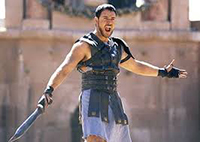
Gladiator
Actor: Russell Crowe (Gladiator)
Actress: Julia Roberts (Erin Brockovich)
Supporting Actor: Benichio Del Toro(Traffic)
Supporting Actress: Marcia Gay Harden (Pollock)
Director: Stephen Soderbergh (Traffic) |
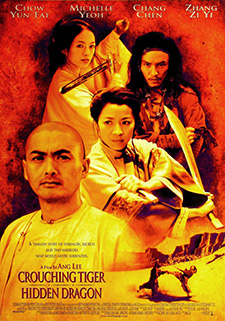
Crouching
Tiger, Hidden Dragon
Actor:Michael Douglas (Wonder Boys)*
Actress: Julia Roberts (Erin Brockovich)
Supporting Actor: Benichio Del Toro(Traffic)
Supporting Actress: Ziyi Zhang
(Crouching
Tiger, Hidden Dragon)*
Director: Ang Lee (Crouching Tiger, Hidden Dragon) |
|
Hindsight Award nominations for 2000
|
|  The
Academy awarded the Best Picture Oscar to another default
selection this year, surprising everyone by choosing Gladiator,
a professionally made, though thoroughly forgettable, sword-and-sandals
epic that shouldn't have been remembered for anything other
than Olivier Reed dying during production and the producers
being forced to spend three million dollars to finish his
performance through the the use of a stunt double and a CGI-rendered
mask of Reed's face. Instead, the film's Oscar glory briefly
launched Russell Crowe into a period of superstardom until
his narcissistic behavior launched him right out of it again.
The awards race was wide open with the New York Film Critics
selecting Stephen Soderbergh's Traffic for the top
honor, their colleagues in Los Angeles selecting the Chinese-made Crouching Tiger, Hidden Dragon, and the National Society
of Film Critics and National Board of Review not helping anyone
with their left-field selections of Yi yi: A One and a
Two and Quills, respectively. The Academy went
with Gladiator, Crouching Tiger, Hidden Dragon, Traffic, the Julia Roberts box office smash ode to
feminine empowerment Erin Brockovich, and Chocolat,
a tribute to the deep pockets of Miramax Films' publicity
department. The
Academy awarded the Best Picture Oscar to another default
selection this year, surprising everyone by choosing Gladiator,
a professionally made, though thoroughly forgettable, sword-and-sandals
epic that shouldn't have been remembered for anything other
than Olivier Reed dying during production and the producers
being forced to spend three million dollars to finish his
performance through the the use of a stunt double and a CGI-rendered
mask of Reed's face. Instead, the film's Oscar glory briefly
launched Russell Crowe into a period of superstardom until
his narcissistic behavior launched him right out of it again.
The awards race was wide open with the New York Film Critics
selecting Stephen Soderbergh's Traffic for the top
honor, their colleagues in Los Angeles selecting the Chinese-made Crouching Tiger, Hidden Dragon, and the National Society
of Film Critics and National Board of Review not helping anyone
with their left-field selections of Yi yi: A One and a
Two and Quills, respectively. The Academy went
with Gladiator, Crouching Tiger, Hidden Dragon, Traffic, the Julia Roberts box office smash ode to
feminine empowerment Erin Brockovich, and Chocolat,
a tribute to the deep pockets of Miramax Films' publicity
department.
 Crouching
Tiger, Hidden Dragon received
ten nominations (a record number for a foreign language film)
as well as the top award from the Directors Guild of America
(no one questioned why an American guild was giving their
top honor to a Chinese film), and it seemed like the Academy
would finally get over their longtime phobia of giving major
awards to foreign language films. At times, the film seems
like a sumptuously beautiful love story that turns briefly
into a Nintendo game with its elaborate (and sometimes unmotivated)
samurai battles, but there is no denying its visual poetry
or the marvelous performances of Chow Yun Fat, Michelle Yeoh
and Ziyi Zhang. In the end, the Academy chickened out and
gave the award to the mediocre Gladiator, still not
willing to admit that the finest film of the year can be spoken
in a language other than English. Crouching
Tiger, Hidden Dragon received
ten nominations (a record number for a foreign language film)
as well as the top award from the Directors Guild of America
(no one questioned why an American guild was giving their
top honor to a Chinese film), and it seemed like the Academy
would finally get over their longtime phobia of giving major
awards to foreign language films. At times, the film seems
like a sumptuously beautiful love story that turns briefly
into a Nintendo game with its elaborate (and sometimes unmotivated)
samurai battles, but there is no denying its visual poetry
or the marvelous performances of Chow Yun Fat, Michelle Yeoh
and Ziyi Zhang. In the end, the Academy chickened out and
gave the award to the mediocre Gladiator, still not
willing to admit that the finest film of the year can be spoken
in a language other than English.
|
| Worst Award
 The
Academy clearly didn't have much enthusiasm for Gladiator,
bypassing it for the director and screenplay awards (the first
time a Best Picture failed to win either since All the Kings
Men in 1949) and giving the cinematography and art direction
awards (which usually go to Best Picture-winning epic period
pieces) to Crouching Tiger, Hidden Dragon. It was simply
a well-made summer film from a neglected genre that drew heavily
from forerunners like Spartacus and The Fall of the
Roman Empire. In the face of far more original competition
like Crouching Tiger, Hidden Dragon, and Traffic (and overlooked entries like Wonder Boys, Billy Elliott and O Brother, Where Art Thou?), the selection of the
derivative Gladiator for Best Picture is a clear indication
of the lack of courage or original thinking currently prevalent
in Movieland. The
Academy clearly didn't have much enthusiasm for Gladiator,
bypassing it for the director and screenplay awards (the first
time a Best Picture failed to win either since All the Kings
Men in 1949) and giving the cinematography and art direction
awards (which usually go to Best Picture-winning epic period
pieces) to Crouching Tiger, Hidden Dragon. It was simply
a well-made summer film from a neglected genre that drew heavily
from forerunners like Spartacus and The Fall of the
Roman Empire. In the face of far more original competition
like Crouching Tiger, Hidden Dragon, and Traffic (and overlooked entries like Wonder Boys, Billy Elliott and O Brother, Where Art Thou?), the selection of the
derivative Gladiator for Best Picture is a clear indication
of the lack of courage or original thinking currently prevalent
in Movieland. |
Biggest Oversight 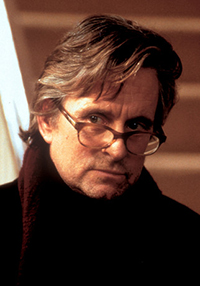 The
Academy typically overlooks quirky comedies for top honors and
2000 was no exception with two of the top films of the year, Wonder Boys and O Brother, Where Art Thou?, receiving
scant attention in the Oscar race to show for their brilliance.
This is especially a shame as the two comedies boasted the finest
male performances of the year. George Clooney captured a Golden Globe for his wonderful
performance as con-on-the-run C. Everett McGill in O Brother,
Where Art Thou?, which won Oscar nods for its cinematography
and the Cohen Brothers' hilarious screenplay. Michael Douglas won the Los Angeles
Drama Critics Award for his inspired turn as embattled English
Professor Grady Tripp in Wonder Boys, which received
a single nomination for Steven Kloves' brilliant screenplay. Either Douglas
or Clooney would have been a better choice than the Academy's
final five of Russell Crowe, Javier Bardem, Tom Hanks, Ed Harris,
and Geoffrey Rush (not to mention the overlooked Chow Yun Fat
for Crouching Tiger, Hidden Dragon), but Douglas' detailed portrait of a college English professor with writers block may be the finest work in that oft-underrated actor's filography. He has received only one Oscar nomination is his career, winning the award in 1987 for his performance as a corporate raider in 1987's Wall Street. And while Gordon Gekko may be a more famous role, he has contributed even better work in Traffic, The American President and especially as Grady Tripp and his list of Oscar nominated performances should be longer than it is. The
Academy typically overlooks quirky comedies for top honors and
2000 was no exception with two of the top films of the year, Wonder Boys and O Brother, Where Art Thou?, receiving
scant attention in the Oscar race to show for their brilliance.
This is especially a shame as the two comedies boasted the finest
male performances of the year. George Clooney captured a Golden Globe for his wonderful
performance as con-on-the-run C. Everett McGill in O Brother,
Where Art Thou?, which won Oscar nods for its cinematography
and the Cohen Brothers' hilarious screenplay. Michael Douglas won the Los Angeles
Drama Critics Award for his inspired turn as embattled English
Professor Grady Tripp in Wonder Boys, which received
a single nomination for Steven Kloves' brilliant screenplay. Either Douglas
or Clooney would have been a better choice than the Academy's
final five of Russell Crowe, Javier Bardem, Tom Hanks, Ed Harris,
and Geoffrey Rush (not to mention the overlooked Chow Yun Fat
for Crouching Tiger, Hidden Dragon), but Douglas' detailed portrait of a college English professor with writers block may be the finest work in that oft-underrated actor's filography. He has received only one Oscar nomination is his career, winning the award in 1987 for his performance as a corporate raider in 1987's Wall Street. And while Gordon Gekko may be a more famous role, he has contributed even better work in Traffic, The American President and especially as Grady Tripp and his list of Oscar nominated performances should be longer than it is.
|
Return
to top
1920s •
1930s •
1940s •
1950s •
1960s •
1970s •
1980s •
1990s • 2010s
| |
|
A
Beautiful Mind
Actor: Denzel Washington (Training Day)
Actress: Halle Berry (Monster's Ball)
Supporting Actor: Jim Broadbent (Iris)
Supporting Actress: Jennifer Connelly
(A Beautiful Mind)
Director: Ron Howard (A Beautiful Mind) |
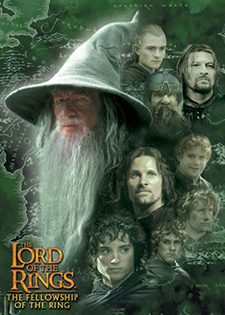
The
Lord of the Rings:
The Fellowship of the Ring
Actor: John Cameron Mitchell
(Hedwig & the Angry Inch)*
Actress: Sissy Spacek (In the Bedroom)
Supporting Actor: Ben Kingsley (Sexy Beast)
Supporting Actress: Helen Mirren (Gosford Park)
Director: Peter Jackson
(The Lord of the Rings: The Fellowship of the Ring) |
|
Hindsight Award nominations for 2001
|
|  It
is the great tradition of biographical motion pictures to
cast actors who are remarkably more attractive than the real-life
people that they portray. Ron Howard's film of A Beautiful
Mind, the inspiring story of schizophrenic economist John
Nash who managed to overcome his debilitating mental problems
to ultimately win the 1994 Nobel Prize for a paper that he
wrote in 1949, follows this proud line in casting super-hot
Russell Crowe as Nash and Jennifer Connelly as his patient
wife Alicia in following 45 years through the couple's life
and in the end seeing them only having some graying around
the temples to show the results of their aging (the film's
nomination for Best Makeup is an absolute joke). But the couple's
physical appearance isn't the only aspect of their story to
get a makeover, as Nash's story received a typical movie whitewash
(failing to make any references to Nash's homosexual past
- supposedly to prevent the audience from associating his
sexual history with his illness - or to the child he had with
Eleanor Stier in 1953, three years before he met his future
wife), resulting in a typically schmaltzy Ron Howard-directed
mass entertainment. The film does have some genuinely moving
sequences and Russell Crowe delivers an impressive movie star
turn as Nash (he was a shoo-in to win the Best Actor Oscar
until his self-indulgent public behavior turned the tide in
the favor of Denzel Washington for his brilliant performance
in the otherwise silly cop movie Training Day), but
Nash's powerful story is covered with far too much Hollywood
gloss to be a serious contender for the finest film of the
year. It
is the great tradition of biographical motion pictures to
cast actors who are remarkably more attractive than the real-life
people that they portray. Ron Howard's film of A Beautiful
Mind, the inspiring story of schizophrenic economist John
Nash who managed to overcome his debilitating mental problems
to ultimately win the 1994 Nobel Prize for a paper that he
wrote in 1949, follows this proud line in casting super-hot
Russell Crowe as Nash and Jennifer Connelly as his patient
wife Alicia in following 45 years through the couple's life
and in the end seeing them only having some graying around
the temples to show the results of their aging (the film's
nomination for Best Makeup is an absolute joke). But the couple's
physical appearance isn't the only aspect of their story to
get a makeover, as Nash's story received a typical movie whitewash
(failing to make any references to Nash's homosexual past
- supposedly to prevent the audience from associating his
sexual history with his illness - or to the child he had with
Eleanor Stier in 1953, three years before he met his future
wife), resulting in a typically schmaltzy Ron Howard-directed
mass entertainment. The film does have some genuinely moving
sequences and Russell Crowe delivers an impressive movie star
turn as Nash (he was a shoo-in to win the Best Actor Oscar
until his self-indulgent public behavior turned the tide in
the favor of Denzel Washington for his brilliant performance
in the otherwise silly cop movie Training Day), but
Nash's powerful story is covered with far too much Hollywood
gloss to be a serious contender for the finest film of the
year.
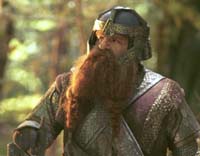 It
is almost embarrassing to call The Fellowship of the Ring,
the first installment of Peter Jackson's epic trilogy of J.R.R.
Tolkien's The Lord of the Ring saga, as the finest
film of the year since its final chapter The Return of
the King tied for the record of receiving the most Oscars
in history. But the LOTR trilogy is arguably the most
impressive achievement in motion picture history, and each
film must be taken on its own merits. The Fellowship of
the Ring is the most moving of the three films (although The Return of the King is the most impressive), because
it is the one that we first meet the story's myriad of characters,
so it is is more about human (so to speak) interaction than
about the spectacle that is so prevalent in the second and
third installments (it is telling that The Fellowship of
the Ring received the trilogy's only acting nomination
for Ian McKellen's performance as Gandalf, which also won
the Screen Actor's Guild Award). Those who are not taken in
by stories of hobbits and wizards and axe-yielding dwarves
may disagree with this choice, but for our money there was
no better example of movie-making prowess in 2001 than the
first installment of The Lord of the Rings. It
is almost embarrassing to call The Fellowship of the Ring,
the first installment of Peter Jackson's epic trilogy of J.R.R.
Tolkien's The Lord of the Ring saga, as the finest
film of the year since its final chapter The Return of
the King tied for the record of receiving the most Oscars
in history. But the LOTR trilogy is arguably the most
impressive achievement in motion picture history, and each
film must be taken on its own merits. The Fellowship of
the Ring is the most moving of the three films (although The Return of the King is the most impressive), because
it is the one that we first meet the story's myriad of characters,
so it is is more about human (so to speak) interaction than
about the spectacle that is so prevalent in the second and
third installments (it is telling that The Fellowship of
the Ring received the trilogy's only acting nomination
for Ian McKellen's performance as Gandalf, which also won
the Screen Actor's Guild Award). Those who are not taken in
by stories of hobbits and wizards and axe-yielding dwarves
may disagree with this choice, but for our money there was
no better example of movie-making prowess in 2001 than the
first installment of The Lord of the Rings.
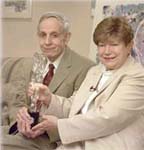
Real-life Nashes |
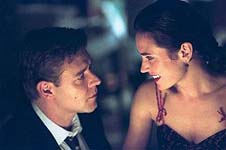
Super-hot
movie Nashes |
|
Worst Award
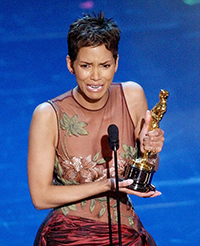 Halle Berry gave the most embarrassing, self-indulgent
acceptance speech in Oscar history when she won the award for Monster's Ball, effectively taking credit for "opening
the door" for black actresses, forgetting that trailblazers
like Hattie McDaniel, Dorothy Dandridge, and Cicely Tyson came
before her. Berry's speech might have been slightly less awkward
if the performance she was awarded for was strikingly brilliant,
but it was a banal, generic characterization in a forgettable
film whose only absorbing moments are provided by the performance
of Berry's costar Billy Bob Thornton. Berry is a stunningly
gorgeous woman, but she is an appallingly overrated actress
whose performances in films like Gothika, X-Men: The Last
Stand, and Catwoman are laughably incompetent, and
her Oscar for Best Actress for Monster's Ball may be
the worst selection in that category since Mary Pickford won
the award for Coquette. Berry went on to win a (more
appropriate for her talents) Golden Raspberry Award as Worst
Actress of the year for Catwoman, and (to her credit)
she actually appeared at the ceremony and she redeemed herself
by doing an hilarious and endearing parody of his Oscar speech. Halle Berry gave the most embarrassing, self-indulgent
acceptance speech in Oscar history when she won the award for Monster's Ball, effectively taking credit for "opening
the door" for black actresses, forgetting that trailblazers
like Hattie McDaniel, Dorothy Dandridge, and Cicely Tyson came
before her. Berry's speech might have been slightly less awkward
if the performance she was awarded for was strikingly brilliant,
but it was a banal, generic characterization in a forgettable
film whose only absorbing moments are provided by the performance
of Berry's costar Billy Bob Thornton. Berry is a stunningly
gorgeous woman, but she is an appallingly overrated actress
whose performances in films like Gothika, X-Men: The Last
Stand, and Catwoman are laughably incompetent, and
her Oscar for Best Actress for Monster's Ball may be
the worst selection in that category since Mary Pickford won
the award for Coquette. Berry went on to win a (more
appropriate for her talents) Golden Raspberry Award as Worst
Actress of the year for Catwoman, and (to her credit)
she actually appeared at the ceremony and she redeemed herself
by doing an hilarious and endearing parody of his Oscar speech.
|
Biggest Oversight 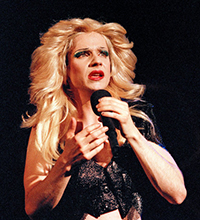 John
Cameron Mitchell exploded onto the movie scene with
his screenplay, direction and performance of Hedwig and the
Angry Inch, a stunning musical about a charismatic transsexual
drag queen dealing with betrayal and disappointments through
a series of extraordinary club performances. Mitchell, who first
performed the role in an off-Broadway production of the original
stage show, was remarkable in the showy role and received a
Golden Globe nomination for his performance and awards for debut
director from the National Board of Review and the Los Angeles
Film Critics Association. But the film was too revolutionary
for a mainstream audience and was overlooked by the Academy,
who preferred the mundane work supplied by Will Smith in Ali and Sean Penn in I Am Sam. Mitchell may never find another
role that showcases his unique talents as well as Hedwig, and
had sadly not appeared in a film since its release. John
Cameron Mitchell exploded onto the movie scene with
his screenplay, direction and performance of Hedwig and the
Angry Inch, a stunning musical about a charismatic transsexual
drag queen dealing with betrayal and disappointments through
a series of extraordinary club performances. Mitchell, who first
performed the role in an off-Broadway production of the original
stage show, was remarkable in the showy role and received a
Golden Globe nomination for his performance and awards for debut
director from the National Board of Review and the Los Angeles
Film Critics Association. But the film was too revolutionary
for a mainstream audience and was overlooked by the Academy,
who preferred the mundane work supplied by Will Smith in Ali and Sean Penn in I Am Sam. Mitchell may never find another
role that showcases his unique talents as well as Hedwig, and
had sadly not appeared in a film since its release.
|
Return
to top
1920s •
1930s •
1940s •
1950s •
1960s •
1970s •
1980s •
1990s • 2010s
| |
|
Chicago
Actor: Adrien Brody (The Pianist)
Actress: Nicole Kidman (The Hours)
Supporting Actor:Chris Cooper (Adaptation)
Supporting Actress: Catherine Zeta-Jones (Chicago)
Director: Roman Polanski (The
Pianist) |
Chicago
Actor: Nicolas Cage (Adaptation)
Actress: Nicole Kidman (The Hours)
Supporting Actor: Chris Cooper(Adaptation)
Supporting Actress: Catherine Zeta-Jones (Chicago)
Director: Rob Marshall (Chicago) |
|
Hindsight Award nominations for 2002
|
| 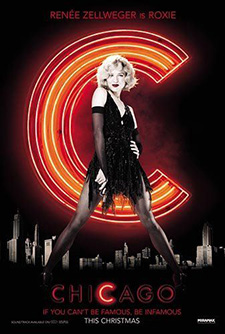 The
old-fashioned movie musical was a dying art by 2001 when Baz
Luhrmann's controversial big-budget freak show Moulin Rouge! showed the studios that a film could have singing and
dancing and still turn a profit. The time seemed right to
go back to the archives of Broadway just like MGM did so successfully
in the 1940s and 1950s, and the show that was the ripest for
a movie version was the 1975 Bob Fosse/Fred Ebb/John Kander
hit Chicago, which ran an impressive 936 performances
in its original production and a spectacular 4000+ in a 1997
Broadway revival. The film version was entrusted to movie
neophyte Rob Marshall, who had been nominated for five Tony
Awards but whose film experience was limited to choreographing
a few TV shows. The freshman director took the bull by the
horns and did a spectacular job mounting the show for the
screen, despite being saddled with actors who weren't skilled
at musical performance like Renée Zellweger and Richard Gere, whose singing had to be digitally
enhanced and dancing had to be hidden by careful editing.
The film's best moments are when Zellweger and Gere aren't
in frame, especially in the spectacular "Cell Block Tango"
number led by the magnificent Catherine Zeta-Jones (who also does wonders with the most famous song in the show, "All
That Jazz") or John C. Reilly's performance of "Mister
Cellophane." The musical is based on a 1927 Broadway
play of the same name by Maurine Watkins, which was filmed
as a silent in 1927 and a talkie called Roxie Hart in 1942. Marshall retained the show's Prohibition-era sensibility
while loading it with razzle-dazzle so that even Zellweger
and Gere came off as accomplished musical performers. Of the
other five nominated films of the year, Gangs of New York,
The Hours, The Lord of the Rings: The Two Towers, and The Pianist, only the heartbreaking The Hours seems
like a legitimate contender for the top award, but the Oscars
is too frequently a testimonial to self-consciously arty drama,
and the selection of the slick and entertaining Chicago is a welcome break from tradition. The
old-fashioned movie musical was a dying art by 2001 when Baz
Luhrmann's controversial big-budget freak show Moulin Rouge! showed the studios that a film could have singing and
dancing and still turn a profit. The time seemed right to
go back to the archives of Broadway just like MGM did so successfully
in the 1940s and 1950s, and the show that was the ripest for
a movie version was the 1975 Bob Fosse/Fred Ebb/John Kander
hit Chicago, which ran an impressive 936 performances
in its original production and a spectacular 4000+ in a 1997
Broadway revival. The film version was entrusted to movie
neophyte Rob Marshall, who had been nominated for five Tony
Awards but whose film experience was limited to choreographing
a few TV shows. The freshman director took the bull by the
horns and did a spectacular job mounting the show for the
screen, despite being saddled with actors who weren't skilled
at musical performance like Renée Zellweger and Richard Gere, whose singing had to be digitally
enhanced and dancing had to be hidden by careful editing.
The film's best moments are when Zellweger and Gere aren't
in frame, especially in the spectacular "Cell Block Tango"
number led by the magnificent Catherine Zeta-Jones (who also does wonders with the most famous song in the show, "All
That Jazz") or John C. Reilly's performance of "Mister
Cellophane." The musical is based on a 1927 Broadway
play of the same name by Maurine Watkins, which was filmed
as a silent in 1927 and a talkie called Roxie Hart in 1942. Marshall retained the show's Prohibition-era sensibility
while loading it with razzle-dazzle so that even Zellweger
and Gere came off as accomplished musical performers. Of the
other five nominated films of the year, Gangs of New York,
The Hours, The Lord of the Rings: The Two Towers, and The Pianist, only the heartbreaking The Hours seems
like a legitimate contender for the top award, but the Oscars
is too frequently a testimonial to self-consciously arty drama,
and the selection of the slick and entertaining Chicago is a welcome break from tradition.
|
| Worst Award
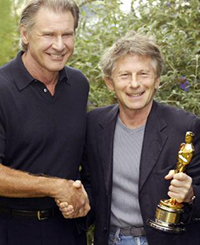 Roman Polanski received a standing ovation from the
audience at the Kodak Theatre when his name was announced as
the surprise winner of the Best Director Oscar for The Pianist,
implying that Polanski's 30-year exile from the United States
was regarded with the status of a victimized political prisoner
rather than a convicted rapist who skipped bail. But Polanski's
placement in the Worst Award category isn't based on moral grounds
so much as as an acknowledgment that The Pianist is a
plodding bore whose central character spends his time peering
out the corner of windows to try and catch a glimpse of something
interesting that might be happening around the corner. The Academy
has always had a fascination with films with a Holocaust theme,
and Polanski's status as a Holocaust survivor seems to give
his film an implied authenticity. But because a film is based
on dramatically tragic circumstances does not necessarily make
the film dramatic or tragic, and both Polanski and Best Actor
winner Adrien Brody's Oscars were awarded for mediocre work
that was overrated because it depicted such a harrowing subject
matter. 2002 was yet another year when the Emperor showed up
stark naked at the Oscar ceremony. Roman Polanski received a standing ovation from the
audience at the Kodak Theatre when his name was announced as
the surprise winner of the Best Director Oscar for The Pianist,
implying that Polanski's 30-year exile from the United States
was regarded with the status of a victimized political prisoner
rather than a convicted rapist who skipped bail. But Polanski's
placement in the Worst Award category isn't based on moral grounds
so much as as an acknowledgment that The Pianist is a
plodding bore whose central character spends his time peering
out the corner of windows to try and catch a glimpse of something
interesting that might be happening around the corner. The Academy
has always had a fascination with films with a Holocaust theme,
and Polanski's status as a Holocaust survivor seems to give
his film an implied authenticity. But because a film is based
on dramatically tragic circumstances does not necessarily make
the film dramatic or tragic, and both Polanski and Best Actor
winner Adrien Brody's Oscars were awarded for mediocre work
that was overrated because it depicted such a harrowing subject
matter. 2002 was yet another year when the Emperor showed up
stark naked at the Oscar ceremony.
|
Biggest Oversight  There
were a lot of overlooked achievements in 2002. Peter Jackson
should have been in the final five for Best Director for The
Two Towers, but after giving him the awards for 2001 and
2003, we're tired of seeing his name on this screen. Dennis
Quaid and Alfred Molina are two outstanding actors who have
never been noticed in the Oscar race, despite their outstanding
performances this year in Far From Heaven and Frida.
But since we're always chiding the Academy for overlooking anything
that isn't a three-hour drama released after December 1 for
the top prize, we're going to turn the spotlight on Spider-Man.
Director Sam Raimi did a spectacular job of turning the comic
book into an exciting and frequently touching action film, giving
the webslinger some very real and relatable inner conflicts
that provided the audience with some engaging drama between
the carnage. The blockbuster predictably received only two nominations,
for Best Sound and Best Visual Effects, despite doing a far
better job of achieving what it set out to do than the lumbering
and overrated Best Picture nominees Gangs of New York or The Pianist. Had anyone at the Academy let their pretenses
down, Spider-Man would have been an outstanding nominee
for Best Picture, Best Director, Best Adapted Screenplay as
well as for Best Cinematography and Best Editing, the technical
categories that summer action films seem only to be eligible
for. There
were a lot of overlooked achievements in 2002. Peter Jackson
should have been in the final five for Best Director for The
Two Towers, but after giving him the awards for 2001 and
2003, we're tired of seeing his name on this screen. Dennis
Quaid and Alfred Molina are two outstanding actors who have
never been noticed in the Oscar race, despite their outstanding
performances this year in Far From Heaven and Frida.
But since we're always chiding the Academy for overlooking anything
that isn't a three-hour drama released after December 1 for
the top prize, we're going to turn the spotlight on Spider-Man.
Director Sam Raimi did a spectacular job of turning the comic
book into an exciting and frequently touching action film, giving
the webslinger some very real and relatable inner conflicts
that provided the audience with some engaging drama between
the carnage. The blockbuster predictably received only two nominations,
for Best Sound and Best Visual Effects, despite doing a far
better job of achieving what it set out to do than the lumbering
and overrated Best Picture nominees Gangs of New York or The Pianist. Had anyone at the Academy let their pretenses
down, Spider-Man would have been an outstanding nominee
for Best Picture, Best Director, Best Adapted Screenplay as
well as for Best Cinematography and Best Editing, the technical
categories that summer action films seem only to be eligible
for.
|
Return
to top
1920s •
1930s •
1940s •
1950s •
1960s •
1970s •
1980s •
1990s • 2010s
| |
|
The
Lord of the Rings:
The Return of the King
Actor: Sean Penn (Mystic River)
Actress: Charlie Theron (Monster)
Supporting Actor: Tim Robbins (Mystic River)
Supporting Actress: Renée Zellweger (Cold Mountain)
Director: Peter Jackson (The Lord of the Rings:
The Return of the King) |
The
Lord of the Rings:
The Return of the King
Actor: Bill Murray (Lost in Translation)
Actress: Charlize Theron (Monster)
Supporting Actor: Alec Baldwin (The Cooler)
Supporting Actress: Hope Davis (American Splendor)*
Director: Peter Jackson (The Lord of the Rings:
The Return of the King) |
|
Hindsight Award nominations for 2003
|
| 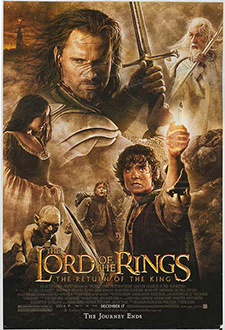 The
first two installments of The Lord of the Rings trilogy
had already won a combined six Academy Awards when The
Return of the King opened, so it would be fair to assume
that the members of the Academy felt that they had done enough
to honor Peter Jackson's epic. But the third part of the story
resulted in what may be the most miraculously impressive spectacle
ever put on film, winning a record tying fourteen Oscars that
probably would have been more if the Academy could have come
up with some additional technical categories. Anyone who isn't
a fan of the sword-and-sorcery genre might feel that the Oscars
got carried away with their adulation of The Return of
the King and they might have a point: at a whopping 200
minutes (251 for the extended DVD version), the film is a
marathon for the backside and the screenplay probably holds
the record for the most false endings in a single film. But
the Academy can be forgiven their excesses because the perception
was that the awards were for the trilogy as a whole, and even
if one isn't taken in by Tolkien's magic, there is no denying
that the finished product is arguably the most ambitious and
impressive piece of filmmaking ever attempted. There are certainly
some sequences that require a hefty lump of suspension of
disbelief (such as when the diminutive Miranda Otto effortlessly
chops off the head of a massive flying lizard with one swing
of her mighty blade), but there are are others which are unforgettable
in their sheer spectacle (such as when Aragorn calls on the
ghosts of his father's generation to join him in battle) or
deeply moving (like the wizard Gandalf - brilliantly played
by Ian McKellen - reassuring a member of his company about
the nature of winning and losing on the eve of being defeated
in battle). The selection of The Return of the King as Best Picture is boring and predictable, but it also absolutely
correct. The
first two installments of The Lord of the Rings trilogy
had already won a combined six Academy Awards when The
Return of the King opened, so it would be fair to assume
that the members of the Academy felt that they had done enough
to honor Peter Jackson's epic. But the third part of the story
resulted in what may be the most miraculously impressive spectacle
ever put on film, winning a record tying fourteen Oscars that
probably would have been more if the Academy could have come
up with some additional technical categories. Anyone who isn't
a fan of the sword-and-sorcery genre might feel that the Oscars
got carried away with their adulation of The Return of
the King and they might have a point: at a whopping 200
minutes (251 for the extended DVD version), the film is a
marathon for the backside and the screenplay probably holds
the record for the most false endings in a single film. But
the Academy can be forgiven their excesses because the perception
was that the awards were for the trilogy as a whole, and even
if one isn't taken in by Tolkien's magic, there is no denying
that the finished product is arguably the most ambitious and
impressive piece of filmmaking ever attempted. There are certainly
some sequences that require a hefty lump of suspension of
disbelief (such as when the diminutive Miranda Otto effortlessly
chops off the head of a massive flying lizard with one swing
of her mighty blade), but there are are others which are unforgettable
in their sheer spectacle (such as when Aragorn calls on the
ghosts of his father's generation to join him in battle) or
deeply moving (like the wizard Gandalf - brilliantly played
by Ian McKellen - reassuring a member of his company about
the nature of winning and losing on the eve of being defeated
in battle). The selection of The Return of the King as Best Picture is boring and predictable, but it also absolutely
correct.
|
| Worst Award
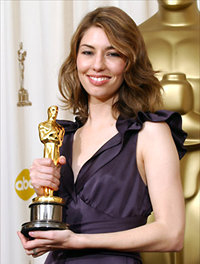 Sophia
Coppola became only the third woman in history to be nominated
for the Best Director Oscar for Lost in Translation,
winning the award for her screenplay that depicted an American
movie star (played by a detached Bill Murray, whose offbeat performance makes the film seem far more interesting than it actually is) who finds himself
in Tokyo to shoot a series of commercials and tries to work
through his loneliness with the companionship of a twentysomething
American girl (played by Scarlett Johansson in a performance
that is so bland that it seems to physically suck the energy
off the screen). Coppola's script was alarmingly patronizing
to Japanese culture and displays its weaknesses in Murray and
Johansson's final farewell, where Murray whispers his goodbye
in Johansson's ear so that the audience can't hear what he's
saying, clearly indicating that it was actually Coppola with
nothing to say and that farewell whisper was a transparent attempt
to cover it up. Coppola won the award for Original Screenplay
in a weak field, but should have easily been passed over in
favor of Finding Nemo or In America, screenplays
that actually had something to say. Sophia
Coppola became only the third woman in history to be nominated
for the Best Director Oscar for Lost in Translation,
winning the award for her screenplay that depicted an American
movie star (played by a detached Bill Murray, whose offbeat performance makes the film seem far more interesting than it actually is) who finds himself
in Tokyo to shoot a series of commercials and tries to work
through his loneliness with the companionship of a twentysomething
American girl (played by Scarlett Johansson in a performance
that is so bland that it seems to physically suck the energy
off the screen). Coppola's script was alarmingly patronizing
to Japanese culture and displays its weaknesses in Murray and
Johansson's final farewell, where Murray whispers his goodbye
in Johansson's ear so that the audience can't hear what he's
saying, clearly indicating that it was actually Coppola with
nothing to say and that farewell whisper was a transparent attempt
to cover it up. Coppola won the award for Original Screenplay
in a weak field, but should have easily been passed over in
favor of Finding Nemo or In America, screenplays
that actually had something to say. |
Biggest Oversight 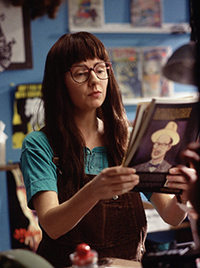 Hope
Davis won the New York Film Critics award for Best Actress
for her wonderfully disturbed performance as Joyce Brabner,
the neurotic wife of comic book author Harvey Pekar in the delightfully
original American Splendor. Davis was also nominated
for Best Supporting Actress by the Golden Globes, a better classification
since she doesn't show until about a third of the way into the
clever film, which deserved nominations for Best Picture, Best
Director for Shari Springer Berman and Robert Pulcini (who received
the film's only nomination for Adapted Screenplay) and for the
breakthrough performance of Paul Giamatti as Pekar, who had
his authenticity tested as the film mixes footage of its real-life
subjects with their fictional counterparts. Davis is a unique
actress who has delivered memorable performances in Next
Stop Wonderland, About Schmidt, and The Secret Lives
of Dentists, but her finest work to date is in American
Splendor, and far more inventive and original than the nominated
work of Shohreh Aghdashloo, Marcia Gay Harden, Holly Hunter
or winner Renée Zellweger (Patricia Clarkson in Pieces
of April was the only nominee who provided a really interesting
performance). In the face of competition like that, Davis should
have won the Oscar in a walk. Hope
Davis won the New York Film Critics award for Best Actress
for her wonderfully disturbed performance as Joyce Brabner,
the neurotic wife of comic book author Harvey Pekar in the delightfully
original American Splendor. Davis was also nominated
for Best Supporting Actress by the Golden Globes, a better classification
since she doesn't show until about a third of the way into the
clever film, which deserved nominations for Best Picture, Best
Director for Shari Springer Berman and Robert Pulcini (who received
the film's only nomination for Adapted Screenplay) and for the
breakthrough performance of Paul Giamatti as Pekar, who had
his authenticity tested as the film mixes footage of its real-life
subjects with their fictional counterparts. Davis is a unique
actress who has delivered memorable performances in Next
Stop Wonderland, About Schmidt, and The Secret Lives
of Dentists, but her finest work to date is in American
Splendor, and far more inventive and original than the nominated
work of Shohreh Aghdashloo, Marcia Gay Harden, Holly Hunter
or winner Renée Zellweger (Patricia Clarkson in Pieces
of April was the only nominee who provided a really interesting
performance). In the face of competition like that, Davis should
have won the Oscar in a walk.
|
Return
to top
1920s •
1930s •
1940s •
1950s •
1960s •
1970s •
1980s •
1990s • 2010s
| |
|
Million
Dollar Baby
Actor: Jamie Foxx (Ray)
Actress: Hillary Swank (Million Dollar Baby)
Supporting Actor: Morgan Freeman
(Million Dollar Baby)
Supporting Actress: Cate Blanchett (The
Aviator)
Director: Clint Eastwood (Million Dollar Baby) |
Sideways
Actor: Jamie Foxx (Ray)
Actress: Hillary Swank (Million Dollar Baby)
Supporting Actor: Thomas Haden Church
(Sideways)
Supporting Actress: Virginia
Madsen (Sideways)
Director: Alexander Payne (Sideways)* |
|
Hindsight Award nominations for 2004
|
|  The
Academy selected Million Dollar Baby as the year's
best picture, Clint Eastwood's moving, bittersweet tale of
a female boxer on the rise that takes the viewer through an
inspiring upward climb before taking an unexpected (and jarring)
left-turn into tragedy and defeat. It is wonderfully acted
by Eastwood and Oscar winners Hillary Swank (who underwent
a demanding workout regime to acquire the physique of a professional
boxer) and Morgan Freeman and contains the usual solid and
professional Eastwood direction, but it is chock-full of boxing
clichés dating back to the 1940s and has some painfully
contrived moments (such as trusty old trainer Freeman suddenly
putting on a pair of gloves and flooring an arrogant young
boxer half his age and twice his size, just to teach the whippersnapper
a lesson). But for all its familiarity, Million Dollar
Baby managed to raise a well-publicized controversy in
its apparent defense of euthanasia that was a testimony to
the effectiveness of the film. But that is part of the problem
with the film - by taking on such an untried plot device as
the world of female boxing and using the framework of a million
other boxing movies that we've already seen, Eastwood is trying
to have his cake and eat it, too. In the end, we don't feel
that we've gotten a glimpse at the world of professional female
boxers at all; just another well-made, well-acted boxing movie
that happens to have a woman cast in the lead role. And the
movie's uncomfortable plot turn two-thirds of the way in makes
it seem as though the filmmakers had lost confidence in the
film that they started on, and decided to make a different
one at the last minute. It's undeniably moving, but it also
doesn't entirely work. The
Academy selected Million Dollar Baby as the year's
best picture, Clint Eastwood's moving, bittersweet tale of
a female boxer on the rise that takes the viewer through an
inspiring upward climb before taking an unexpected (and jarring)
left-turn into tragedy and defeat. It is wonderfully acted
by Eastwood and Oscar winners Hillary Swank (who underwent
a demanding workout regime to acquire the physique of a professional
boxer) and Morgan Freeman and contains the usual solid and
professional Eastwood direction, but it is chock-full of boxing
clichés dating back to the 1940s and has some painfully
contrived moments (such as trusty old trainer Freeman suddenly
putting on a pair of gloves and flooring an arrogant young
boxer half his age and twice his size, just to teach the whippersnapper
a lesson). But for all its familiarity, Million Dollar
Baby managed to raise a well-publicized controversy in
its apparent defense of euthanasia that was a testimony to
the effectiveness of the film. But that is part of the problem
with the film - by taking on such an untried plot device as
the world of female boxing and using the framework of a million
other boxing movies that we've already seen, Eastwood is trying
to have his cake and eat it, too. In the end, we don't feel
that we've gotten a glimpse at the world of professional female
boxers at all; just another well-made, well-acted boxing movie
that happens to have a woman cast in the lead role. And the
movie's uncomfortable plot turn two-thirds of the way in makes
it seem as though the filmmakers had lost confidence in the
film that they started on, and decided to make a different
one at the last minute. It's undeniably moving, but it also
doesn't entirely work.
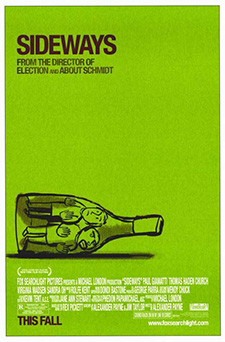
 Sideways,
Alexander Payne's heartwarming comedy about a wine connoisseur
and would-be novelist whose world is changed after meeting
an attractive waitress during a trip to the wine country of
Santa Barbara, California, works on every level. Wonderfully
acted by Paul Giamatti (who was robbed of a Best Actor nomination
after winning the New York Film Critics Award), Sandra Oh,
and Oscar nominees Thomas Haden Church and Virginia Madsen
as a quartet of fresh and unpredictable characters, the movie
is both funny and touching and possesses a wonderfully inconclusive
ending that is far more satisfying than Eastwood's apparent
social commentary. It won its only Oscar for director Alexander
Payne's original screenplay, a quantity that should have risen
drastically if the Academy didn't have such a fetish for somber
drama. Sideways,
Alexander Payne's heartwarming comedy about a wine connoisseur
and would-be novelist whose world is changed after meeting
an attractive waitress during a trip to the wine country of
Santa Barbara, California, works on every level. Wonderfully
acted by Paul Giamatti (who was robbed of a Best Actor nomination
after winning the New York Film Critics Award), Sandra Oh,
and Oscar nominees Thomas Haden Church and Virginia Madsen
as a quartet of fresh and unpredictable characters, the movie
is both funny and touching and possesses a wonderfully inconclusive
ending that is far more satisfying than Eastwood's apparent
social commentary. It won its only Oscar for director Alexander
Payne's original screenplay, a quantity that should have risen
drastically if the Academy didn't have such a fetish for somber
drama.
|
| Worst Award
 The Academy is famous for handing out technical awards in a
lump to a big box office successes that overshadow films that
did more modestly in their total nominations, but might be the
best choice in a specific category. An excellent example of
this is The Aviator, Martin Scorsese's rambling biography
of Howard Hughes. The film received 11 nominations, including
Best Picture and Leonardo DiCaprio for Best Actor for his rather
stretched attempt at playing Hughes (he is effective in the
early parts of the film, but looks like a little boy playing
dress-up when he plays Hughes as a middle-aged man), winning
five awards including Cate Blanchett for Best Supporting Actress
as Katharine Hepburn (becoming the first person to win an Oscar
for playing someone who had won an Oscar), Cinematography, Costume
Design, Editing, and Dante Ferretti and Francesca Lo Schiavo for the film's art direction. All were fine achievements,
but the awards that they won seem based more on the Academy's
enthusiasm for the film as a whole rather than for its individual
parts. If the awards were handed out strictly for each film's
success in their specific category, the clear winner for art
direction would be Rick Heinrichs and Cheryl Carasik for their
miraculous design of the box office disappointment Lemony
Snicket's A Series of Unfortunate Events which cost a hundred
and forty million dollars to make and made significantly less
than that in receipts despite the presence of Jim Carrey and
Meryl Streep in the cast (who both delivered wonderfully entertaining
performances, although the film's critics maintained that Carrey's
characterization relied far more on his grab bag of shtick than
on the character in the wildly popular series of books that
the film is based on). The morose children's film had one of
the most extraordinary presentations in movie history, receiving
four nominations and winning the award for Valli O'Reilly and
Bill Corso's makeup. A deserving choice, but the real achievement
of the film is Heinrichs and Carasik's extraordinary visual
universe that was far more impressive than The Aviator's recreation of some 1930s hotel ballrooms. The Academy is famous for handing out technical awards in a
lump to a big box office successes that overshadow films that
did more modestly in their total nominations, but might be the
best choice in a specific category. An excellent example of
this is The Aviator, Martin Scorsese's rambling biography
of Howard Hughes. The film received 11 nominations, including
Best Picture and Leonardo DiCaprio for Best Actor for his rather
stretched attempt at playing Hughes (he is effective in the
early parts of the film, but looks like a little boy playing
dress-up when he plays Hughes as a middle-aged man), winning
five awards including Cate Blanchett for Best Supporting Actress
as Katharine Hepburn (becoming the first person to win an Oscar
for playing someone who had won an Oscar), Cinematography, Costume
Design, Editing, and Dante Ferretti and Francesca Lo Schiavo for the film's art direction. All were fine achievements,
but the awards that they won seem based more on the Academy's
enthusiasm for the film as a whole rather than for its individual
parts. If the awards were handed out strictly for each film's
success in their specific category, the clear winner for art
direction would be Rick Heinrichs and Cheryl Carasik for their
miraculous design of the box office disappointment Lemony
Snicket's A Series of Unfortunate Events which cost a hundred
and forty million dollars to make and made significantly less
than that in receipts despite the presence of Jim Carrey and
Meryl Streep in the cast (who both delivered wonderfully entertaining
performances, although the film's critics maintained that Carrey's
characterization relied far more on his grab bag of shtick than
on the character in the wildly popular series of books that
the film is based on). The morose children's film had one of
the most extraordinary presentations in movie history, receiving
four nominations and winning the award for Valli O'Reilly and
Bill Corso's makeup. A deserving choice, but the real achievement
of the film is Heinrichs and Carasik's extraordinary visual
universe that was far more impressive than The Aviator's recreation of some 1930s hotel ballrooms.
|
Biggest Oversight
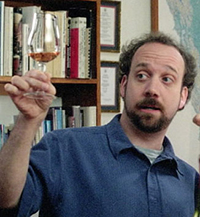 For
the second year in a row, Paul Giamatti was overlooked
for an Oscar nomination after giving one of the finest performances
of the year. He was slighted in 2003 for his bravura performance
as comic book writer Harvey Pekar in American Beauty,
a highly imaginative low-budget film with an independent sensibility
that the big-stakes players who belong to the Academy are not
always sensitive to. And his second slight was for another big
winner at the Independent Spirit Awards: Sideways. Giamatti
provided a tour-de-force as a disappointed wannabe novelist
taking his hedonistic best friend for a farewell to the single
life before his upcoming marriage, receiving the New York Film
Critics Award for Best Actor. That Giamatti was overlooked for
an Oscar nomination in favor of run-of-the-mill work by Leonardo
DiCaprio in The Aviator and Don Cheadle in Hotel Rwanda obviously taught him the lesson that the Academy doesn't
like seeing a pudgy character actor front-lining imaginative
and original low budget films, as his next role was one of the
most beloved clichés in movies: a crusty trainer in the
big budget boxing movie Cinderella Man starring traditional
box office hero Russell Crowe, following in the tradition of
Paul Stewart in Champion, Canada Lee in Body and Soul, Oscar nominee Burgess Meredith in Rocky, and Oscar winner
Morgan Freeman in Million Dollar Baby. The performance
lacked the originality of his work in American Splendor or Sideways, but the Academy was impressed enough at
Giamatti learning that his place was in support of a Major Movie
Star that they finally awarded him an overdue Oscar nomination. For
the second year in a row, Paul Giamatti was overlooked
for an Oscar nomination after giving one of the finest performances
of the year. He was slighted in 2003 for his bravura performance
as comic book writer Harvey Pekar in American Beauty,
a highly imaginative low-budget film with an independent sensibility
that the big-stakes players who belong to the Academy are not
always sensitive to. And his second slight was for another big
winner at the Independent Spirit Awards: Sideways. Giamatti
provided a tour-de-force as a disappointed wannabe novelist
taking his hedonistic best friend for a farewell to the single
life before his upcoming marriage, receiving the New York Film
Critics Award for Best Actor. That Giamatti was overlooked for
an Oscar nomination in favor of run-of-the-mill work by Leonardo
DiCaprio in The Aviator and Don Cheadle in Hotel Rwanda obviously taught him the lesson that the Academy doesn't
like seeing a pudgy character actor front-lining imaginative
and original low budget films, as his next role was one of the
most beloved clichés in movies: a crusty trainer in the
big budget boxing movie Cinderella Man starring traditional
box office hero Russell Crowe, following in the tradition of
Paul Stewart in Champion, Canada Lee in Body and Soul, Oscar nominee Burgess Meredith in Rocky, and Oscar winner
Morgan Freeman in Million Dollar Baby. The performance
lacked the originality of his work in American Splendor or Sideways, but the Academy was impressed enough at
Giamatti learning that his place was in support of a Major Movie
Star that they finally awarded him an overdue Oscar nomination.
|
Return
to top
1920s •
1930s •
1940s •
1950s •
1960s •
1970s •
1980s •
1990s • 2010s
| |
|
Crash
Actor: Phillip Seymour Hoffman (Capote)
Actress: Renee Witherspoon (Walk the Line)
Supporting Actor: George Clooney (Syriana)
Supporting Actress: Rachel Weis
(The Constant Gardener)
Director: Ang Lee (Brokeback Mountain) |
Brokeback
Mountain
Actor: Phillip Seymour Hoffman (Capote)
Actress: Renee Witherspoon (Walk the Line)
Supporting Actor: Jake Gyllenhaal
(Brokeback
Mountain)
Supporting Actress: Amy Adams (Junebug)
Director: Ang Lee (Brokeback Mountain) |
|
Hindsight Award nominations for 2005
|
| 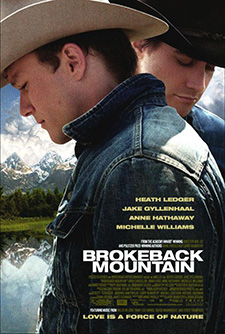 The
selection of Crash, director Paul Haggis' collection
of episodes depicting racial unrest in Los Angeles, for Best
Picture was a stunning surprise on Oscar night because the
film hadn't been awarded that honor by any other major awards
group prior to the ceremony. The award was anticipated to
go to Brokeback Mountain, Ang Lee's meandering
saga of two gay cowboys, which had not only been named the
best film of the year by almost every major group, but boasted
the most frequently parodied film poster of all time. Both
films are highly flawed - Crash's Oscar-winning script
relies far too heavily on outrageous coincidences and lacks
a clear sense of anything specific to say about race relations,
and the quality of its performances is inconsistent: Bahar
Soomekh as the compassionate daughter of an overwrought Persian
shopkeeper, Michael Pena as a put-upon locksmith, and especially
Matt Dillon in an Oscar nominated performance as a racist
cop are all outstanding, but more famous names like Sandra
Bullock, Brendan Fraser and Don Cheadle flounder about in
unconvincing characterizations. Brokeback Mountain also
has its drawbacks - at 134 minutes it is probably half an
hour too long, and its leisurely pace makes it seem even longer.
But there is no question that Brokeback Mountain made
the biggest impact of any film released that year and despite
its drawbacks is a highly moving, well-acted love story that
represented a great deal of courage on the part of its makers
and will be regarded as the defining movie of 2005 long after Crash is forgotten. The
selection of Crash, director Paul Haggis' collection
of episodes depicting racial unrest in Los Angeles, for Best
Picture was a stunning surprise on Oscar night because the
film hadn't been awarded that honor by any other major awards
group prior to the ceremony. The award was anticipated to
go to Brokeback Mountain, Ang Lee's meandering
saga of two gay cowboys, which had not only been named the
best film of the year by almost every major group, but boasted
the most frequently parodied film poster of all time. Both
films are highly flawed - Crash's Oscar-winning script
relies far too heavily on outrageous coincidences and lacks
a clear sense of anything specific to say about race relations,
and the quality of its performances is inconsistent: Bahar
Soomekh as the compassionate daughter of an overwrought Persian
shopkeeper, Michael Pena as a put-upon locksmith, and especially
Matt Dillon in an Oscar nominated performance as a racist
cop are all outstanding, but more famous names like Sandra
Bullock, Brendan Fraser and Don Cheadle flounder about in
unconvincing characterizations. Brokeback Mountain also
has its drawbacks - at 134 minutes it is probably half an
hour too long, and its leisurely pace makes it seem even longer.
But there is no question that Brokeback Mountain made
the biggest impact of any film released that year and despite
its drawbacks is a highly moving, well-acted love story that
represented a great deal of courage on the part of its makers
and will be regarded as the defining movie of 2005 long after Crash is forgotten.
|
| Worst Award
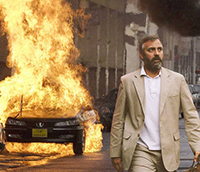 George Clooney had a remarkable year in 2005, becoming
the first person in history to be nominated for Best Director
in addition to an acting Oscar for different films. His directing
effort, Good Night, and Good Luck (for which he was also
nominated for Best Screenplay), was a remarkably inventive and
courageous film of television journalist Edward R. Murrow's
on-air battles with infamous Senator Joseph McCarthy. The film
was made in black-and-white so that McCarthy could be presented
through his television appearances, essentially allowing the
commie-hunter to play himself in the film. The Academy wanted
to award Clooney for his achievement, but since the screenplay
award was going to Crash and the directing prize to Ang
Lee for Brokeback Mountain, Clooney was awarded an Oscar
for his colorless performance as a disgraced CIA agent in the
cliché-ridden thriller Syriana. Clooney can be
a wonderful actor who deserved Oscars for his performances
in Up in the Air and The Descendants, but his work in Syriana has the same effect as swallowing a handful of Ambien and his
Oscar success can only be explained as a consolation prize for
losing the awards for Good Night, and Good Luck.
George Clooney had a remarkable year in 2005, becoming
the first person in history to be nominated for Best Director
in addition to an acting Oscar for different films. His directing
effort, Good Night, and Good Luck (for which he was also
nominated for Best Screenplay), was a remarkably inventive and
courageous film of television journalist Edward R. Murrow's
on-air battles with infamous Senator Joseph McCarthy. The film
was made in black-and-white so that McCarthy could be presented
through his television appearances, essentially allowing the
commie-hunter to play himself in the film. The Academy wanted
to award Clooney for his achievement, but since the screenplay
award was going to Crash and the directing prize to Ang
Lee for Brokeback Mountain, Clooney was awarded an Oscar
for his colorless performance as a disgraced CIA agent in the
cliché-ridden thriller Syriana. Clooney can be
a wonderful actor who deserved Oscars for his performances
in Up in the Air and The Descendants, but his work in Syriana has the same effect as swallowing a handful of Ambien and his
Oscar success can only be explained as a consolation prize for
losing the awards for Good Night, and Good Luck.
|
Biggest Oversight 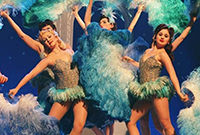 The
Academy did themselves proud in the Best Song department, eschewing
their usual conservative tastes and selecting an outstanding
rap song from the film Hustle and Flow. "It's Hard
Out Here for a Pimp" didn't represent the usual tastes
personified by names like Burt Bacharach and Henry Mancini,
but it was the best example of an outstanding movie song of
the year. But "It's Hard Out Here for a Pimp's" biggest
competition should have been the exciting World War II era songs
written by George Fenton for the wonderful Mrs. Henderson
Presents: "Inspiration", "The Grecian Frieze",
"Sails of the Windmill", and especially the charming
and energetic "Babies of the Blitz" all captured the
spirit of the film and era perfectly and were among the best
examples of movie songwriting for the decade. The
Academy did themselves proud in the Best Song department, eschewing
their usual conservative tastes and selecting an outstanding
rap song from the film Hustle and Flow. "It's Hard
Out Here for a Pimp" didn't represent the usual tastes
personified by names like Burt Bacharach and Henry Mancini,
but it was the best example of an outstanding movie song of
the year. But "It's Hard Out Here for a Pimp's" biggest
competition should have been the exciting World War II era songs
written by George Fenton for the wonderful Mrs. Henderson
Presents: "Inspiration", "The Grecian Frieze",
"Sails of the Windmill", and especially the charming
and energetic "Babies of the Blitz" all captured the
spirit of the film and era perfectly and were among the best
examples of movie songwriting for the decade.
|
Return
to top
1920s •
1930s •
1940s •
1950s •
1960s •
1970s •
1980s •
1990s • 2010s
| |
|
The
Departed
Actor: Forest Whitaker (The Last King of
Scotland)
Actress: Helen Mirren (The Queen)
Supporting Actor: Alan Arkin (Little Miss Sunshine)
Supporting Actress: Jennifer Hudson (Dreamgirls)
Director: Martin Scorsese (The Departed) |
The
Queen
Actor: Forrest Whitaker (The Last King of Scotland )
Actress: Helen Mirren (The Queen)
Supporting Actor: Eddie Murphy (Dreamgirls)
Supporting Actress: Jennifer Hudson (Dreamgirls)
Director: Guillermo del Toro (Pan's Labyrinth)* |
|
Hindsight Award nominations for 2006
|
|  Martin
Scorsese is one of the seminal filmmakers of the post-World
War II era, who should have won the Best Director Oscar for
his masterpieces Raging Bull and GoodFellas.
But since the Academy dropped the ball by giving the award
those years to movies stars making their directing debuts
for films whose reputations have declined with each passing
year, they seem to have been itching to make it up to Scorsese
by giving him the recognition he deserved at his peak.
But the director's output has grown increasingly thin over
the years, as the budgets for his films have bloated to the
point of being able to pay for ten or twenty Taxi Drivers or Mean Streets, but each lacking even the remotest
level of passion, commitment or originality that made those
early low-budget entries the unforgettable classics that they
are. The Academy went along with the charade, awarding overrated
mediocrities like Gangs of New York and The Aviator a boatload of nominations, but never quite being able to play
the game to completion because there was always a film or
director who couldn't be overlooked enough to give Scorsese
his overdue loving cup. That all changed in 2006, when Scorsese
was able to slip in The Departed, a well-acted although derivative
and ultimately forgettable cop movie that managed to generate enough hype because of
the big names associated with it in a lukewarm field that
the Emperor found himself once again attired in brand new
duds at Oscar time. Martin
Scorsese is one of the seminal filmmakers of the post-World
War II era, who should have won the Best Director Oscar for
his masterpieces Raging Bull and GoodFellas.
But since the Academy dropped the ball by giving the award
those years to movies stars making their directing debuts
for films whose reputations have declined with each passing
year, they seem to have been itching to make it up to Scorsese
by giving him the recognition he deserved at his peak.
But the director's output has grown increasingly thin over
the years, as the budgets for his films have bloated to the
point of being able to pay for ten or twenty Taxi Drivers or Mean Streets, but each lacking even the remotest
level of passion, commitment or originality that made those
early low-budget entries the unforgettable classics that they
are. The Academy went along with the charade, awarding overrated
mediocrities like Gangs of New York and The Aviator a boatload of nominations, but never quite being able to play
the game to completion because there was always a film or
director who couldn't be overlooked enough to give Scorsese
his overdue loving cup. That all changed in 2006, when Scorsese
was able to slip in The Departed, a well-acted although derivative
and ultimately forgettable cop movie that managed to generate enough hype because of
the big names associated with it in a lukewarm field that
the Emperor found himself once again attired in brand new
duds at Oscar time.
 No
one seemed to mind all that much because there was so little
to get excited about in this Oscar year, which saw Dreamgirls achieve the unprecedented feat of being the first film with
the most nominations not to be nominated for Best Picture.
There were several foreign films that showed a passion and
commitment missing in Hollywood, like The Lives of Others, Pan's Labyrinth and Water, but the only English
entry that seems to embody the qualities that Oscar is supposed
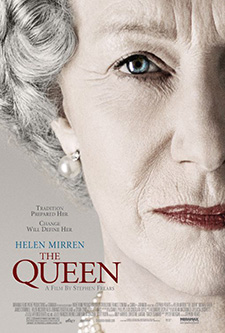
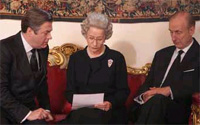
to represent is as English as they come. The Queen,
Stephen Frears' brilliant docudrama about the Royal Family's
reaction to the death of Princess Diana, deservedly won every
award handed out for Best Actress for Helen Mirren's courageous
and moving performance as Queen Elizabeth II, and she was
matched every step of the way by Michael Sheen (who won the
Los Angeles Film Critics Award for his sympathetic portrayal
of Tony Blair), and by Alex Jennings, Sylvia Sims and especially
James Cromwell as the surrounding members of the House of
Windsor. But the film had much more to recommend it than brilliant
acting, especially Peter Morgan's magnificent screenplay which
was robbed of Oscar recognition by Little Miss Sunshine. No
one seemed to mind all that much because there was so little
to get excited about in this Oscar year, which saw Dreamgirls achieve the unprecedented feat of being the first film with
the most nominations not to be nominated for Best Picture.
There were several foreign films that showed a passion and
commitment missing in Hollywood, like The Lives of Others, Pan's Labyrinth and Water, but the only English
entry that seems to embody the qualities that Oscar is supposed
to represent is as English as they come. The Queen,
Stephen Frears' brilliant docudrama about the Royal Family's
reaction to the death of Princess Diana, deservedly won every
award handed out for Best Actress for Helen Mirren's courageous
and moving performance as Queen Elizabeth II, and she was
matched every step of the way by Michael Sheen (who won the
Los Angeles Film Critics Award for his sympathetic portrayal
of Tony Blair), and by Alex Jennings, Sylvia Sims and especially
James Cromwell as the surrounding members of the House of
Windsor. But the film had much more to recommend it than brilliant
acting, especially Peter Morgan's magnificent screenplay which
was robbed of Oscar recognition by Little Miss Sunshine.
|
| Worst Award
 Eddie
Murphy won the Golden Globe and the SAG Award for his brilliant
send-up of Chuck Berry in Dreamgirls and seemed poised
to finally win an Oscar after a long string of indifferent
films, but the comic made the disastrous mistake of returning
to his trend of appearing in artistic fiascoes during the
balloting period. Murphy would go on to win Razzie Awards
for Worst Actor, Worst Supporting Actor and Worst Supporting Actress for his various characterizations
in Norbit, while the Academy scrambled to award the
Oscar to someone who wasn't currently embarrassing himself
on the big screen. They decided to go the Martin Scorsese
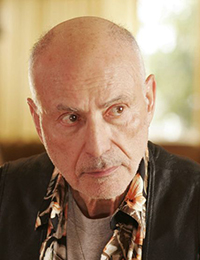
Lifetime Achievement route by giving an overdue award to Alan Arkin for his generic dirty old Grandpa shtick in
the pleasing but unremarkable independent film Little Miss
Sunshine, which achieved the mantle of The Comedy That
Oscar Throws A Bone To over more deserving laugh fests like Borat and Thank You for Smoking. Arkin is a
wonderful and accomplished actor who gave one of the most
enduring performances of the 1960s in The Heart is a Lonely
Hunter, but he turned in mediocre work in Little Miss
Sunshine that wasn't remotely on a par with Murphy's;
or of nominees Jackie Earle Haley in Little Children and Djimon Hounsou in Blood Diamond, non-nominee Michael
Sheen in The Queen, or, for that matter, Best Actor
winner Forest Whitaker for his powerful performance as Idi
Amin in what was arguably a supporting role in The Last
King of Scotland. Eddie
Murphy won the Golden Globe and the SAG Award for his brilliant
send-up of Chuck Berry in Dreamgirls and seemed poised
to finally win an Oscar after a long string of indifferent
films, but the comic made the disastrous mistake of returning
to his trend of appearing in artistic fiascoes during the
balloting period. Murphy would go on to win Razzie Awards
for Worst Actor, Worst Supporting Actor and Worst Supporting Actress for his various characterizations
in Norbit, while the Academy scrambled to award the
Oscar to someone who wasn't currently embarrassing himself
on the big screen. They decided to go the Martin Scorsese
Lifetime Achievement route by giving an overdue award to Alan Arkin for his generic dirty old Grandpa shtick in
the pleasing but unremarkable independent film Little Miss
Sunshine, which achieved the mantle of The Comedy That
Oscar Throws A Bone To over more deserving laugh fests like Borat and Thank You for Smoking. Arkin is a
wonderful and accomplished actor who gave one of the most
enduring performances of the 1960s in The Heart is a Lonely
Hunter, but he turned in mediocre work in Little Miss
Sunshine that wasn't remotely on a par with Murphy's;
or of nominees Jackie Earle Haley in Little Children and Djimon Hounsou in Blood Diamond, non-nominee Michael
Sheen in The Queen, or, for that matter, Best Actor
winner Forest Whitaker for his powerful performance as Idi
Amin in what was arguably a supporting role in The Last
King of Scotland.
|
Biggest Oversight 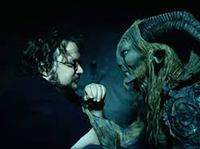 Scorsese's
lifetime achievement award stole recognition from nominees Stephen
Frear' for The Queen and Paul Greengrass for his New
York Film Critics Award-winning work for the remarkable docudrama
about the the heroic passengers of United 93. But completely
overlooked in the nominations was the directorial tour de
force of Guillermo del Toro for the stunning and
disturbing fantasy Pan's Labyrinth. The unique drama
about a lonely little girl who is drawn into a magical and dangerous
underworld won Oscars for art direction, cinematography and
makeup, losing the Best Foreign Film Award by a nose to the
brilliant The Lives of Others. But the hero of Pan's
Labyrinth was del Toro, one of the most singular and original
directors in film today. Scorsese's
lifetime achievement award stole recognition from nominees Stephen
Frear' for The Queen and Paul Greengrass for his New
York Film Critics Award-winning work for the remarkable docudrama
about the the heroic passengers of United 93. But completely
overlooked in the nominations was the directorial tour de
force of Guillermo del Toro for the stunning and
disturbing fantasy Pan's Labyrinth. The unique drama
about a lonely little girl who is drawn into a magical and dangerous
underworld won Oscars for art direction, cinematography and
makeup, losing the Best Foreign Film Award by a nose to the
brilliant The Lives of Others. But the hero of Pan's
Labyrinth was del Toro, one of the most singular and original
directors in film today.
|
Return
to top
1920s •
1930s •
1940s •
1950s •
1960s •
1970s •
1980s •
1990s • 2010s
| |
|
No
Country for Old Men
Actor: Daniel Day Lewis (There Will Be Blood )
Actress: Marion Cotillard (La Vie en Rose)
Supporting Actor: Jarvier Barden
(No Country for Old Men)
Supporting Actress: Tilda Swinton (Michael Clayton)
Director: Joel and Ethan Cohen
(No Country for Old Men) |
No
Country for Old Men
Actor: Daniel Day Lewis (There Will Be Blood )
Actress: Marion Cotillard (La Vie en Rose)
Supporting Actor: Jarvier Barden
(No Country for Old Men)
Supporting Actress: Marisa Tomei
(Before the Devil Knows You're Dead)*
Director: Joel and Ethan Cohen
(No Country for Old Men) |
|
Hindsight Award nominations for 2007
|
| 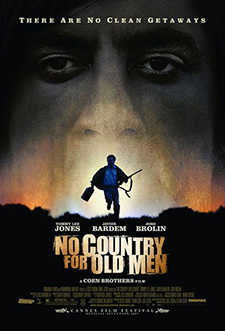 There
are few things more boring than an Oscarcast where there are
"no contests" across the board. 2007 was one of
those dull marathons, where winners Daniel Day Lewis and
Javier Bardem were so deserving of recognition that they had
swept all of the pre-Oscar awards and when they picked up
their little gold men, they had already thanked everyone they
needed to thank more times than anyone could count. Viewers
were woken up a few times by the surprising announcements
of the always-interesting Tilda Swinton in Michael Clayton (despite only winning one other major pre-Oscar award from
the BAFTAs) for Best Supporting Actress and Marion Cotillard,
who became only the third performer to win an Oscar for a
foreign-language film when she was named Best Actress for
her sublime Edith Piaf in La Vie en rose. There was
speculation that Julie Christie might take the award for her
workmanlike performance as an Alzheimer's sufferer who falls
in love with another patient to the consternation of her husband
(Gordon Pinsent, in an altogether superior unnominated performance)
in Away from Her, but sanity prevailed on Oscar night
when Cotillard was honored for her depiction of Piaf (a performance
that madbeast.com ranks as the greatest in the history of
motion pictures). There
are few things more boring than an Oscarcast where there are
"no contests" across the board. 2007 was one of
those dull marathons, where winners Daniel Day Lewis and
Javier Bardem were so deserving of recognition that they had
swept all of the pre-Oscar awards and when they picked up
their little gold men, they had already thanked everyone they
needed to thank more times than anyone could count. Viewers
were woken up a few times by the surprising announcements
of the always-interesting Tilda Swinton in Michael Clayton (despite only winning one other major pre-Oscar award from
the BAFTAs) for Best Supporting Actress and Marion Cotillard,
who became only the third performer to win an Oscar for a
foreign-language film when she was named Best Actress for
her sublime Edith Piaf in La Vie en rose. There was
speculation that Julie Christie might take the award for her
workmanlike performance as an Alzheimer's sufferer who falls
in love with another patient to the consternation of her husband
(Gordon Pinsent, in an altogether superior unnominated performance)
in Away from Her, but sanity prevailed on Oscar night
when Cotillard was honored for her depiction of Piaf (a performance
that madbeast.com ranks as the greatest in the history of
motion pictures).
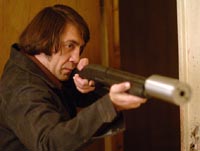 There
was really no contest in the Best Picture race, with the only
genuinely outstanding contender being Jason Reitman's quirky
comedy about teenage pregnancy Juno. The other nominees
- There Will Be Blood (which featured a superb performance
by Day Lewis that made a fairly overlong and mediocre movie
seem far better than it was), the pleasing though conventional Michael Clayton and the interminable Atonement - were all just rounding out the field against the obvious
winner No Country for Old Men, which won Best Picture
honors from most of the other major awards groups (although
the Los Angeles Film Critics preferred There Will Be Blood and the BAFTAs and the Golden Globes - a group with a history
of questionable decisions - were taken in by the Emperor's
New Clothes of Atonement). The disturbing tale of
professional assassin Anton Chigurh (unforgettably played
by Bardem) was a razor's edge of tension from the pen of master
filmmakers Joel & Ethan Cohen, who became the first co-winners
of the Best Director Oscar since Jerome Robbins and Robert
Wise for West Side Story was a no-brainer by Oscar
night. It made for a dull broadcast, but the uncontestable
right choice. There
was really no contest in the Best Picture race, with the only
genuinely outstanding contender being Jason Reitman's quirky
comedy about teenage pregnancy Juno. The other nominees
- There Will Be Blood (which featured a superb performance
by Day Lewis that made a fairly overlong and mediocre movie
seem far better than it was), the pleasing though conventional Michael Clayton and the interminable Atonement - were all just rounding out the field against the obvious
winner No Country for Old Men, which won Best Picture
honors from most of the other major awards groups (although
the Los Angeles Film Critics preferred There Will Be Blood and the BAFTAs and the Golden Globes - a group with a history
of questionable decisions - were taken in by the Emperor's
New Clothes of Atonement). The disturbing tale of
professional assassin Anton Chigurh (unforgettably played
by Bardem) was a razor's edge of tension from the pen of master
filmmakers Joel & Ethan Cohen, who became the first co-winners
of the Best Director Oscar since Jerome Robbins and Robert
Wise for West Side Story was a no-brainer by Oscar
night. It made for a dull broadcast, but the uncontestable
right choice.
|
| Worst Award
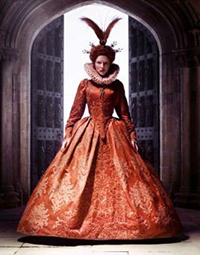 While
the Academy's selections for 2007 were predictable, they were
also hard to take any real exception to. This includes Amanda
Byrne's Oscar-winning costume design for Elizabeth:
The Golden Age. Byrne's costumes provided a sumptuous
feast for the eye in this sequel to Elizabeth (for
which she was also nominated), and since this was her first
Oscar on her fourth nomination, she seemed primed for recognition.
So while we want to make it clear that we don't consider Byrne
to be undeserving by any means, the selection of yet another
big budget, bloated period piece in this category makes one
wonder if the professionals in the Academy really comprehend
the challenges of designing the costumes for a contemporary
story on a more modest budget, The films nominated for the
costume design award were all (as usual) period pieces: Across
the Universe (perhaps the most interesting design of
any of the nominees), Atonement,. La Vie en rose,
and Sweeney Todd. All were notable achievements,
but it can be argued that they lacked the ingenuity or integration
with the story of the subtle designs for No Country for
Old Men, Eastern Promises, Into the Wild or Lars
and the Real Girl, contemporary dramas that no one ever
thought of to honor for their costume design despite making
as much of a contribution to the films' success as the more
flamboyant nominated entries. While
the Academy's selections for 2007 were predictable, they were
also hard to take any real exception to. This includes Amanda
Byrne's Oscar-winning costume design for Elizabeth:
The Golden Age. Byrne's costumes provided a sumptuous
feast for the eye in this sequel to Elizabeth (for
which she was also nominated), and since this was her first
Oscar on her fourth nomination, she seemed primed for recognition.
So while we want to make it clear that we don't consider Byrne
to be undeserving by any means, the selection of yet another
big budget, bloated period piece in this category makes one
wonder if the professionals in the Academy really comprehend
the challenges of designing the costumes for a contemporary
story on a more modest budget, The films nominated for the
costume design award were all (as usual) period pieces: Across
the Universe (perhaps the most interesting design of
any of the nominees), Atonement,. La Vie en rose,
and Sweeney Todd. All were notable achievements,
but it can be argued that they lacked the ingenuity or integration
with the story of the subtle designs for No Country for
Old Men, Eastern Promises, Into the Wild or Lars
and the Real Girl, contemporary dramas that no one ever
thought of to honor for their costume design despite making
as much of a contribution to the films' success as the more
flamboyant nominated entries.
|
Biggest Oversight  We
came down hard on Marisa Tomei's Oscar for
her sitcom-level performance in My Cousin Vinny. Rest
assured that this was a commentary on the tastes of the Academy
that year and not on the talents of Ms. Tomei, who has contributed
far more memorable work on other occasions. One of her finest
performances was in the compelling crime drama Before the
Devil Knows You're Dead as a dissatisfied wife caught in
a love triangle with two brothers (Ethan Hawke and Phillip Seymour
Hoffman as two of the most unconvincingly cast siblings in movie
history). In a year when the Academy was honoring mediocre work
by Amy Ryan in Gone, Baby, Gone and Ruby Dee in American
Gangster, the white-hot eroticism of Tomei's steamy performance
should have barrelled past all her competition for the Golden
Statuette. Instead, she has an Oscar on her mantel for My
Cousin Vinny while her stellar work in Before the Devil
Knows You're Dead had to settle for a nomination from the
Independent Spirit Awards (losing to Cate Blanchett for the
staggeringly pretentious homage to Bob Dylan, I'm Not There).
It is a strange and frustrating world that we live in. We
came down hard on Marisa Tomei's Oscar for
her sitcom-level performance in My Cousin Vinny. Rest
assured that this was a commentary on the tastes of the Academy
that year and not on the talents of Ms. Tomei, who has contributed
far more memorable work on other occasions. One of her finest
performances was in the compelling crime drama Before the
Devil Knows You're Dead as a dissatisfied wife caught in
a love triangle with two brothers (Ethan Hawke and Phillip Seymour
Hoffman as two of the most unconvincingly cast siblings in movie
history). In a year when the Academy was honoring mediocre work
by Amy Ryan in Gone, Baby, Gone and Ruby Dee in American
Gangster, the white-hot eroticism of Tomei's steamy performance
should have barrelled past all her competition for the Golden
Statuette. Instead, she has an Oscar on her mantel for My
Cousin Vinny while her stellar work in Before the Devil
Knows You're Dead had to settle for a nomination from the
Independent Spirit Awards (losing to Cate Blanchett for the
staggeringly pretentious homage to Bob Dylan, I'm Not There).
It is a strange and frustrating world that we live in.
|
Return
to top
1920s •
1930s •
1940s •
1950s •
1960s •
1970s •
1980s •
1990s • 2010s
| |
|
Slumdog Millionaire
Actor: Sean Penn (Milk )
Actress: Kate Winslett(The Reader)
Supporting Actor: Heath Ledger (The Dark Knight)
Supporting Actress:Penélope Cruz
(Vicky Cristina Barcelona)
Director: Danny Boyle (Slumdog Millionaire) |
Milk
Actor: Sean Penn (Milk )
Actress: Kate Winslett(The Reader)
Supporting Actor: Heath Ledger (The Dark Knight)
Supporting Actress:Penélope Cruz
(Vicky Cristina Barcelona)
Director: Gus Van Sant (Milk) |
|
Hindsight Award nominations for 2008
|
| 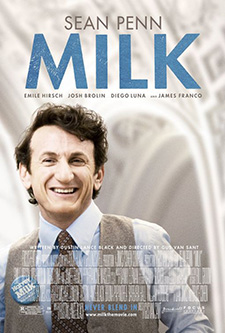 The Academy loved Slumdog Millionaire, director Danny Boyle's forceful story of a poverty-stricken Mumbai teen named Jamal who becomes a national sensation when he is inexplicably able to answer the most challenging questions on India's version of the TV game show Who Wants to Be a Millonaire, ultimately causing authoritarian police to challenge his ability to have access to such knowledge without cheating before they will allow him to play the final round. This imaginative predicament provides the framework to tell Jamal's story of desperate poverty and exploitation by India's criminal class, his spirit always buoyed by the seemingly impossible goal of being with the beautiful girl that he loves. It was a powerful, inspirational tale that was given the Best Picture prize from the Academy as well as top awards from the National Board of Review and the Screen Actors and Directors Guild. Slumdog Millionaire is a terrific film but as much as we enjoyed and respected it, it frequently descended into grim melodrama and the cloying, self obsessed performance of Anil Kapoor as the host of Who Wants to Be a Millonaire sometimes crossed the line into parody. So while we think Slumdog Millionaire was a good choice for the Oscar, there were better ones available including Best Picture nominees The Reader and Frost/Nixon and non-nominees Man on Wire and The Dark Knight. The Academy loved Slumdog Millionaire, director Danny Boyle's forceful story of a poverty-stricken Mumbai teen named Jamal who becomes a national sensation when he is inexplicably able to answer the most challenging questions on India's version of the TV game show Who Wants to Be a Millonaire, ultimately causing authoritarian police to challenge his ability to have access to such knowledge without cheating before they will allow him to play the final round. This imaginative predicament provides the framework to tell Jamal's story of desperate poverty and exploitation by India's criminal class, his spirit always buoyed by the seemingly impossible goal of being with the beautiful girl that he loves. It was a powerful, inspirational tale that was given the Best Picture prize from the Academy as well as top awards from the National Board of Review and the Screen Actors and Directors Guild. Slumdog Millionaire is a terrific film but as much as we enjoyed and respected it, it frequently descended into grim melodrama and the cloying, self obsessed performance of Anil Kapoor as the host of Who Wants to Be a Millonaire sometimes crossed the line into parody. So while we think Slumdog Millionaire was a good choice for the Oscar, there were better ones available including Best Picture nominees The Reader and Frost/Nixon and non-nominees Man on Wire and The Dark Knight.
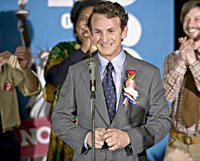 But at the end of the day, there was really no competition for what should have walked away with the Best Picture prize. Milk, Gus Van Sant's heart-wrenching biography of slain San Francisco city councilman Harvey Milk, the first openly gay politician in the United States, won the Best Picture Award from the New York Film Critics and should have been the easy winner at the Oscars. Milk is more than Harvey Milk's story, it is a chronicle of the Gay Movement in America starting in the 1960s and detailing such remarkable episodes as orange juice spokesperson and religious nut Anita Bryant's misguided campaign to make gay Americans second class citizens. But Milk is much more than a dry history lesson, with every scene infused with the white hot intensity and delicate compassion of Sean Penn's masterful Oscar-winning performance of the title role (surely the finest performance by a male actor of the decade). The Academy honored a fine film in giving Slumdog Millionaire the Best Picture award, but in doing so they overlooked what is sure to be an enduring masterpiece in Milk. But at the end of the day, there was really no competition for what should have walked away with the Best Picture prize. Milk, Gus Van Sant's heart-wrenching biography of slain San Francisco city councilman Harvey Milk, the first openly gay politician in the United States, won the Best Picture Award from the New York Film Critics and should have been the easy winner at the Oscars. Milk is more than Harvey Milk's story, it is a chronicle of the Gay Movement in America starting in the 1960s and detailing such remarkable episodes as orange juice spokesperson and religious nut Anita Bryant's misguided campaign to make gay Americans second class citizens. But Milk is much more than a dry history lesson, with every scene infused with the white hot intensity and delicate compassion of Sean Penn's masterful Oscar-winning performance of the title role (surely the finest performance by a male actor of the decade). The Academy honored a fine film in giving Slumdog Millionaire the Best Picture award, but in doing so they overlooked what is sure to be an enduring masterpiece in Milk.
|
Worst Award  2008 was another one of those years where the Academy didn't unveil any disconcertingly sore thumbs and even if we didn't agree with all their choices, we can see how they came to the conclusions they did. We are therefore going to focus on Donald Graham Burt and Victor J. Zolfo's art direction for The Curious Case of Benjamin Button. Burt and Zolfo actually contributed a nifty production design for a ponderously pretentious and overlong film about a man who inexplicably ages backwards and, after nearly three hours of tedious Forrest Gump-Light (provided by Forrest Gump scripter Eric Roth, who apparently is a great believer in recycling) teaches the highly relatable and profound lesson that it's a pretty bizarre thing to age backwards. One of the peculiar inconsistencies of Button's malady is that he is born with the appearance and physical condition of a decrepit old man but is still the size of a newborn baby (which must have been a great relief to his mother as she was pushing him out into the world) and the growth of his body through his childhood and teenage years seems to be the one normal facet of his development. But when he hits the equator of his condition and begins to age backwards into a young and groovy Brad Pitt, he apparently shrinks in his final years because when he is shown as an elderly baby in his last gasps of life, he has reduced back to infant size before, I suppose, reverting into a fetus and then splitting off into an eighty year old egg and one confused sperm. It's a concept that might have made a fun Twilight Zone episode back in the early 1960s but it was a silly, over-budgeted and overrated bore in 2008 and we just don't want to give it any Hindsight Awards. So there. 2008 was another one of those years where the Academy didn't unveil any disconcertingly sore thumbs and even if we didn't agree with all their choices, we can see how they came to the conclusions they did. We are therefore going to focus on Donald Graham Burt and Victor J. Zolfo's art direction for The Curious Case of Benjamin Button. Burt and Zolfo actually contributed a nifty production design for a ponderously pretentious and overlong film about a man who inexplicably ages backwards and, after nearly three hours of tedious Forrest Gump-Light (provided by Forrest Gump scripter Eric Roth, who apparently is a great believer in recycling) teaches the highly relatable and profound lesson that it's a pretty bizarre thing to age backwards. One of the peculiar inconsistencies of Button's malady is that he is born with the appearance and physical condition of a decrepit old man but is still the size of a newborn baby (which must have been a great relief to his mother as she was pushing him out into the world) and the growth of his body through his childhood and teenage years seems to be the one normal facet of his development. But when he hits the equator of his condition and begins to age backwards into a young and groovy Brad Pitt, he apparently shrinks in his final years because when he is shown as an elderly baby in his last gasps of life, he has reduced back to infant size before, I suppose, reverting into a fetus and then splitting off into an eighty year old egg and one confused sperm. It's a concept that might have made a fun Twilight Zone episode back in the early 1960s but it was a silly, over-budgeted and overrated bore in 2008 and we just don't want to give it any Hindsight Awards. So there.
|
Biggest Oversight
 There is a controversy as to whether a documentary like Man on Wire, the superb account of tightrope walker Philippe Petit's obsessive plot to walk a high wire strung between New York's Twin Towers, is "written" in the fashion that conventionally-plotted fictional films are. The director James Marsh and editor Jinx Godfrey didn't fashion a screenplay in the way that Oscar nominees like distinguished playwrights John Patrick Shanley and David Hare did. All that Marsh and Godfrey managed was to string together mountains of unrelated photographs, film clips, television sequences and taped interviews and somehow craft a story that resulted in one of the most dramatic and gripping films of the year; one with an edge of your seat narrative and intricately structured plot that was as emotionally engaging as anything honored by the Writers Branch. Documentarians have historically gotten short shrift from the Academy; unless you count the pseudo-documentary Chang: A Drama of the Wilderness' nomination for Best Picture, Unique and Artistic Production in 1928 (and I don't think anyone does; the award was also known as Artistic Quality of Production and was obsoleted after the first year of the awards because no one could distinguish it from Best Picture, which just goes to show how confused things were in 1928) the only documentaries which have been nominated for an Oscar not specific to documentaries (aside from a few bones tossed by the music awards) were Best Editing nods for Woodstock in 1970 and Hoop Dreams in 1994. But documentaries deserve as much recognition as any other kind of film for Oscar consideration in the various categories, and one as well-written as Man on Wire should be placed at the top of the heap. There is a controversy as to whether a documentary like Man on Wire, the superb account of tightrope walker Philippe Petit's obsessive plot to walk a high wire strung between New York's Twin Towers, is "written" in the fashion that conventionally-plotted fictional films are. The director James Marsh and editor Jinx Godfrey didn't fashion a screenplay in the way that Oscar nominees like distinguished playwrights John Patrick Shanley and David Hare did. All that Marsh and Godfrey managed was to string together mountains of unrelated photographs, film clips, television sequences and taped interviews and somehow craft a story that resulted in one of the most dramatic and gripping films of the year; one with an edge of your seat narrative and intricately structured plot that was as emotionally engaging as anything honored by the Writers Branch. Documentarians have historically gotten short shrift from the Academy; unless you count the pseudo-documentary Chang: A Drama of the Wilderness' nomination for Best Picture, Unique and Artistic Production in 1928 (and I don't think anyone does; the award was also known as Artistic Quality of Production and was obsoleted after the first year of the awards because no one could distinguish it from Best Picture, which just goes to show how confused things were in 1928) the only documentaries which have been nominated for an Oscar not specific to documentaries (aside from a few bones tossed by the music awards) were Best Editing nods for Woodstock in 1970 and Hoop Dreams in 1994. But documentaries deserve as much recognition as any other kind of film for Oscar consideration in the various categories, and one as well-written as Man on Wire should be placed at the top of the heap.
|
Return
to top
1920s •
1930s •
1940s •
1950s •
1960s •
1970s •
1980s •
1990s • 2010s
|
|
The Hurt Locker
Actor: Jeff Bridges (Crazy Heart)
Actress: Sandra Bullock(The Blind Side)
Supporting Actor: Cristoph Waltz (Inglorious Basterds)
Supporting Actress:Mo'Nique (Precious)
Director: Kathryn Bigelow (The Hurt Locker) |
The Hurt Locker
Actor: Jeff Bridges (Crazy Heart)
Actress: Meryl Streep(Julie and Julia)
Supporting Actor: Cristoph Waltz (Inglorious Basterds)
Supporting Actress:Vera Farmiga (Up in the Air)
Director: Kathryn Bigelow (The Hurt Locker) |
|
Hindsight Award nominations for 2009
|
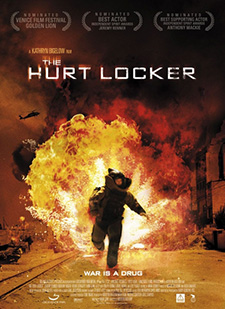 When considering the Best Picture Academy Awards race, the word "Best" frequently translates into "Most Important." There were numerous films which could be considered the "Best" film for 2009, depending on which criteria you use. Avatar was the biggest financial success that had the greatest impact on popular culture. Up in the Air was arguably the most engaging to an adult mainstream audience. Up! was among the most sentimentally satisfying family films ever released. But when it comes to "Importance," nothing compares to Kathryn Bigelow's compelling The Hurt Locker; the first - and arguably the only - great film to focus on the Iraqi war. It is essentially a character study of a bomb disposal expert (superbly played by Jeremy Renner) who becomes increasingly unhinged as the pressures of his assignments eat away at him. But he ultimately finds that the life-and-death razor blade on which he makes a daily ride to be addictive and he becomes more and more unable to cope with the tedium and everyday human interaction that life away from the front offers, succinctly articulated in the film's advertising slogan "War is a Drug." Like many drugs, The Hurt Locker is not always pleasant to swallow but it was the first major film to effectively communicate the hell that U.S. soldiers in the middle east suffered and may be the only one to do so for a long, long time. It's always easy to argue whether or not any work of art is the "best" of its kind that is put on display, or indeed if it's even necessary or possible to make such a distinction. But there's no doubting the importance of The Hurt Locker and whether or not it's our favorite film of 2009, it's an excellent selection for the Academy Award. When considering the Best Picture Academy Awards race, the word "Best" frequently translates into "Most Important." There were numerous films which could be considered the "Best" film for 2009, depending on which criteria you use. Avatar was the biggest financial success that had the greatest impact on popular culture. Up in the Air was arguably the most engaging to an adult mainstream audience. Up! was among the most sentimentally satisfying family films ever released. But when it comes to "Importance," nothing compares to Kathryn Bigelow's compelling The Hurt Locker; the first - and arguably the only - great film to focus on the Iraqi war. It is essentially a character study of a bomb disposal expert (superbly played by Jeremy Renner) who becomes increasingly unhinged as the pressures of his assignments eat away at him. But he ultimately finds that the life-and-death razor blade on which he makes a daily ride to be addictive and he becomes more and more unable to cope with the tedium and everyday human interaction that life away from the front offers, succinctly articulated in the film's advertising slogan "War is a Drug." Like many drugs, The Hurt Locker is not always pleasant to swallow but it was the first major film to effectively communicate the hell that U.S. soldiers in the middle east suffered and may be the only one to do so for a long, long time. It's always easy to argue whether or not any work of art is the "best" of its kind that is put on display, or indeed if it's even necessary or possible to make such a distinction. But there's no doubting the importance of The Hurt Locker and whether or not it's our favorite film of 2009, it's an excellent selection for the Academy Award.
|
Worst Award
 Sandra Bullock became the first performer to win an Academy Award for giving the best performance and a Razzie Award for the worst performance in the same year, winning the Oscar for The Blind Side and the Razzie for the mundane relationship comedy All About Steve. In truth, she didn't really deserve either honor. All About Steve, while no cinematic gem, is about on par with the fare you're likely to stumble upon on Comedy Central at 2:00 in the afternoon on any given Saturday and Bullock gives a thoroughly professional (if uninspired) performance in it. The problem is, the same thing can be said about her Oscar-winning work in The Blind Side, a maudlin little snoozer about a football-obsessed, well-heeled white woman who adopts a black urban youth from an impoverished background and nurtures him into becoming a gridiron sensation. It's the type of film that usually shows up as a programmer on The Family Channel or Lifetime and while Bullock delivers another thoroughly professional (if uninspired) performance, her by-the-numbers embodiment of self-assured female empowerment wasn't a particularly impressive display of the art of acting even in a weak year. Vastly more deserving of recognition was Meryl Streep's marvelous portrayal of television's French chef Julia Child in Julie and Julia, which won the Best Actress award from the New York Film Critics. It's ironic that the Academy chose to overlook a superb performance depicting someone who worked on TV in favor of a run-of-the-mill one that would have been more suitable to have been shown on it. Sandra Bullock became the first performer to win an Academy Award for giving the best performance and a Razzie Award for the worst performance in the same year, winning the Oscar for The Blind Side and the Razzie for the mundane relationship comedy All About Steve. In truth, she didn't really deserve either honor. All About Steve, while no cinematic gem, is about on par with the fare you're likely to stumble upon on Comedy Central at 2:00 in the afternoon on any given Saturday and Bullock gives a thoroughly professional (if uninspired) performance in it. The problem is, the same thing can be said about her Oscar-winning work in The Blind Side, a maudlin little snoozer about a football-obsessed, well-heeled white woman who adopts a black urban youth from an impoverished background and nurtures him into becoming a gridiron sensation. It's the type of film that usually shows up as a programmer on The Family Channel or Lifetime and while Bullock delivers another thoroughly professional (if uninspired) performance, her by-the-numbers embodiment of self-assured female empowerment wasn't a particularly impressive display of the art of acting even in a weak year. Vastly more deserving of recognition was Meryl Streep's marvelous portrayal of television's French chef Julia Child in Julie and Julia, which won the Best Actress award from the New York Film Critics. It's ironic that the Academy chose to overlook a superb performance depicting someone who worked on TV in favor of a run-of-the-mill one that would have been more suitable to have been shown on it.
|
Biggest Oversight  The Academy made a tactical misfire by opening up the Best Picture category to 10 nominees this year in the hopes of improving the dwindling TV ratings for their awards show, resulting with the honor being watered down as mediocre entries like The Blind Side and An Education were included to round out the field. Completely overlooked in any category was Spike Jonze's inventive film adaptation of Maurice Sendak's beloved children's book Where the Wild Things Are. We are not implying that the film was so good that it should have won a Best Picture slot (at least in a year where there were 5 nominees), but filmmakers that can make a creditable 101 minute-long big screen version of a book that takes an adult 45 seconds to read while still maintaining the spirit of the original deserves some recognition. This is especially true of K.K. Barrett and Jeffrey Thorp's marvelous production design and art direction that brought Sendek's immortal illustrations to life, work that was singled out by the Art Directors Guild Award but snubbed by the Academy in favor of the mundane Nine and the predictable Young Victoria. Maybe the Academy should have piled on some more nominations in that category as well. It might not have improved the TV rating but at least some deserving films would have received the recognition they deserved. The Academy made a tactical misfire by opening up the Best Picture category to 10 nominees this year in the hopes of improving the dwindling TV ratings for their awards show, resulting with the honor being watered down as mediocre entries like The Blind Side and An Education were included to round out the field. Completely overlooked in any category was Spike Jonze's inventive film adaptation of Maurice Sendak's beloved children's book Where the Wild Things Are. We are not implying that the film was so good that it should have won a Best Picture slot (at least in a year where there were 5 nominees), but filmmakers that can make a creditable 101 minute-long big screen version of a book that takes an adult 45 seconds to read while still maintaining the spirit of the original deserves some recognition. This is especially true of K.K. Barrett and Jeffrey Thorp's marvelous production design and art direction that brought Sendek's immortal illustrations to life, work that was singled out by the Art Directors Guild Award but snubbed by the Academy in favor of the mundane Nine and the predictable Young Victoria. Maybe the Academy should have piled on some more nominations in that category as well. It might not have improved the TV rating but at least some deserving films would have received the recognition they deserved.
|
Return
to top
1920s • 1930s • 1940s • 1950s • 1960s • 1970s • 1980s •
1990s • 2010s
|
THE
TOP 10
FILMS OF
THE2010s
1
2
3
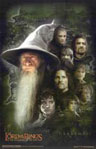
4
5
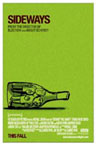
6
7
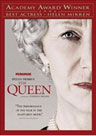
8
9
10
BEST
MALE
PERFORMANCE 
Sean Penn
in
Milk
BEST
FEMALE
PERFORMANCE 
Marion Cotillard
in
La Vie en rose
|