1980 • 1981 • 1982 • 1983 • 1984 • 1985 • 1986 • 1987 • 1988 • 1989 * Indicates that the film/performance was not nominated for an Academy Award in this category
1980
Ordinary
People
Actor: Robert DeNiro (Raging Bull)
Actress: Sissy Spacek (Coal Miner's Daughter) Supporting Actor:Timothy Hutton (Ordinary People) Supporting Actress: Mary Steenburgen
(Melvin and Howard) Director: Robert Redford (Ordinary People)
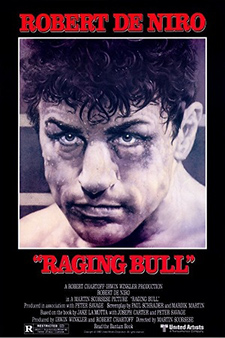
Raging
Bull
Actor: Robert DeNiro (Raging Bull)
Actress: Sissy Spacek (Coal Miner's Daughter) Supporting Actor: Joe Pesci (Raging Bull) Supporting Actress: Mary Tyler Moore
(Ordinary People) Director: Martin Scorsese (Raging Bull)
The
Academy favored Serious fair in 1980, awarding the top prize
to Ordinary People, Robert Redford's directorial debut
about a teenage boy grappling with the accidental drowning
of his brother. It is an earnest, well-acted film (especially
by Timothy Hutton in the lead role, who was delegated to the
Best Supporting Actor category at the awards only because
of the subordinate billing he received to the more famous
stars playing secondary roles), and the selection of Mary
Tyler Moore to play the boy's aloof mother was a brilliant
piece of casting, showing the dark underside to the cloying
optimism she displayed on television. But as well crafted
as the film is, it is an incredibly depressing story that
has a last-minute revelation which seems to be inserted only
to manipulate the audience into feeling a false sense of optimism
towards a character whose primary dilemma during the film
is whether or not to commit suicide. Hutton's role is so gloomy
and depressed that it never really becomes compelling and
the resulting film has a disagreeably hollow center as its
consequence.
Compelling
is the only word for the lead character is Raging Bull,
the volatile, self-obsessed boxer Jake LaMotta played so brilliantly
by Robert DeNiro. The film has been named in many critics'
polls as the best made in the 1980s, although it really is
far too morose and disturbing a story to claim that title
and the character of LaMotta - while undeniably intriguing
- is such a repellent human being without any redemption that
it occasionally makes one wonder what kind of statement director
Martin Scorsese was trying to make in depicting this loathsome
person's story. But it is hard not to admire a film with such
a dark central character which doesn't resort to the contrivances
that Ordinary People or 1980's other big prestige picture, The Elephant Man, employ to make their distressing
protagonists more palatable to movie audiences, and presents
LaMotta unapologetically as the appalling example of humanity
at its worst that he was.
Worst Award
The
Academy's distinction between a leading and supporting role
has been murky since they began giving the supporting awards
in 1936, when Spencer Tracy was nominated for Best Actor for
his secondary role in San Francisco and Stuart Erwin
was nominated for Best Supporting Actor for his lead in Pigskin
Parade. The confusion has never been cleared up, with Barry
Fitzgerald being nominated for both Best Actor and Best
Supporting Actor for his performance in Going My Way,
Marlon Brando, Peter Finch and Louise Fletcher winning lead
Oscars for playing ancillary roles in The Godfather, Network and One Flew Over the Cuckoo's Nest, and George Burns,
Tatum O'Neal and Michael Caine being awarded supporting Oscars
for playing primary roles The Sunshine Boys, Paper Moon and Hannah and Her Sisters. But one of the most blatant
examples of a role being incorrectly classified was Timothy
Hutton's Conrad Jarrett, which was unquestionably the leading
role in Ordinary People. Hutton gave a fine performance,
but his placement in this classification was unfair to fellow
nominees Joe Pesci, Michael O'Keefe, Judd Hirsch and Jason Robards,
who really did play supporting roles. Hutton's inclusion in
this category raised no controversy at the time because he was
listed below Donald Sutherland and Mary Tyler Moore in the film's
credits, but his is the character which drives the film and
his Oscar would have been more honest if it had been for Best
Actor With Supporting Billing.
Biggest Oversight
The
Long Good Friday was a spectacular gangster film featuring
a magnificent performance by Bob Hoskins as a tragic London
crime boss. It was a true breakout role for the Cockney actor,
who had also given an unforgettable television depiction of
Shakespeare's Iago in Othello in 1980 and would rise
to a brief period of stardom with his stage appearance as Nathan
Detroit in Guys and Dolls and films like Mona Lisa and Who Framed Roger Rabbit before choosing to cash in
on his unexpected fame with a string of flops like Heart
Condition, Super Mario Bros. and Mermaids and losing
the artistic momentum that he had been building. But 1980 was
a strong year for male performances, with Robert DeNiro in Raging
Bull, Jack Lemmon in Tribute, Peter O'Toole in The
Stunt Man, Robert Duvall in The Great Santini and
John Hurt in The Elephant Man receiving nominations (and
Timothy Hutton pulling a fast one by being listed in the inappropriate
Best Supporting Actor race), it is understandable that Hoskins
was overlooked. His costar Helen Mirren'sbrilliant
work as the gangster's beloved ladyfriendis a much more
dubious oversight, especially considering the nomination of
Goldie Hawn for doing her typical ditzy blonde shtick in the
box office smash Private Benjamin. Mirren is one of the
finest actresses in the world, best known for her stage work
and the British television series Prime Suspect and winning
Oscar nominations for her performances in the films The Madness
of King George and Gosford Park, and finally won
her first (overdue) Oscar for her performance as Elizabeth II
in The Queen in 2006.
Chariots
of Fire
Actor: Henry Fonda (On Golden Pond)
Actress: Katharine Hepburn (On Golden Pond) Supporting Actor: John Gielgud (Arthur) Supporting Actress: Maureen Stapleton (Reds) Director: Warren Beatty (Reds)
Raiders
of the Lost Ark
Actor:Burt Lancaster (Atlantic City)
Actress: Meryl Streep (The French Lieutenant's Woman) Supporting Actor: John Gielgud (Arthur) Supporting Actress: Maureen Stapleton (Reds) Director: Steven Spielberg (Raiders of the Lost Ark)
It's
fun to ponder what goes through an Academy member's mind when
they fill out their ballots for Best Picture. It's hard not
to believe that there are frequently mental conversations
that go "Spider-Man II was the film that I enjoyed
the most and did the best job of delivering what it intended,
but this is a Serious award and I have to choose something
that isn't so artistically unpretentious." There must
have been a lot of mental conversations like that one in 1981
when the Academy chose Chariots of Fire, director
Hugh Hudson's account of 1924 Olympics, for its top prize
- a sumptuously produced drama made by high pedigree British
talent that is so unremittingly bland that it's difficult
to remember anything about it (except for Vangellis' powerfully
effective Oscar-winning score). If the Academy felt the urge
to choose a high-minded drama for Best Picture, they might
have gone with the far more ingratiating nominees Reds,
On Golden Pond or Atlantic City, but in 1981 they
seemed to be on a mission to award their top prize to the
least entertaining film possible.
With
this mindset, it's surprising that one of the most unpretentious
and entertaining films ever made was nominated for Best Picture. Raiders of the Lost Ark was the seminal teaming of
super-showmen Steven Spielberg and George Lucas, filled with
some of the most celebrated scenes ever filmed (the opening
sequence of Indiana Jones trying to retrieve a golden idol
from its underground vault seems to have been parodied by
every animated television series ever created). It is actually
a credit to the Academy that Raiders was considered
for the top prize at at all, since summer blockbusters are
usually consigned to the technical awards and nothing else.
But this first entry in the Indiana Jones saga has always
been considered something unique, and time has proven it to
be the most memorable film made in 1981, as well as the best.
Worst Award
Timing
plays a huge part in the acting Academy Awards. It's doubtful
that awards would have been given to John Wayne in True Grit,
Paul Newman in The Color of Money or Jack Palance in City Slickers if they had won the Oscar already, while
it's equally possible that Oscars might have been given to James
Stewart in Anatomy of a Murder, Bette Davis in All
About Eve or Charles Laughton in Mutiny on the Bounty if they didn't already have a statuette at home. This kind of
timing played a huge part in the remarkable Henry Fonda's
Oscar win for his unremarkable performance in the senior tearjerker On Golden Pond. If Fonda had won the Oscar he deserved
in 1940 for The Grapes of Wrath, it's doubtful that he
would have received such recognition and the award would have
gone to the 1960 Best Actor winner Burt Lancaster for Atlantic
City, a performance that won almost all of the pre-Oscar
awards. Of course in the Hindsight Award race, Fonda has already
won for The Grapes of Wrath and Lancaster's Elmer
Gantry award was taken by Spencer Tracy in Inherit the Wind,
so it can be argued that we're just as guilty of rank sentimentality
as the Academy.
Biggest Oversight
When
1981 Hindsight Awards Best Actor Burt Lancaster was asked who
he thought was overlooked in that year's Oscar race, he named Raiders of the Lost Ark star Harrison Ford for
his performance as Indiana Jones. "He's a remarkably good
actor," said Lancaster. "In that role you have to
bring something special to it, to be funny as well as a good
actor." Ford certainly was special as the thrillseeking
archeologist and his sarcastic delivery brought as much to the
classic film as Spielberg's lightning-paced direction. It's
rare where an actor is nominated for an action/adventure film,
and Ford is no exception, winning his only nomination for his
dramatic turn as a policeman hiding out with the Amish in Witness.
But he did his best work in Raiders of the Lost Ark,
and while it may not be the kind of acting that gets Academy
Award nominations, it is a performance that has taken its place
as one of the great icons in film lore.
Gandhi
Actor: Ben Kingsley (Gandhi)
Actress: Meryl Streep (Sophie's Choice) Supporting Actor:Louis Gosset (An Officer and a Gentleman) Supporting Actress: Jessica Lange (Tootsie) Director: Richard Attenborough (Gandhi)
E.T.
the Extra-Terrestrial
Actor: Ben Kingsley (Gandhi)
Actress: Meryl Streep (Sophie's Choice) Supporting Actor: Leonard Nimoy
(Star Trek II: The Wrath of Khan) Supporting Actress: Glenn Close
(The World According to Garp) Director:
Steven Spielberg (ET the Extraterrestrial)
Richard
Attenborough spent twenty years trying to get his film about
the life of Mahatma Gandhi made, and the result was a David
Lean-like epic with a high-mindedness that borders on the
preachy. The Academy loves sanctimonious films like Gandhi,
and stories like the uphill making of films like Gandhi even more, so their selection of it as Best Picture is a perfectly
understandable, if predictable, one. In fact, Gandhi is a fine film, with Attenborough's passion evident in every
frame and wonderful performances by its cast, especially Ben
Kingsley in the title role (the lone exception is Candice
Bergan, who stands out like a sore thumb in her few awkward
scenes as photographer Margaret Bourke-White). But 1982 was
filled with fine films, with nominees ET the Extraterrestrial,
Missing, The Verdict and Tootsie all being reasonable
contenders for the Best Picture crown. But the best of these
was Steven Spielberg's box office champ about the little alien
trying to go home. ET was only the second science fiction
film ever nominated for Best Picture (after Star Wars),
and given the Academy's distaste for the genre and the backlash
against the film after it became a cash cow for Universal,
it's not surprising that it failed to win the Best Picture
award against Attenborough's somber testimonial to the Great
Spirit. But ET the Extraterrestrial is a vastly more
engaging and memorable film, and should have been awarded
the Best Picture, Director, Cinematography, and Sound Oscars
in addition to the Oscars for Original Score, Visual Effects
and Sound Effects Editing that it received.
Worst Award
The
one award that Gandhi received that created any controversy
was John Mollo and Bhanu Athaiya's for Best Costume Design,
the predominant thinking being that the designers couldn't have
contributed that impressive a result when the main character
spent most of the film wearing a bedsheet. To be fair, this
is a remarkably simplistic conclusion to reach when you consider
that Gandhi features a cast of thousands, most of whom
did not wear bedsheets. Even so, Gandhi's costume design
is relatively unimpressive,and it's reasonable to assume that
it received the award more because of the general admiration
for the film as a whole than for the outstanding achievement
in this particular category. In fact, a far more outstanding
design was contributed by nominee Patricia Norris for Victor/Victoria,
but she had the disadvantage of not working for a director who
spent twenty years trying to get his film made.
Biggest Oversight
It is often argued what are the most underrated movies of all time. For our money, the title goes to Star Trek II: The Wrath of Khan. It's not that the tale of Khan Noonien Singh's obsessive quest for revenge against James T. Kirk and the USS Enterprise isn't highly regarded (it's become the Star Trek franchise's go-to story whenever it cranks out a new reboot). But the quality of The Wrath of Khan is always discussed in the context of the Star Trek universe or the science fiction genre. We contend that it ranks among the best and most influential films of the 1980s with especially superb performances by Ricardo Montalban in the title role and Leonard Nimoy as the iconic Mr. Spock. Nimoy received three Emmy nominations for playing the Vulcan science officer although when the series was rebooted as a movie franchise, his presence in the cast seemed taken for granted. But he supplies a performance of remarkable subtlety and poignancy in The Wrath of Khan with one of the most moving and memorable death scenes in movie history. An episode of Seinfeld once parodied the film and when the scene is brought up, Jerry sagely concludes that "it's a helluva thing when Spock dies." We'll go further than that and say that it is one of the few scenes and performances that consistently moves us to tears. A helluva thing, indeed.
Terms
of Endearment
Actor: Robert Duvall (Tender Mercies)
Actress: Shirley MacLaine (Terms of Endearment) Supporting Actor: Jack Nicholson
(Terms of Endearment) Supporting Actress: Linda Hunt
(The Year of Living Dangerously) Director: James L. Brooks (Terms of Endearment)
Fanny
and Alexander*
Actor: Robert Duvall (Tender Mercies)
Actress: Shirley MacLaine (Terms of Endearment) Supporting Actor: Jack Nicholson
(Terms of Endearment) Supporting Actress: Sandra Bernhard
(The King of Comedy)* Director: Ingmar Bergman (Fanny and Alexander)
Terms
of Endearment was the overwhelming favorite at the 1983
Academy Awards, James L. Brooks' motion picture debut after
immortalizing himself with work on television series like The Mary Tyler Moore Show, Rhoda, and Taxi (and
later his crowning achievement, The Simpsons). The
film won universal acclaim and most of the pre-Oscar awards,
including the DGA Award for Brooks who would go on to win
three Oscars for producing, directing, and writing it. But
watched now, it's hard to understand what all the fuss was
about, as Terms of Endearment comes off merely as a
moderately clever soap opera. Well acted by Shirley MacLaine
and Jack Nicholson, the film's eccentric characters now seem
quirky for the sake of being quirky and its major plot contrivance,
MacLaine's daughter Debra Winger dealing with life-threatening
cancer, seems more appropriate for a potboiler on the Lifetime
channel than for the Oscar winner for Best Picture.
If
this seems like harsh criticism of Terms of Endearment,
it is in part because Brooks' comic melodrama was honored
over Ingmar Bergman's astonishing five hour (in its original
version) epic about the isolation and powerlessness of childhood, Fanny and Alexander. Foreign films were rarely well
represented at the Oscars until recent years, but Bergman's
masterpiece was an exception, being nominated for Best Director
and Screenplay Written Directly For the Screen, and actually
winning the Oscars for Foreign Film, Art Direction-Set Direction,
Costume Design and Cinematography; a record total for a foreign
language film that has since been broken. Fanny and Alexander is such a gracefully exquisite film that anything else released
in 1983 seems almost vulgar by comparison.
Worst Award
Only
six people have won the Best Director Oscar for the first film
they directed. The fourth in line to make that accomplishment
was James L. Brooks for his film adaptation of the novel Terms of Endearment. Brooks was brought onto the project
by former screen star Jennifer Jones, who owned the movie rights
to Larry McMurty's source novel and envisioned it as her comeback
film. Brooks' vision for the film ultimately didn't include
Jennifer Jones however, and he tactfully removed her from the
project, casting Shirley MacLaine (who was excellent in the
role). Brooks provided a witty, observant screenplay but his
triumph is much more as a writer than director, and his camera
eye is not remotely on the same lyrical level as Ingmar Bergman's
for Fanny and Alexander or Bruce Beresford's for Tender
Mercies. Brooks' subsequent output as a director has been
a mixed bag, combining a hit (Broadcast News) with misses
(I'll Do Anything, Spanglish) with an oddball collection
of plusses and minuses (As Good As It Gets,whose
mentally unbalanced central character - brilliantly played by
Jack Nicholson - frequently comes off as much more disturbing
than amusing), winning nominations as a writer and producer,
but never again as a director.
Biggest Oversight
The
National Society of Film Critics awarded their Best Supporting Actress
prize to Sandra Bernhard for her outrageous performance
as Robert DeNiro's partner in crime in Martin Scorseses' dark
comic masterpiece The King of Comedy. Berhard provided
a volatile characterization as an obsessed fan who takes part
in n outlandish plot to kidnap the film's Johnny Carson surrogate
(played by Jerry Lewis in an overrated performance). The result
was one of the most original and effective performances of the
decade, overlooked by the Academy in favor of routine work by
Glenn Close in The Big Chill and Amy Irving in Yentl. The King of Comedy was only Bernhard's second film and
she was never offered such an effective part again, but her
performance as Masha is an immortal testament to an unusual
talent.
Amadeus
Actor: F. Murray Abraham (Amadeus)
Actress: Sally Field (Places in the Heart) Supporting Actor: Dr. Haing S Ngor (The Killing Fields) Supporting Actress: Peggy Ashcroft
(A Passage to India) Director: Milos Foreman (Amadeus)
Amadeus
Actor: F. Murray Abraham (Amadeus)
Actress: Mia Farrow (Broadway Danny Rose)* Supporting Actor: Richard Burton (1984)* Supporting Actress: Peggy Ashcroft
(A Passage to India) Director: Ron Howard (Splash)*
1984
was a bland movie year, with no great films and only a handful
of very good ones. The best was the Academy’s choice,
Milos Foreman’s film version of Peter Schaeffer’s
play about Mozart, Amadeus. Schaeffer did a terrific
job of adapting the screenplay to the new medium, especially
in making Mozart’s nemesis Antonio Salieri the instigator
of the plot to take credit for Mozart’s Requiem Mass
(in the play, an unseen third party is behind the scheme).
Foreman made some bold casting choices in bypassing the famous
names who had played the roles on stage (Ian McKellen and
Tim Curry played Salieri and Mozart in the Broadway production,
and Paul Scofield created the role of Salieri in the play’s
premiere at the National Theatre of Great Britain), choosing
virtual unknowns F. Murray Abraham and Tom Hulce, who responded
to the gamble with brilliant Academy Award nominated performances.
Abraham is particularly memorable in his Oscar-winning role
as the jealous Salieri, and his failure to procure any additional
quality movie roles is bewildering (he has had the most undistinguished
film career of any Best Actor Oscar winner). Foreman’s
direction occasionally lapses into bad taste (his attempts
to elicit comedy from the behavior of members of the Austrian
court are painfully broad), although he did get wonderful
performances from Jeffrey Jones, Roy Dotrice, and Simon Callow
(who created the role of Mozart in the London stage production)
playing a Music Hall singer/manager who stages the premiere
of The Magic Flute. Far less persuasive is Elizabeth
Berridge as Mozart’s wife Stanzy, whose unconvincing
performance comes off as incompatibly modern compared to her
fellow cast members, and her lack of subsequent film success
is much more understandable than Abraham’s.
The
film also has the unsettling feeling of having a scene missing
when Stanzy leaves Mozart because he has been obsessively
working on The Magic Flute - an opera that has little
chance of financial success - as he neglects his wealthy patron's
lucrative commission of the Requiem Mass. But after her histrionic
exit, she makes an unexpected return and has inexplicably
cultivated the completely opposite conviction that the Mass
is now killing Mozart and he is never to work on it again.
In the version released in theatres, she has also acquired a sudden distrust of Solieri on her
arrival, despite his being her secret confidante in everything
leading up to that scene (the Director's Cut DVD restored an ommitted sequence where Salieri makes an aborted attempt to seduce her, explaining her dislike of him but not of the Requiem Mass). But
despite its unevenness, Amadeus has some remarkable
sequences, particularly the exciting climax where Salieri
transcribes Mozart’s dictation of the Requiem (one of
the most electrifying depictions of artistic creation in film
history) and while it may have faced an uphill battle for
the award in a stronger year, it was the deserving winner
in 1984.
Worst Award
A
trio of dramas depicting struggling farmers in the Depression
came out in 1984 featuring Oscar nominated performances by three
fine actresses: Sally Field in Places of the Heart, Jessica
Lange in Country and Sissy Spacek in The River. Places in the Heart was the most successful of the dustbowl
dramas, receiving nominations for Best Picture and Best Director
and winning the Oscars for Best Actress for Field and Best Screenplay
Written Directly for the Screen for Robert Benton's sincere
but episodic and somewhat tedious script. Benton's work, inspired
by his mother, was clearly a labor of love but it lacked the
strength and originality of nominated screenplays for Broadway
Danny Rose and Splash. Benton's had a phenomenally successful career, winning Oscars for Kramer vs. Kramer and Places in the Heart and nominations for Bonnie and Clyde (1967), The Late Show (1978) and one final piece of syrupy hokum, Nobody's Fool (1994).
Biggest Oversight
There
were a number of impressive performances by actors in supporting
roles in 1984. It’s impossible to fault the Academy for
their selection of Haing Ngor, whose performance as Cambodian
photographer Dith Pran in The Killing Fields mirrored
his own tragic experience as prisoner of the Khmer Rouge, but
they overlooked several other remarkable performances in this
category including Jeffrey Jones’ whimsical Emperor Joseph
II in Amadeus and John Candy giving the finest performance
of his tragically brief career in Splash. But
the best of this unappreciated lot was Richard Burton as O’Brien, the sinister Party insider in 1984.
Burton had been wasting his talent on atrocious movies like Exorcist II: The Heretic, The Medusa Touch and Circle
of Two in recent years, but managed to pull it together
for one last great performance in the faithful adaptation of
George Orwell’s novel that was filmed in the time period
and locations in which the story was set. Burton was spellbinding
as the tormentor of Winston Smith (memorably played by a perfectly
cast John Hurt), but failed to receive a nomination despite
the enormous sentiment towards his fine performance because
of his death prior to the film’s release. Ralph Richardson
died in 1984 as well, and it is possible that his posthumous
nomination for Greystoke may have hurt Burton’s
Oscar chances. It is doubtful that Burton would have won the
award in the face of the overwhelming sentimental support for
Ngor, but his O’Brien was a final glimpse of greatness
from a talent that never seemed to fulfill its incredible potential
and a nomination would have been a fitting tribute. Ngor, sadly,
didn’t benefit from his Oscar glory in a manner that befits
most Academy Award winners. He appeared in a handful of minor
films after The Killing Fields and was ultimately gunned
down in his own front yard by gang members who were intent on
stealing a locket containing a photograph of his late wife.
Out
of Africa
Actor: William Hurt (Kiss of the Spider
Woman)
Actress: Geraldine Page (The Trip to Bountiful) Supporting Actor: Don Ameche (Cocoon) Supporting Actress: Anjelica Huston (Prizzi's Honor) Director: Sydney Pollack (Out of Africa)
Ran*
Actor: William Hurt (Kiss of the Spider
Woman)
Actress: Geraldine Page (The Trip to Bountiful) Supporting Actor: Klaus Maria Brandauer
(Out of Africa) Supporting Actress: Anjelica Huston (Prizzi's Honor) Director: Akira Kurasawa (Ran)
Two
austere dramas went head to head at the 1985 Academy Awards,
with eleven nominations each for Out of Africa and The Color Purple. Out of Africa was the big winner,
with seven awards to The Color Purple's zero, the latter
total a huge surprise to pundits who expected the ceremony
to turn into a show of support for Steven Spielberg (who wasn't
nominated for Best Director despite his film's popularity
in the other categories). In fact, neither film deserved the
plaudits they received, both being maudlin, overlong bores
featuring wooden performances by leading actors (Whoopi Goldberg
and Robert Redford); but they fit the Academy criterium of
self-importance to a tee. Of the two, Out of Africa (loosely based on the memoirs of Danish aristocrat Karen Dinesen)
is certainly the superior film (Meryl Streep and Klaus Maria
Brandauer both deliver excellent performances as Dinesen and
her husband), but for all its pictorial splendor it is ultimately
meaningless. It is a shame that the Academy was taken in by
such empty opulence, as 1985 contained some delightfully inventive
movies that weren't considered for the Best Picture Award: The Purple Rose of Cairo, Back to the Future, Brazil, and After Hours were quirky, original films that were
wildly entertaining with something to say about the human
condition, but perhaps not highfalutin' enough to be taken
seriously by the Academy snobs.
There
was one sumptuously produced epic that was so arty that it
was based on a Shakespearean tragedy, but it was ruled out
of the running because it committed the unpardonable sin of
not being spoken in English. But the fact is that Ran,
Akira Kurasawa's vision of King Lear, was not only
the finest film released in 1985, it is one of the most towering
artistic achievements of the twentieth century: Shakespeare's
most timeless masterpiece brought to breathtaking life by
the most inspired and original interpreters of his work on
film. Ran did remarkably well at the Oscars for a foreign
film, winning nominations for Director, Cinematography and
Art Direction-Set Direction and winning the Oscar for Emi
Wada's stunning costume design, but its failure to be nominated
(and win) the Best Picture award over the vastly inferior Out of Africa and The Color Purple is proof
positive that an Academy Award is not necessarily an indication
of true quality.
Worst Award
The
Academy occasionally gives their Best Song award to radio hits
that have little connection to the film that they are associated
with. The best example of this is "Say You, Say Me," whose only claim to being a film song was that it was played
over the end credits of White Knights, a god-awful mess
about an expatriate Russian dancer played by Mikhail Barishnikov
trying to escape from the Soviet Union after his plane goes
down. Lionel Richie's top 40 hit was a pleasant little ditty
played so deeply into the end of the film's final scroll that
you would have had to stick around to find out who the caterer
was to hear it and had absolutely nothing to do with the story
which had just unfolded (except that its lyrics were as nonsensical
as the film's screenplay). A far better choice would have been
"Miss Celie's Blues" from The Color Purple,
which not only had the disadvantage of not being a radio hit,
but being performed by one of the film's characters within the
course of the story.
Biggest Oversight
The
conventional scripts for Witness and Out of Africa won the screenplay awards this year over the far more original
nominees Back to the Future, Brazil, The Purple Rose of Cairo,
Kiss of the Spider Woman and Prizzi's Honor. With
the Academy showing such pedestrian taste, it's not surprising
that one of the most refreshing and inventive scripts of the
decade failed to make the cut. Phil Hartman and Paul Reubens'
screenplay for Pee Wee's Big Adventure made for
a wild roller coaster of a film featuring one of the most unusual
leading characters in movie history - not the type of film that
usually receives Oscar nominations, but such an inventively
original one that it's difficult to categorize it into a type
at all. Reubens returned to the character in Big Top Pee-wee (1988) when he unsuccessfully tried to present Pee-wee as a romantic leading man and again in Pee-wee's Big Holiday (2016) where at the age of 56, Pee-wee's pre-pubescent antics seemed far more creepy than amusing. Like the proverbial little girl with the curly hair, when Pee-wee was good, he was very good, but when he was bad, he was terrible.
Platoon
Actor: Paul Newman (The Color of Money)
Actress: Marlee Matlin (Children of a Lesser God) Supporting Actor: Michael Caine
(Hannah and Her Sisters) Supporting Actress: Diane
Wiest (Hannah and Her Sisters) Director: Oliver Stone (Platoon)
Platoon
Actor: Bob Hoskins (Mona Lisa)
Actress: Sigourney Weaver (Aliens) Supporting Actor: Michael Caine
(Hannah and Her Sisters) Supporting Actress: Diane
Wiest (Hannah and Her Sisters) Director:
Oliver Stone (Platoon)
There
were three great films up for the Best Picture Oscar in 1986:
Woody Allen's Chekhovian Hannah and Her Sisters, the
seminal achievement of the Merchant/Ivory partnership A
Room With a View, and the Academy's choice, Oliver Stone's
ride down a cinematic razor blade, Platoon. Any of
these three masterpieces would have been a fine selection
for Best Picture (Hannah and Her Sisters and Room
With a View split the two screenplay awards), but Platoon is unique in being one of the few films set within the context
of the Vietnam war which seems to understand what makes that
conflict different from other wars America has fought in the
past. It is not an easy film to watch - Stone keeps his audience
constantly on edge with the same tension that the soldiers
are under so that attending a screening of Platoon seems like an ultra-concentrated tour of duty in Vietnam.
A far less pleasant experience than the elegant romance of A Room With a View or the intellectual angst of Hannah
and Her Sisters, but of all the films that set themselves
up to be about the experiences of combat soldiers in Vietnam, Platoon is the only one that completely delivers.
Worst Award
Paul Newman is one of the finest actors in movie history,
and would have deservedly walked away with the Oscar for his
nominated performances in Cat on a Hot Tin Roof, The Hustler,
Hud, Cool Hand Luke or The Verdict. But for one reason
or another other actors were honored with the award, so the
Academy - apparently feeling that they were running out of time
to honor this great talent - gave him the Oscar for one of his
least interesting performances in The Color of Money.
If Newman (who turned in another Oscar-worthy performance for Nobody's Fool in 1994, winning him his first New York
Film Critic's Award) already had a statuette to his credit it's
doubtful that he would have received a nomination for this unworthy
sequel to The Hustler, and to give him the award over
vastly superior work by Bob Hoskins in Mona Lisa and
James Woods in Salvador makes it seem all the more lamentable
that the Academy didn't always have better timing. Even Newman
wasn't that enthusiastic about his finally winning the Oscar,
choosing to be a no-show at the ceremony because it all seemed
"too little - too late." It's hard to disagree with
him.
Biggest Oversight
Melanie
Griffith is one of the more difficult movie actresses to
find roles for. Given the wrong part - Shining Through, The
Bonfire of the Vanities, A Stranger Among Us - the result
can be stupefyingly embarrassing, and even cast in a vehicle
that on paper should fit her like a glove (such as Born Yesterday),
there is always the chance that things can go horribly wrong.
But when she is on top of her game (Body Double, Working
Girl), Griffith can be very effective indeed. This was never
truer than her performance as the unpredictable free spirit
Audrey Hankel in Jonathan Demme's aptly-named Something Wild.
Griffith is perfectly cast in the offbeat role of a beautiful
young woman whose exhilarating nonconformity is frequently forced
and usually dangerous, and delivers not only the best performance
of her own checkered career, but the best female movie performance
of 1986. The Academy, however, chose to nominate unexceptional
work by Jane Fonda in The Morning After, Sissy Spacek
in Crimes of the Heart and Kathleen Turner in Peggy
Sue Got Married, awarding the Oscar to the sexy but ultimately
forgettable performance of Marlee Matlin in Children of a
Lesser God. Only the fifth nominee, Sigourney Weaver in her
iconic tour de force as the ill-starred Ellen Ripley in Aliens stands between Griffith and the Hindsight Award, but overlooking her challenging
achievement for a nomination is nuttier than Audrey Hankel.
The
Last Emperor
Actor: Michael Douglas (Wall Street)
Actress: Cher (Moonstruck) Supporting Actor: Sean Connery (The Untouchables) Supporting Actress: Olympia Dukakis (Moonstruck) Director: Bernardo Bertolucci (The Last Emperor)
Broadcast
News
Actor: Marcello Mastroianni (Dark Eyes)
Actress: Holly Hunter (Broadcast News) Supporting Actor: Sean Connery (The Untouchables) Supporting Actress: Olympia Dukakis (Moonstruck) Director: Bernardo
Bertolucci (The Last Emperor)
The
Academy went crazy about The Last Emperor in 1987,
awarding Bernardo Bertolucci's epic about the life of Pu Yi,
China's final emperor before the takeover of Mao Tze Tung's
Communist regime, nine Oscars including
Best Picture. The Last Emperor is a spectacularly beautiful
film featuring (strangely unnominated) committed performances
by John Lone in the title role and Joan Chen as the last empress,
a magnificent production design and the typically lyrical
Bertolucci direction. But for all these strengths, The
Last Emperor is ultimately an unsatisfying film as a whole
because its subject is a colorless figure who never accomplishes
anything or even reaches any profound conclusions about the
timing of his placement in history (Bertolucci and Mark Peploe's
Oscar for Best Screenplay Based On Material from Another Medium
was an award the film didn't deserve, even in this
weak year for that category). He is simply a relatively bland
man whose ancestral entitlement is cut off because of political
factors outside of his control or realm of understanding.
A
much more emotionally involving film is James L. Brooks' quirky
love triangle about the turbulent life of network television
newscasters, Broadcast News. Brooks' complex, entertaining
script (which should have received the Oscar over John Patrick
Shanley's comparatively conventional screenplay for Moonstruck)
is well served by compelling performances by Holly Hunter
and Albert Brooks (who was nominated in the inappropriate
Best Supporting Actor category while costar William Hurt -
whose role was no more contributive to the context of the
story but who received higher billing than Brooks - was placed
in the Best Actor division for his far weaker performance)
and Richard Marks' outstanding film editing (which was regrettably
overlooked in the Academy's tidal wave of recognition for The Last Emperor). In truth, Brooks the screenwriter
was somewhat let down by Brooks the director who provided
a characteristically flat look to the proceedings; but since
the film was about television, Brooks' television-like directorial
style seemed well-suited to the subject matter this time out.
Worst Award
1987
was the year that Cher got respect from the Academy, winning
the Best Actress Oscar for the amusingly broad sitcom Moonstruck.
Playwright John Patrick Shanley wrote a very funny script
for the film and in a weaker year might have been the deserving
winner. But Shanley's generic romantic comedy lacks the insightfulness
of nominees Broadcast News, Radio Days, Hope and Glory or Au Revoir Les Enfants and should have been a distant
also-ran, were it not for the popularity of the film within
Cher's army of loyal fans. But because a film is popular does
not mean that it contains the kind of quality that the Oscars
are designed for, a philosophy that the Academy is not always
quick to embrace.
Biggest Oversight
When
the fine actor Louis Gossett, Jr. won the 1982 Best Supporting
Actor Oscar for his unexceptional performance as an army drill
sergeant in the weepie melodrama An Officer and a Gentleman,
his award was apparently spurred by a desire to try and make
up past injustices to performers of color. But five years later, R. Lee Ermey showed everyone how it was supposed to be
done in Stanley Kubrick's muddled Vietnam drama Full Metal
Jacket. Ermey had served as a staff sergeant in the Marines
and was originally hired only to be the technical advisor on
the film, but was so superior to the actor who had originally
been given the role that he replaced him in the cast. Ermey
received a Golden Globe nomination and the Best Supporting Actor
award from the Boston Society of Film Critics for his career-making
performance as Gunnery Sergeant Hartman, but was overlooked
by the Academy.
Rain
Man
Actor: Dustin Hoffman (Rain Man)
Actress: Jodie Foster (The Accused) Supporting Actor: Kevin Kline (A Fish Called Wanda) Supporting Actress: Geena Davis
(The Accidental Tourist) Director: Barry Levinson (Rain Man)
Who
Framed Roger Rabbit*
Actor: Max von Sydow (Pelle the Conqueror)
Actress: Jodie Foster (The Accused) Supporting Actor: Kevin Kline (A Fish Called Wanda) Supporting Actress: Geena Davis
(The Accidental Tourist) Director: Robert Zemekis (Who Framed Roger Rabbit)*
Rain
Man struck a powerful chord with the movie-going public
and the Academy in 1988 presenting the story of two brothers,
one of whom is an autistic, as they bond during a cross-country
road trip. It is a slickly made though dishonest film (It
is highly unlikely that the autistic brother - a ludicrously
overpraised performance by Dustin Hoffman - would be able
to maintain any kind of composure in the excitement of the
various episodes of their adventure, and Hoffman and Tom Cruise's
famous appearance at a casino to take advantage of Hoffman's
astonishing ability at card counting in matching suits is
simply too cute for words), although undeniably entertaining
and touching if you accept the film on its own manipulative
terms. But as slickly made as Rain Man is, it is far
too simplistic to be considered the best film of 1988 or any
other year. The year's other nominees - The Accidental
Tourist, Dangerous Liaison, Mississippi Burning and Working
Girl - are an uninspired lot that don't seem any more
deserving of singling out than Rain Man (the strongest
film of the nominees - Mississippi Burning - puts forth
the absurd contention that the civil rights movement of the
1960s was driven by J. Edgar Hoover's FBI).
In
this weak year, the most outstanding film bordered on the
cartoonish - literally. Who Framed Roger Rabbit was
the most ambitious blending of animation and live action ever
attempted, and is a once-in-a-lifetime meeting of Warner Bros.
and Disney characters. The frantic style of the Looney Tunes
crew fits into the manic comedy of the film far better than
the gentler Disney bunch, although there is an outstanding
appearance by Donald Duck (whose piano duet with Daffy Duck
is the highlight of the film) and a surprisingly touching
scene with Betty Boop as a cigarette girl. The performance
that gives its basis in reality is the brilliant work of Bob
Hoskins as Los Angeles private eye Eddie Valient, who is forced
to travel deep into the bowels of Toon Town to disprove a
murder charge against his client, cartoon star Roger Rabbit.
Hoskins effortlessly shifts between playing with live action
actors like Christopher Lloyd and Joanna Cassidy and reacting
to his yet-to-be-drawn animated co-stars. Regretfully, he
isn't provided any help by Charles Fleischer, who supplied
one of the most obnoxious voice characterizations in cartoon
history as the insufferable title character. Fortunately,
the immortal Mel Blanc was still around to provide a master
class on how to do such voices and with a little doctoring
of the screenplay, Who Framed Bugs Bunny is one of
the more enticing "what ifs" in film history. Of
course executive producer Steven Spielberg wouldn't have enjoyed
quite such a lucrative marketing tie-in with a preexisting
character, so we'll never know how good the film might have
been if a true movie star had played its title role.
Worst Award
Dustin
Hoffman's Oscar for playing the autistic savant Raymond
Babbitt in Rain Man began a decade-long trend for actors
playing characters with physical or psychological disabilities
to win the Best Actor award. Some brilliant portrayals were
honored in that period to be sure, but (in large part because
of the mental limitations of the character he was playing) Hoffman's
was a one-note performance that didn't require him to interact
with the other characters in any way (Tom Cruise had a much
more difficult role as Hoffman's brother, who was tasked with
providing nuance and variety in his reactions to Raymond's mumbling).
Ironically, a far more effective performance by an actor playing
a more demanding mentally challenged character was completely
ignored in the awards race, but because Tom Hulce is not a movie
star the caliber of Hoffman and Dominick and Eugene was
not the box office hit that Rain Man was, Hulce was unfortunately
overlooked for his brilliant performance of a brain damaged
young man who is forced to deal with the limitations of his
disability in a way that Hoffman's Raymond is totally oblivious
to.
Biggest Oversight
There
are invariably oversights among the Academy Award nominations,
and 1988 was no exception. Who Framed Roger Rabbit as
a Best Picture entry was a noticeable omission, as were Tom
Hulce, Bob Hoskins, John Cleese in A Fish Called Wanda and Jeremy Irons in Dead Ringers in the Best Actor category.
And with the debut of Who Framed Roger Rabbit, this would
have been the perfect time to present a lifetime achievement
award to Mel Blanc (who sadly never received such recognition,
passing away later in 1989). But the oversight that blew the
roof off the Oscars this year was the snub of The Thin
Blue Line, Errol Morris' powerful analysis
of the dubious death sentence that drifter Randall Adams received
for a murder he never committed, for Best Documentary. Morris'
film was one of the most notable achievements of the year, but
it was decreed by the Academy to be ineligbile for thr documentary
award because of some reenactments that depicted events in Adam's
case and therefore placed the film in the category of fiction,
even though it did win the documentary award from the New York
Film Critics and the National Board of Review. The failure of The Thin Blue Line to receive a nomination for Best Documentary
caused such an outcry that the Academy was forced to revamp
its guidelines for that category and reconsider its view on
reenactment scenes in documentaries. But even though the film
failed to win the Oscar, The Thin Blue Line did cause
Texas authorities to reopen Adams' case and ultimately release
him, for which the drifter repaid Morris by suing him to try
and get a piece of the film's unexpected profits.
Driving
Miss Daisy
Actor: Daniel Day Lewis (My Left Foot)
Actress: Jessica Tandy (Driving Miss Daisy) Supporting Actor: Denzel Washington (Glory) Supporting Actress: Brenda Fricker (My Left Foot)
Director: Oliver Stone (Born on the Fourth of July)
Glory*
Actor: Morgan Freeman (Driving Miss Daisy)
Actress: Jessica Tandy (Driving Miss Daisy) Supporting Actor: Denzel Washington (Glory) Supporting Actress: Brenda Fricker (My Left Foot) Director: Edward Zwick (Glory)*
1989
saw the premiere of a lot of very good films including such
notable achievements as the brilliantly acted biography of
cerebral palsy victim Christy Brown My Left Foot, Spike
Lee's provocative racial drama Do the Right Thing, and Kenneth Branagh's only completely successful endeavor
at filmed Shakespeare Henry V. When the scrambling
for Best Picture was over, a pleasing little movie about the
relationship between a black chauffeur and his well-to-do
employer slipped through the cracks to win the top prize. Driving Miss Daisy was a exhilaratingly intimate character
study that relied more on charm than on lavish production
or high pedigree movie stars that most Oscar winners' credentials
rely on. Based on Alfred Uhry's Pulitzer Prize winning play
and expertly acted by Jessica Tandy and particularly Morgan
Freeman (who created his role in the original stage production), Driving Miss Daisy is a perfectly unobjectionable Best
Picture selection, and it is refreshing to find such an unpretentious,
simple film on the roster of Oscar fame. But the Academy didn't
seem all that enthusiastic about its top choice, denying it
the usually perquisite Best Director nomination for Bruce
Beresford that accompanies a Best Picture (Wings and Grand Hotel are the previous other Oscar winners not to
receive a Best Director nominations, but they were both released
in an era when only three directors could be nominated as
opposed to today's five; later joined by 2012's Argo), and producer Richard D. Zanuck somewhat
bitterly (and justifiably) objected to Bereford's lack of
recognition in his Oscar acceptance speech.
The
Academy might have saved itself the controversy by honoring
a more characteristic Best Picture contender in Glory,
director Edward Zwick's brilliant account of the first black
Union Army regiment in the Civil War. Zwick's film takes the
traditional movie cop-out of telling the black soldier's story
through the eyes of their white commander (Matthew Broderick
in a rather uncharismatic performance), but when the camera
is trained on the brilliant work of Denzel Washington, Morgan
Freeman, Jihmi Kennedy and Andre Braugher, it is an unforgettable
story about second class citizens who bask in the opportunity
to prove that they are equal to anyone and in the end become
venerated as the Honored Dead, and its serious subject matter
would seem to be right up the Academy's alley. It's surprising
that a movie with such solid Oscar credentials as Glory was overlooked in the Best Picture race, but (as Bruce
Beresford can attest) these things aren't
always that easy to predict.
Worst Award
The
Academy loved Dead Poets Society, a cloying dramaabout a group of students at a stuffy boys school who
are influenced by a self-styled progressive poetry teacher,
nominating it for Best Picture, Best Director and the absurd
selection of Robin Williams for Best Actor in a typically schmaltzy
performance for his elongated cameo as teacher John Keating.
It actually won the Oscar for Tom Schulman's manipulative
and heavy-handed script where everyone in Williams' camp is
a sensitive, misunderstood artist and the rest of the world
are unfeeling ogres. In reality, Williams' Keating is an irresponsible
dolt who thinks that poetry is all about undisciplined self-indulgent
emotional outbursts and a dreadful teacher who refuses to even
consider points of view that don't embrace his own conceited
posing (he instructs his students to physically tear an essay
that he considers "nonsense" out of their textbooks
without ever bothering to explain why it is nonsense
or giving them the opportunity to read it and make up their
own minds about it). It is difficult to comprehend the respect
that this pompous monument to self-absorbed teenage angst engendered
when it came out, but to imply that it is the year's best anything seems to indicate that the Oscar voting was done this year by
a group of gothic teenage girls who had read too much Sylvia
Plath.
Biggest Oversight
The
Academy's dismissal of the powerful Glory in the
Best Picture race is difficult to comprehend. Except for Denzel
Washington richly deserved Best Supporting Actor Oscar, the
only recognition the film received was in technical categories
(winning the Oscar for Best Sound and Best Cinematography and
receiving nominations for its art direction-set direction and
film editing) despite its brilliant humanity and finely etched
characters. But this was a year when the Academy's tastes ran
towards sickly sentimental pap like Field of Dreams and Dead Poets Society, and Glory delivered its message
in far too uncompromising a fashion to be included with the
year's best.
BEST PICTURE *Raging Bull The Elepant Man
The Long Good Friday
Ordinary People
The Shining
BEST DIRECTOR *Martin Scorsese for Raging Bull
Stanley Kubrick for The Shining
David Lynch for The Elephant Man
Robert Redford for Ordinary People
François Truffaut for The Last Metro
BEST ACTOR *Robert DeNiro in Raging Bull
Rober Duvall in The Great Santini
John Hurt in The Elephant Man
Timothy Hutton in Ordinary People Peter O'Toole in The Stunt Man
BEST ACTRESS *Sissy Spacek in Coal Miner's Daughter
Ellen Burstyn in Ressurrection
Shelly Duvall in The Shining
Helen Mirren in The Long Good Friday
Gena Rowlands in Gloria
BEST SUPPORTING ACTOR *Joe Pesci in Raging Bull
Lloyd Bridges in Airplane!
Judd Hirsch in Ordinary People
Michael O'Keefe in The Great Santini
Jason Robards in Melvin and Howard
BEST SUPPORTING ACTRESS *Mary Tyler Moore in Ordinary People
Ellen Brennan in Private Benjamin
Eva Le Galliene in Resurrection
Cathy Moriarty in Raging Bull
Mary Steenburgen in Melvin and Howard
BEST PICTURE *Raiders of the Lost Ark Atlantic City
On Golden Pond
Prince of the City
Reds
BEST DIRECTOR *Steven Spielberg for Raiders of the Lost Ark
Warren Beatty for Reds
Sidney Lumet for Prince of the City
Louis Malle for Atlantic City
Karel Reisz for The French Lieutenant's Woman
BEST ACTOR *Burt Lancaster in Atlantic City
Warren Beatty in Reds
Henry Fonda in On Golden Pond
Harrison Ford in Raiders of the Lost Ark
Dudley Moore in Arthur
BEST ACTRESS *Meryl Streep in The French Lieutenant's Woman
Diane Keaton in Reds
Katharine Hepburn in On Golden Pond
Marsha Mason in Only When I Laugh
Bernadette Peters in Pennies from Heaven
BEST SUPPORTING ACTOR *John Gielgud in Arthur James Coco in Only When I Laugh
Jack Nicholson in Reds
Howard E. Rollins in Ragtime Christopher Walken in Pennies from Heaven
BEST SUPPORTING ACTRESS *Maureen Stapleton in Reds
Karen Allen in Raiders of the Lost Ark
Melinda Dillon in Absence of Malice
Joan Hackett in Only When I Laugh
Susan Sarandon in Atlantic City
BEST PICTURE *E.T. — The Extra-Terrestrial Blade Runner
Tootsie
The Verdict
Victor/Victoria
BEST DIRECTOR *Steven Spielber for E.T. — The Extra-Terrestrial
Richard Attenborough for Gandhi
Sidney Lumet for The Verdict
Wolfgang Peterson for Das Boot
Ridley Scott for Blade Runner
BEST ACTOR *Ben Kingsley in Gandhi
Dustin Hoffman in Tootsie
Jack Lemmon in Missing
Paul Newman in The Verdict
Peter O'Toole in My Favorite Year
BEST ACTRESS *Meryl Streep in Sophie's Choice
Julie Andrews for Victor/Victoria
Jessica Lange in Frances
Sissy Spacek in Missing
Debra Winger in An Officer and a Gentleman
BEST SUPPORTING ACTOR *Leonard Nimoy in Star Trek II: The Wrath of Kahn
John Lithgow in The World According to Garp
Ricardo Montalban in Star Trek II: The Wrath of Kahn
Robert Preston in Victor/Victoria
William Sanderson in Blade Runner
BEST SUPPORTING ACTRESS *Glenn Close in The World According to Garp
Teri Garr in Tootsie
Lainie Kazan in My Favorite Year
Kim Stanley in Frances
Lesley Anne Warren in Victor/Victoria
BEST PICTURE *Fanny and Alexander The Dresser
The Right Stuff
Star Trek II: The Wrath of Khan
Terms of Endearment
BEST DIRECTOR *Ingmar Bergman for Fanny and Alexander
Nicholas Meyer for Star Trek II: The Wrath of Khan
James Brooks for Terms of Endearment
Philip Kaufman for The Right Stuff
Peter Yates for The Dresser
BEST ACTOR *Robert Duvall in Tender Mercies
Michael Caine in Educating Rita
Tom Conti in Reuben, Reuben
Tom Courtney in The Dresser
Albert Finney in The Dresser
BEST ACTRESS *Shirley Maclaine in Terms of Endearment Jane Alexander in Testament Meryl Streep in Silkwood Julie Walters in Educating Rita Debra Winger in Terms of Endearment
BEST SUPPORTING ACTOR *Jack Nicholson in Terms of Endearment
Charles Durning in To Be or Not to Be
Burt Lancaster in Local Hero
Kurt Russell in Silkwood
Sam Shepard in The Right Stuff
BEST SUPPORTING ACTRESS *Sandra Bernhard in The King of Comedy
Cher in Silkwood
Tess Harper in Tender Mercies
Linda Hunt in The Year of Living Dangerously
Alfre Woodard in Cross Creek
BEST PICTURE *Amadeus Broadway Danny Rose
The Killing Fields
A Passage to India
Splash
BEST DIRECTOR *Ron Howard for Splash
Woody Allen for Broadway Danny Rose
Milos Foreman for Amadeus
Roland Joffee for The Killing Fields
David Lean A Passage to India
BEST ACTOR *F. Murray Abraham in Amadeus
Jeff Bridges in Starman
Tom Hulce in Amadeus
John Hurt in 1984
Eddie Murphy in Beverly Hills Cop
BEST ACTRESS *Mia Farrow in Broadway Danny Rose
Judy Davis in A Passage to India
Sally Field in Places in the Heart
Lily Tomlin in All of Me
Kathleen Turner in Romancing the Stone
BEST SUPPORTING ACTOR *Richard Burton in 1984
Jeffrey Jones in Amadeus
Noriyuki "Pat" Morita in The Karate Kid
Eugene Levy in Splash
Haing S. Ngor in The Killing Fields
BEST SUPPORTING ACTRESS *Peggy Ashcroft in A Passage to India
Melanie Griffith in Body Double
Linda Hamilton in The Terminator
Suzanna Hamilton in 1984
Christine Lahti in Swing Shift
BEST PICTURE *Ran Back to the Future
Kiss of the Spider Woman
Prizzi's Honor
Witness
BEST DIRECTOR *Akira Kurasawa for Ran
Hector Babenco for Kiss of the Spider Woman
John Huston for Prizzi's Honor
Sydnesy Pollack for Out of Africa
Peter Weir for Witness
Robert Zemekis for Back to the Future
BEST ACTOR *William Hurt in Kiss of the Spider Woman
Harrison Ford for Witness
James Garner in Murphy's Romance
Tatsuya Nakadai in Ran
Jack Nicholson in Prizzi's Honor
BEST ACTRESS *Geraldine Page in The Trip to Bountiful
Cher in Mask
Mia Farrow in The Purple Rose of Cairo
Meryl Streep in Out of Africa
Kathleen Turner in Prizzi's Honor
BEST SUPPORTING ACTOR *Klaus Maria Brandauer in Out of Africa Don Ameche in Cocoon
Joel Grey in Remo Williams: The Adventure Begins
Christopher Lloyd in Back to the Future Eric Stoltz in Mask
BEST SUPPORTING ACTRESS *Anjelica Huston in Prizzi's Honor
Margaret Avery in The Color Purple
Mieko Harada in Ran
Meg Tilly in Agnes of God
Oprah Winfrey in The Color Purple
BEST PICTURE *Platoon Aliens
Hannah and Her Sisters
Mona Lisa
A Room with a View
BEST DIRECTOR * Oliver Stone for Platoon
Woody Allen for Hannah and Her Sisters
James Ivory for A Room with a View
David Lynch for Blue Velvet
Ridley Scott for Aliens
BEST ACTOR * Bob Hoskins in Mona Lisa
Harrison Ford in The Mosquito Coast
Jeff Goldblum in The Fly
Gary Oldman in Sid and Nancy
James Woods in Salvador
BEST ACTRESS *Sigourney Weaver in Aliens
Melanie Griffith in Something Wild
Marlee Matlin in Children of a Lesser God
Kathleen Turner in Peggy Sue Got Married
Chloe Webb in Sid and Nancy
BEST SUPPORTING ACTOR *Michael Caine in Hannah and Her Sisters
Tom Berenger in Platoon
Daniel Day-Lewis in A Room with a View
Willem Dafoe in Platoon
Dennis Hopper in Blue Velvet
BEST SUPPORTING ACTRESS *Dianne Wiest in Hannah and Her Sisters
Tess Harper in Crimes of the Heart
Mary Elizabeth Mastrantonio in The Color of Money
Maggie Smith in A Room with a View
Cathy Tyson in Mona Lisa
BEST PICTURE *Broadcast News Hope and Glory
The Last Emperor
The Princess Bride
Wings of Desire
BEST DIRECTOR *Bernardo Bertolucci for The Last Emperor
John Boorman for Hope and Glory
Lasse Hallstrom for My Life as a Dog
Rob Reiner for The Princess Bride
Wim Wenders for Wings of Desire
BEST ACTOR *Marcello Mastroianni in Dark Eyes
Albert Brooks in Broadcast News
Michael Douglas in Wall Street
John Lone in The Last Emperor
Jack Nicholson in The Witches of Eastwick
BEST ACTRESS *Holly Hunter in Broadcast News
Cher in Moonstruck
Glenn Close in Fatal Attraction
Barbara Hershey in Tin Men
Sally Kirkland in Anna
BEST SUPPORTING ACTOR *Sean Connery in The Untouchables
R. Lee Ermey in Full Metal Jacket
Morgan Freeman in Street Smart
Mandy Patinkin in The Princess Bride
Denzel Washington in Cry Freedom
BEST SUPPORTING ACTRESS *Olympia Dukakis in Moonstruck
Norma Aleandro in Gaby - A True Story
Anne Ramsey in Throw Momma from the Train
Vanessa Redgrave in Prick Up Your Ears
Ann Sothern in The Whales of August
BEST PICTURE *Who Framed Roger Rabbit? Big
Die Hard
A Fish Called Wanda
Pelle the Conqueror
BEST DIRECTOR *Robert Zemekis for Who Framed Roger Rabbit?
Bille August for Pelle the Conquerer
Charles Chrichton for A Fish Called Wanda
Penny Marshall for Big
John McTiernan for Die Hard
BEST ACTOR *Max von Sydow in Pelle the Conqueror John Cleese in A Fish Called Wanda
Tom Hanks in Big
Tom Hulce in Dominick and Eugene
Jeremy Irons in Dead Ringers
BEST ACTRESS *Jodie Foster in The Accused Glenn Close in Dangerous Liasons
Jamie Leigh Curtis in A Fish Called Wanda
Meryl Streep in A Cry in the Dark
Sigourney Weaver in Gorillas in the Mist
BEST SUPPORTING ACTOR *Kevin Kline in A Fish Called Wanda
Alec Guinness in Little Dorrit
Martin Landau in Tucker: A Man and His Dreams
Michael Keaton in Beatlejuice
Alan Rickamn in Die Hard
BEST SUPPORTING ACTRESS *Geena Davis in The Accidental Tourist
Frances McDormand in Mississippi Burning
Michelle Pfeiffer in Dangerous Liasons
Lena Olin in The Unbearable Lightness of Being
Diane Venora in Bird
BEST PICTURE *Glory Born on the Fourth of July Driving Miss Daisy Henry V My Left Foot
BEST DIRECTOR *Edward Swick for Glory
Woody Allen for Crimes and Misdemeanors
Kenneth Branagh for Henry V
Spike Lee for Do the Right Thing
Jim Sheridan for My Left Foot
BEST ACTOR *Morgan Freeman in Driving Miss Daisy
Kenneth Branagh in Henry V
Tom Cruise in Born on the Fourth of July
Daniel Day-Lewis in My Left Foot
Al Pacino in Sea of Love
BEST ACTRESS *Jessica Tandy in Driving Miss Daisy
Isabelle Adjani in Camille Claudel
Pauline Collins in Shirley Valentine
Michelle Pfeiffer in The Fabulous Baker Boys
Meg Ryan in When Harry Met Sally
BEST SUPPORTING ACTOR *Denzel Washington in Glory
Danny Aiello in Do the Right Thing
Alan Alda in Crimes and Misdemeanors
Derek Jacobi in Henry V
Marting Landau in Crimes and Misdemeanors
BEST SUPPORTING ACTRESS *Brenda Fricker in My Left Foot Anjelica Huston in Enemies, A Love Story
Lena Olin in Enemies: A Love Story Julia Roberts in Steel Magnolias
Laura San Giacomo in Sex, Lies, and Videotape




 The
Academy favored Serious fair in 1980, awarding the top prize
to Ordinary People, Robert Redford's directorial debut
about a teenage boy grappling with the accidental drowning
of his brother. It is an earnest, well-acted film (especially
by Timothy Hutton in the lead role, who was delegated to the
Best Supporting Actor category at the awards only because
of the subordinate billing he received to the more famous
stars playing secondary roles), and the selection of Mary
Tyler Moore to play the boy's aloof mother was a brilliant
piece of casting, showing the dark underside to the cloying
optimism she displayed on television. But as well crafted
as the film is, it is an incredibly depressing story that
has a last-minute revelation which seems to be inserted only
to manipulate the audience into feeling a false sense of optimism
towards a character whose primary dilemma during the film
is whether or not to commit suicide. Hutton's role is so gloomy
and depressed that it never really becomes compelling and
the resulting film has a disagreeably hollow center as its
consequence.
The
Academy favored Serious fair in 1980, awarding the top prize
to Ordinary People, Robert Redford's directorial debut
about a teenage boy grappling with the accidental drowning
of his brother. It is an earnest, well-acted film (especially
by Timothy Hutton in the lead role, who was delegated to the
Best Supporting Actor category at the awards only because
of the subordinate billing he received to the more famous
stars playing secondary roles), and the selection of Mary
Tyler Moore to play the boy's aloof mother was a brilliant
piece of casting, showing the dark underside to the cloying
optimism she displayed on television. But as well crafted
as the film is, it is an incredibly depressing story that
has a last-minute revelation which seems to be inserted only
to manipulate the audience into feeling a false sense of optimism
towards a character whose primary dilemma during the film
is whether or not to commit suicide. Hutton's role is so gloomy
and depressed that it never really becomes compelling and
the resulting film has a disagreeably hollow center as its
consequence. Compelling
is the only word for the lead character is Raging Bull,
the volatile, self-obsessed boxer Jake LaMotta played so brilliantly
by Robert DeNiro. The film has been named in many critics'
polls as the best made in the 1980s, although it really is
far too morose and disturbing a story to claim that title
and the character of LaMotta - while undeniably intriguing
- is such a repellent human being without any redemption that
it occasionally makes one wonder what kind of statement director
Martin Scorsese was trying to make in depicting this loathsome
person's story. But it is hard not to admire a film with such
a dark central character which doesn't resort to the contrivances
that Ordinary People or 1980's other big prestige picture, The Elephant Man, employ to make their distressing
protagonists more palatable to movie audiences, and presents
LaMotta unapologetically as the appalling example of humanity
at its worst that he was.
Compelling
is the only word for the lead character is Raging Bull,
the volatile, self-obsessed boxer Jake LaMotta played so brilliantly
by Robert DeNiro. The film has been named in many critics'
polls as the best made in the 1980s, although it really is
far too morose and disturbing a story to claim that title
and the character of LaMotta - while undeniably intriguing
- is such a repellent human being without any redemption that
it occasionally makes one wonder what kind of statement director
Martin Scorsese was trying to make in depicting this loathsome
person's story. But it is hard not to admire a film with such
a dark central character which doesn't resort to the contrivances
that Ordinary People or 1980's other big prestige picture, The Elephant Man, employ to make their distressing
protagonists more palatable to movie audiences, and presents
LaMotta unapologetically as the appalling example of humanity
at its worst that he was.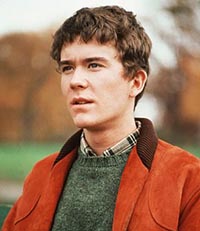 The
Academy's distinction between a leading and supporting role
has been murky since they began giving the supporting awards
in 1936, when Spencer Tracy was nominated for Best Actor for
his secondary role in San Francisco and Stuart Erwin
was nominated for Best Supporting Actor for his lead in Pigskin
Parade. The confusion has never been cleared up, with Barry
Fitzgerald being nominated for both Best Actor and Best
Supporting Actor for his performance in Going My Way,
Marlon Brando, Peter Finch and Louise Fletcher winning lead
Oscars for playing ancillary roles in The Godfather, Network and One Flew Over the Cuckoo's Nest, and George Burns,
Tatum O'Neal and Michael Caine being awarded supporting Oscars
for playing primary roles The Sunshine Boys, Paper Moon and Hannah and Her Sisters. But one of the most blatant
examples of a role being incorrectly classified was Timothy
Hutton's Conrad Jarrett, which was unquestionably the leading
role in Ordinary People. Hutton gave a fine performance,
but his placement in this classification was unfair to fellow
nominees Joe Pesci, Michael O'Keefe, Judd Hirsch and Jason Robards,
who really did play supporting roles. Hutton's inclusion in
this category raised no controversy at the time because he was
listed below Donald Sutherland and Mary Tyler Moore in the film's
credits, but his is the character which drives the film and
his Oscar would have been more honest if it had been for Best
Actor With Supporting Billing.
The
Academy's distinction between a leading and supporting role
has been murky since they began giving the supporting awards
in 1936, when Spencer Tracy was nominated for Best Actor for
his secondary role in San Francisco and Stuart Erwin
was nominated for Best Supporting Actor for his lead in Pigskin
Parade. The confusion has never been cleared up, with Barry
Fitzgerald being nominated for both Best Actor and Best
Supporting Actor for his performance in Going My Way,
Marlon Brando, Peter Finch and Louise Fletcher winning lead
Oscars for playing ancillary roles in The Godfather, Network and One Flew Over the Cuckoo's Nest, and George Burns,
Tatum O'Neal and Michael Caine being awarded supporting Oscars
for playing primary roles The Sunshine Boys, Paper Moon and Hannah and Her Sisters. But one of the most blatant
examples of a role being incorrectly classified was Timothy
Hutton's Conrad Jarrett, which was unquestionably the leading
role in Ordinary People. Hutton gave a fine performance,
but his placement in this classification was unfair to fellow
nominees Joe Pesci, Michael O'Keefe, Judd Hirsch and Jason Robards,
who really did play supporting roles. Hutton's inclusion in
this category raised no controversy at the time because he was
listed below Donald Sutherland and Mary Tyler Moore in the film's
credits, but his is the character which drives the film and
his Oscar would have been more honest if it had been for Best
Actor With Supporting Billing. 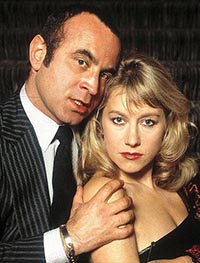 The
Long Good Friday was a spectacular gangster film featuring
a magnificent performance by Bob Hoskins as a tragic London
crime boss. It was a true breakout role for the Cockney actor,
who had also given an unforgettable television depiction of
Shakespeare's Iago in Othello in 1980 and would rise
to a brief period of stardom with his stage appearance as Nathan
Detroit in Guys and Dolls and films like Mona Lisa and Who Framed Roger Rabbit before choosing to cash in
on his unexpected fame with a string of flops like Heart
Condition, Super Mario Bros. and Mermaids and losing
the artistic momentum that he had been building. But 1980 was
a strong year for male performances, with Robert DeNiro in Raging
Bull, Jack Lemmon in Tribute, Peter O'Toole in The
Stunt Man, Robert Duvall in The Great Santini and
John Hurt in The Elephant Man receiving nominations (and
Timothy Hutton pulling a fast one by being listed in the inappropriate
Best Supporting Actor race), it is understandable that Hoskins
was overlooked. His costar Helen Mirren's brilliant
work as the gangster's beloved ladyfriend is a much more
dubious oversight, especially considering the nomination of
Goldie Hawn for doing her typical ditzy blonde shtick in the
box office smash Private Benjamin. Mirren is one of the
finest actresses in the world, best known for her stage work
and the British television series Prime Suspect and winning
Oscar nominations for her performances in the films The Madness
of King George and Gosford Park, and finally won
her first (overdue) Oscar for her performance as Elizabeth II
in The Queen in 2006.
The
Long Good Friday was a spectacular gangster film featuring
a magnificent performance by Bob Hoskins as a tragic London
crime boss. It was a true breakout role for the Cockney actor,
who had also given an unforgettable television depiction of
Shakespeare's Iago in Othello in 1980 and would rise
to a brief period of stardom with his stage appearance as Nathan
Detroit in Guys and Dolls and films like Mona Lisa and Who Framed Roger Rabbit before choosing to cash in
on his unexpected fame with a string of flops like Heart
Condition, Super Mario Bros. and Mermaids and losing
the artistic momentum that he had been building. But 1980 was
a strong year for male performances, with Robert DeNiro in Raging
Bull, Jack Lemmon in Tribute, Peter O'Toole in The
Stunt Man, Robert Duvall in The Great Santini and
John Hurt in The Elephant Man receiving nominations (and
Timothy Hutton pulling a fast one by being listed in the inappropriate
Best Supporting Actor race), it is understandable that Hoskins
was overlooked. His costar Helen Mirren's brilliant
work as the gangster's beloved ladyfriend is a much more
dubious oversight, especially considering the nomination of
Goldie Hawn for doing her typical ditzy blonde shtick in the
box office smash Private Benjamin. Mirren is one of the
finest actresses in the world, best known for her stage work
and the British television series Prime Suspect and winning
Oscar nominations for her performances in the films The Madness
of King George and Gosford Park, and finally won
her first (overdue) Oscar for her performance as Elizabeth II
in The Queen in 2006. 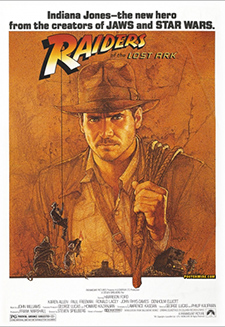 It's
fun to ponder what goes through an Academy member's mind when
they fill out their ballots for Best Picture. It's hard not
to believe that there are frequently mental conversations
that go "Spider-Man II was the film that I enjoyed
the most and did the best job of delivering what it intended,
but this is a Serious award and I have to choose something
that isn't so artistically unpretentious." There must
have been a lot of mental conversations like that one in 1981
when the Academy chose Chariots of Fire, director
Hugh Hudson's account of 1924 Olympics, for its top prize
- a sumptuously produced drama made by high pedigree British
talent that is so unremittingly bland that it's difficult
to remember anything about it (except for Vangellis' powerfully
effective Oscar-winning score). If the Academy felt the urge
to choose a high-minded drama for Best Picture, they might
have gone with the far more ingratiating nominees Reds,
On Golden Pond or Atlantic City, but in 1981 they
seemed to be on a mission to award their top prize to the
least entertaining film possible.
It's
fun to ponder what goes through an Academy member's mind when
they fill out their ballots for Best Picture. It's hard not
to believe that there are frequently mental conversations
that go "Spider-Man II was the film that I enjoyed
the most and did the best job of delivering what it intended,
but this is a Serious award and I have to choose something
that isn't so artistically unpretentious." There must
have been a lot of mental conversations like that one in 1981
when the Academy chose Chariots of Fire, director
Hugh Hudson's account of 1924 Olympics, for its top prize
- a sumptuously produced drama made by high pedigree British
talent that is so unremittingly bland that it's difficult
to remember anything about it (except for Vangellis' powerfully
effective Oscar-winning score). If the Academy felt the urge
to choose a high-minded drama for Best Picture, they might
have gone with the far more ingratiating nominees Reds,
On Golden Pond or Atlantic City, but in 1981 they
seemed to be on a mission to award their top prize to the
least entertaining film possible.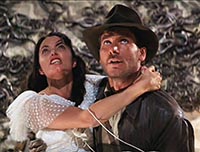 With
this mindset, it's surprising that one of the most unpretentious
and entertaining films ever made was nominated for Best Picture. Raiders of the Lost Ark was the seminal teaming of
super-showmen Steven Spielberg and George Lucas, filled with
some of the most celebrated scenes ever filmed (the opening
sequence of Indiana Jones trying to retrieve a golden idol
from its underground vault seems to have been parodied by
every animated television series ever created). It is actually
a credit to the Academy that Raiders was considered
for the top prize at at all, since summer blockbusters are
usually consigned to the technical awards and nothing else.
But this first entry in the Indiana Jones saga has always
been considered something unique, and time has proven it to
be the most memorable film made in 1981, as well as the best.
With
this mindset, it's surprising that one of the most unpretentious
and entertaining films ever made was nominated for Best Picture. Raiders of the Lost Ark was the seminal teaming of
super-showmen Steven Spielberg and George Lucas, filled with
some of the most celebrated scenes ever filmed (the opening
sequence of Indiana Jones trying to retrieve a golden idol
from its underground vault seems to have been parodied by
every animated television series ever created). It is actually
a credit to the Academy that Raiders was considered
for the top prize at at all, since summer blockbusters are
usually consigned to the technical awards and nothing else.
But this first entry in the Indiana Jones saga has always
been considered something unique, and time has proven it to
be the most memorable film made in 1981, as well as the best. 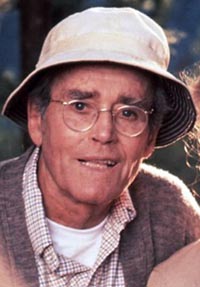 Timing
plays a huge part in the acting Academy Awards. It's doubtful
that awards would have been given to John Wayne in True Grit,
Paul Newman in The Color of Money or Jack Palance in City Slickers if they had won the Oscar already, while
it's equally possible that Oscars might have been given to James
Stewart in Anatomy of a Murder, Bette Davis in All
About Eve or Charles Laughton in Mutiny on the Bounty if they didn't already have a statuette at home. This kind of
timing played a huge part in the remarkable Henry Fonda's
Oscar win for his unremarkable performance in the senior tearjerker On Golden Pond. If Fonda had won the Oscar he deserved
in 1940 for The Grapes of Wrath, it's doubtful that he
would have received such recognition and the award would have
gone to the 1960 Best Actor winner Burt Lancaster for Atlantic
City, a performance that won almost all of the pre-Oscar
awards. Of course in the Hindsight Award race, Fonda has already
won for The Grapes of Wrath and Lancaster's Elmer
Gantry award was taken by Spencer Tracy in Inherit the Wind,
so it can be argued that we're just as guilty of rank sentimentality
as the Academy.
Timing
plays a huge part in the acting Academy Awards. It's doubtful
that awards would have been given to John Wayne in True Grit,
Paul Newman in The Color of Money or Jack Palance in City Slickers if they had won the Oscar already, while
it's equally possible that Oscars might have been given to James
Stewart in Anatomy of a Murder, Bette Davis in All
About Eve or Charles Laughton in Mutiny on the Bounty if they didn't already have a statuette at home. This kind of
timing played a huge part in the remarkable Henry Fonda's
Oscar win for his unremarkable performance in the senior tearjerker On Golden Pond. If Fonda had won the Oscar he deserved
in 1940 for The Grapes of Wrath, it's doubtful that he
would have received such recognition and the award would have
gone to the 1960 Best Actor winner Burt Lancaster for Atlantic
City, a performance that won almost all of the pre-Oscar
awards. Of course in the Hindsight Award race, Fonda has already
won for The Grapes of Wrath and Lancaster's Elmer
Gantry award was taken by Spencer Tracy in Inherit the Wind,
so it can be argued that we're just as guilty of rank sentimentality
as the Academy. 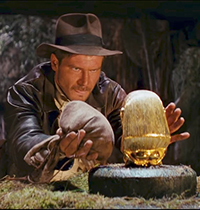 When
1981 Hindsight Awards Best Actor Burt Lancaster was asked who
he thought was overlooked in that year's Oscar race, he named Raiders of the Lost Ark star Harrison Ford for
his performance as Indiana Jones. "He's a remarkably good
actor," said Lancaster. "In that role you have to
bring something special to it, to be funny as well as a good
actor." Ford certainly was special as the thrillseeking
archeologist and his sarcastic delivery brought as much to the
classic film as Spielberg's lightning-paced direction. It's
rare where an actor is nominated for an action/adventure film,
and Ford is no exception, winning his only nomination for his
dramatic turn as a policeman hiding out with the Amish in Witness.
But he did his best work in Raiders of the Lost Ark,
and while it may not be the kind of acting that gets Academy
Award nominations, it is a performance that has taken its place
as one of the great icons in film lore.
When
1981 Hindsight Awards Best Actor Burt Lancaster was asked who
he thought was overlooked in that year's Oscar race, he named Raiders of the Lost Ark star Harrison Ford for
his performance as Indiana Jones. "He's a remarkably good
actor," said Lancaster. "In that role you have to
bring something special to it, to be funny as well as a good
actor." Ford certainly was special as the thrillseeking
archeologist and his sarcastic delivery brought as much to the
classic film as Spielberg's lightning-paced direction. It's
rare where an actor is nominated for an action/adventure film,
and Ford is no exception, winning his only nomination for his
dramatic turn as a policeman hiding out with the Amish in Witness.
But he did his best work in Raiders of the Lost Ark,
and while it may not be the kind of acting that gets Academy
Award nominations, it is a performance that has taken its place
as one of the great icons in film lore.
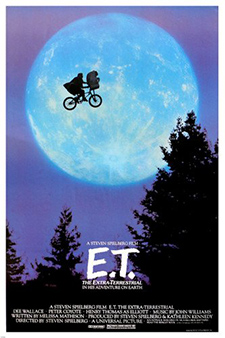 Richard
Attenborough spent twenty years trying to get his film about
the life of Mahatma Gandhi made, and the result was a David
Lean-like epic with a high-mindedness that borders on the
preachy. The Academy loves sanctimonious films like Gandhi,
and stories like the uphill making of films like Gandhi even more, so their selection of it as Best Picture is a perfectly
understandable, if predictable, one. In fact, Gandhi is a fine film, with Attenborough's passion evident in every
frame and wonderful performances by its cast, especially Ben
Kingsley in the title role (the lone exception is Candice
Bergan, who stands out like a sore thumb in her few awkward
scenes as photographer Margaret Bourke-White). But 1982 was
filled with fine films, with nominees ET the Extraterrestrial,
Missing, The Verdict and Tootsie all being reasonable
contenders for the Best Picture crown. But the best of these
was Steven Spielberg's box office champ about the little alien
trying to go home. ET was only the second science fiction
film ever nominated for Best Picture (after Star Wars),
and given the Academy's distaste for the genre and the backlash
against the film after it became a cash cow for Universal,
it's not surprising that it failed to win the Best Picture
award against Attenborough's somber testimonial to the Great
Spirit. But ET the Extraterrestrial is a vastly more
engaging and memorable film, and should have been awarded
the Best Picture, Director, Cinematography, and Sound Oscars
in addition to the Oscars for Original Score, Visual Effects
and Sound Effects Editing that it received.
Richard
Attenborough spent twenty years trying to get his film about
the life of Mahatma Gandhi made, and the result was a David
Lean-like epic with a high-mindedness that borders on the
preachy. The Academy loves sanctimonious films like Gandhi,
and stories like the uphill making of films like Gandhi even more, so their selection of it as Best Picture is a perfectly
understandable, if predictable, one. In fact, Gandhi is a fine film, with Attenborough's passion evident in every
frame and wonderful performances by its cast, especially Ben
Kingsley in the title role (the lone exception is Candice
Bergan, who stands out like a sore thumb in her few awkward
scenes as photographer Margaret Bourke-White). But 1982 was
filled with fine films, with nominees ET the Extraterrestrial,
Missing, The Verdict and Tootsie all being reasonable
contenders for the Best Picture crown. But the best of these
was Steven Spielberg's box office champ about the little alien
trying to go home. ET was only the second science fiction
film ever nominated for Best Picture (after Star Wars),
and given the Academy's distaste for the genre and the backlash
against the film after it became a cash cow for Universal,
it's not surprising that it failed to win the Best Picture
award against Attenborough's somber testimonial to the Great
Spirit. But ET the Extraterrestrial is a vastly more
engaging and memorable film, and should have been awarded
the Best Picture, Director, Cinematography, and Sound Oscars
in addition to the Oscars for Original Score, Visual Effects
and Sound Effects Editing that it received.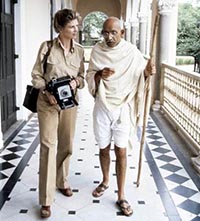 The
one award that Gandhi received that created any controversy
was John Mollo and Bhanu Athaiya's for Best Costume Design,
the predominant thinking being that the designers couldn't have
contributed that impressive a result when the main character
spent most of the film wearing a bedsheet. To be fair, this
is a remarkably simplistic conclusion to reach when you consider
that Gandhi features a cast of thousands, most of whom
did not wear bedsheets. Even so, Gandhi's costume design
is relatively unimpressive,and it's reasonable to assume that
it received the award more because of the general admiration
for the film as a whole than for the outstanding achievement
in this particular category. In fact, a far more outstanding
design was contributed by nominee Patricia Norris for Victor/Victoria,
but she had the disadvantage of not working for a director who
spent twenty years trying to get his film made.
The
one award that Gandhi received that created any controversy
was John Mollo and Bhanu Athaiya's for Best Costume Design,
the predominant thinking being that the designers couldn't have
contributed that impressive a result when the main character
spent most of the film wearing a bedsheet. To be fair, this
is a remarkably simplistic conclusion to reach when you consider
that Gandhi features a cast of thousands, most of whom
did not wear bedsheets. Even so, Gandhi's costume design
is relatively unimpressive,and it's reasonable to assume that
it received the award more because of the general admiration
for the film as a whole than for the outstanding achievement
in this particular category. In fact, a far more outstanding
design was contributed by nominee Patricia Norris for Victor/Victoria,
but she had the disadvantage of not working for a director who
spent twenty years trying to get his film made. 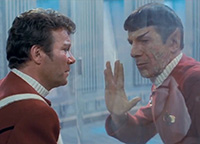 It is often argued what are the most underrated movies of all time. For our money, the title goes to Star Trek II: The Wrath of Khan. It's not that the tale of Khan Noonien Singh's obsessive quest for revenge against James T. Kirk and the USS Enterprise isn't highly regarded (it's become the Star Trek franchise's go-to story whenever it cranks out a new reboot). But the quality of The Wrath of Khan is always discussed in the context of the Star Trek universe or the science fiction genre. We contend that it ranks among the best and most influential films of the 1980s with especially superb performances by Ricardo Montalban in the title role and Leonard Nimoy as the iconic Mr. Spock. Nimoy received three Emmy nominations for playing the Vulcan science officer although when the series was rebooted as a movie franchise, his presence in the cast seemed taken for granted. But he supplies a performance of remarkable subtlety and poignancy in The Wrath of Khan with one of the most moving and memorable death scenes in movie history. An episode of Seinfeld once parodied the film and when the scene is brought up, Jerry sagely concludes that "it's a helluva thing when Spock dies." We'll go further than that and say that it is one of the few scenes and performances that consistently moves us to tears. A helluva thing, indeed.
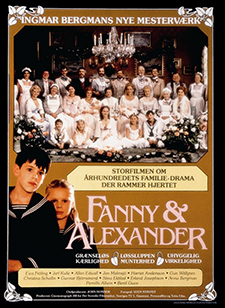 Terms
of Endearment was the overwhelming favorite at the 1983
Academy Awards, James L. Brooks' motion picture debut after
immortalizing himself with work on television series like The Mary Tyler Moore Show, Rhoda, and Taxi (and
later his crowning achievement, The Simpsons). The
film won universal acclaim and most of the pre-Oscar awards,
including the DGA Award for Brooks who would go on to win
three Oscars for producing, directing, and writing it. But
watched now, it's hard to understand what all the fuss was
about, as Terms of Endearment comes off merely as a
moderately clever soap opera. Well acted by Shirley MacLaine
and Jack Nicholson, the film's eccentric characters now seem
quirky for the sake of being quirky and its major plot contrivance,
MacLaine's daughter Debra Winger dealing with life-threatening
cancer, seems more appropriate for a potboiler on the Lifetime
channel than for the Oscar winner for Best Picture.
Terms
of Endearment was the overwhelming favorite at the 1983
Academy Awards, James L. Brooks' motion picture debut after
immortalizing himself with work on television series like The Mary Tyler Moore Show, Rhoda, and Taxi (and
later his crowning achievement, The Simpsons). The
film won universal acclaim and most of the pre-Oscar awards,
including the DGA Award for Brooks who would go on to win
three Oscars for producing, directing, and writing it. But
watched now, it's hard to understand what all the fuss was
about, as Terms of Endearment comes off merely as a
moderately clever soap opera. Well acted by Shirley MacLaine
and Jack Nicholson, the film's eccentric characters now seem
quirky for the sake of being quirky and its major plot contrivance,
MacLaine's daughter Debra Winger dealing with life-threatening
cancer, seems more appropriate for a potboiler on the Lifetime
channel than for the Oscar winner for Best Picture. If
this seems like harsh criticism of Terms of Endearment,
it is in part because Brooks' comic melodrama was honored
over Ingmar Bergman's astonishing five hour (in its original
version) epic about the isolation and powerlessness of childhood, Fanny and Alexander. Foreign films were rarely well
represented at the Oscars until recent years, but Bergman's
masterpiece was an exception, being nominated for Best Director
and Screenplay Written Directly For the Screen, and actually
winning the Oscars for Foreign Film, Art Direction-Set Direction,
Costume Design and Cinematography; a record total for a foreign
language film that has since been broken. Fanny and Alexander is such a gracefully exquisite film that anything else released
in 1983 seems almost vulgar by comparison.
If
this seems like harsh criticism of Terms of Endearment,
it is in part because Brooks' comic melodrama was honored
over Ingmar Bergman's astonishing five hour (in its original
version) epic about the isolation and powerlessness of childhood, Fanny and Alexander. Foreign films were rarely well
represented at the Oscars until recent years, but Bergman's
masterpiece was an exception, being nominated for Best Director
and Screenplay Written Directly For the Screen, and actually
winning the Oscars for Foreign Film, Art Direction-Set Direction,
Costume Design and Cinematography; a record total for a foreign
language film that has since been broken. Fanny and Alexander is such a gracefully exquisite film that anything else released
in 1983 seems almost vulgar by comparison.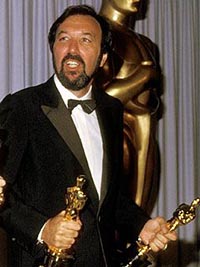 Only
six people have won the Best Director Oscar for the first film
they directed. The fourth in line to make that accomplishment
was James L. Brooks for his film adaptation of the novel Terms of Endearment. Brooks was brought onto the project
by former screen star Jennifer Jones, who owned the movie rights
to Larry McMurty's source novel and envisioned it as her comeback
film. Brooks' vision for the film ultimately didn't include
Jennifer Jones however, and he tactfully removed her from the
project, casting Shirley MacLaine (who was excellent in the
role). Brooks provided a witty, observant screenplay but his
triumph is much more as a writer than director, and his camera
eye is not remotely on the same lyrical level as Ingmar Bergman's
for Fanny and Alexander or Bruce Beresford's for Tender
Mercies. Brooks' subsequent output as a director has been
a mixed bag, combining a hit (Broadcast News) with misses
(I'll Do Anything, Spanglish) with an oddball collection
of plusses and minuses (As Good As It Gets, whose
mentally unbalanced central character - brilliantly played by
Jack Nicholson - frequently comes off as much more disturbing
than amusing), winning nominations as a writer and producer,
but never again as a director.
Only
six people have won the Best Director Oscar for the first film
they directed. The fourth in line to make that accomplishment
was James L. Brooks for his film adaptation of the novel Terms of Endearment. Brooks was brought onto the project
by former screen star Jennifer Jones, who owned the movie rights
to Larry McMurty's source novel and envisioned it as her comeback
film. Brooks' vision for the film ultimately didn't include
Jennifer Jones however, and he tactfully removed her from the
project, casting Shirley MacLaine (who was excellent in the
role). Brooks provided a witty, observant screenplay but his
triumph is much more as a writer than director, and his camera
eye is not remotely on the same lyrical level as Ingmar Bergman's
for Fanny and Alexander or Bruce Beresford's for Tender
Mercies. Brooks' subsequent output as a director has been
a mixed bag, combining a hit (Broadcast News) with misses
(I'll Do Anything, Spanglish) with an oddball collection
of plusses and minuses (As Good As It Gets, whose
mentally unbalanced central character - brilliantly played by
Jack Nicholson - frequently comes off as much more disturbing
than amusing), winning nominations as a writer and producer,
but never again as a director. 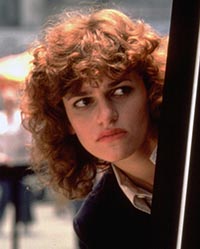 The
National Society of Film Critics awarded their Best Supporting Actress
prize to Sandra Bernhard for her outrageous performance
as Robert DeNiro's partner in crime in Martin Scorseses' dark
comic masterpiece The King of Comedy. Berhard provided
a volatile characterization as an obsessed fan who takes part
in n outlandish plot to kidnap the film's Johnny Carson surrogate
(played by Jerry Lewis in an overrated performance). The result
was one of the most original and effective performances of the
decade, overlooked by the Academy in favor of routine work by
Glenn Close in The Big Chill and Amy Irving in Yentl. The King of Comedy was only Bernhard's second film and
she was never offered such an effective part again, but her
performance as Masha is an immortal testament to an unusual
talent.
The
National Society of Film Critics awarded their Best Supporting Actress
prize to Sandra Bernhard for her outrageous performance
as Robert DeNiro's partner in crime in Martin Scorseses' dark
comic masterpiece The King of Comedy. Berhard provided
a volatile characterization as an obsessed fan who takes part
in n outlandish plot to kidnap the film's Johnny Carson surrogate
(played by Jerry Lewis in an overrated performance). The result
was one of the most original and effective performances of the
decade, overlooked by the Academy in favor of routine work by
Glenn Close in The Big Chill and Amy Irving in Yentl. The King of Comedy was only Bernhard's second film and
she was never offered such an effective part again, but her
performance as Masha is an immortal testament to an unusual
talent.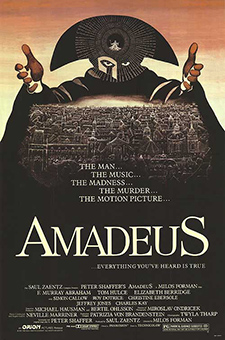 1984
was a bland movie year, with no great films and only a handful
of very good ones. The best was the Academy’s choice,
Milos Foreman’s film version of Peter Schaeffer’s
play about Mozart, Amadeus. Schaeffer did a terrific
job of adapting the screenplay to the new medium, especially
in making Mozart’s nemesis Antonio Salieri the instigator
of the plot to take credit for Mozart’s Requiem Mass
(in the play, an unseen third party is behind the scheme).
Foreman made some bold casting choices in bypassing the famous
names who had played the roles on stage (Ian McKellen and
Tim Curry played Salieri and Mozart in the Broadway production,
and Paul Scofield created the role of Salieri in the play’s
premiere at the National Theatre of Great Britain), choosing
virtual unknowns F. Murray Abraham and Tom Hulce, who responded
to the gamble with brilliant Academy Award nominated performances.
Abraham is particularly memorable in his Oscar-winning role
as the jealous Salieri, and his failure to procure any additional
quality movie roles is bewildering (he has had the most undistinguished
film career of any Best Actor Oscar winner). Foreman’s
direction occasionally lapses into bad taste (his attempts
to elicit comedy from the behavior of members of the Austrian
court are painfully broad), although he did get wonderful
performances from Jeffrey Jones, Roy Dotrice, and Simon Callow
(who created the role of Mozart in the London stage production)
playing a Music Hall singer/manager who stages the premiere
of The Magic Flute. Far less persuasive is Elizabeth
Berridge as Mozart’s wife Stanzy, whose unconvincing
performance comes off as incompatibly modern compared to her
fellow cast members, and her lack of subsequent film success
is much more understandable than Abraham’s.
1984
was a bland movie year, with no great films and only a handful
of very good ones. The best was the Academy’s choice,
Milos Foreman’s film version of Peter Schaeffer’s
play about Mozart, Amadeus. Schaeffer did a terrific
job of adapting the screenplay to the new medium, especially
in making Mozart’s nemesis Antonio Salieri the instigator
of the plot to take credit for Mozart’s Requiem Mass
(in the play, an unseen third party is behind the scheme).
Foreman made some bold casting choices in bypassing the famous
names who had played the roles on stage (Ian McKellen and
Tim Curry played Salieri and Mozart in the Broadway production,
and Paul Scofield created the role of Salieri in the play’s
premiere at the National Theatre of Great Britain), choosing
virtual unknowns F. Murray Abraham and Tom Hulce, who responded
to the gamble with brilliant Academy Award nominated performances.
Abraham is particularly memorable in his Oscar-winning role
as the jealous Salieri, and his failure to procure any additional
quality movie roles is bewildering (he has had the most undistinguished
film career of any Best Actor Oscar winner). Foreman’s
direction occasionally lapses into bad taste (his attempts
to elicit comedy from the behavior of members of the Austrian
court are painfully broad), although he did get wonderful
performances from Jeffrey Jones, Roy Dotrice, and Simon Callow
(who created the role of Mozart in the London stage production)
playing a Music Hall singer/manager who stages the premiere
of The Magic Flute. Far less persuasive is Elizabeth
Berridge as Mozart’s wife Stanzy, whose unconvincing
performance comes off as incompatibly modern compared to her
fellow cast members, and her lack of subsequent film success
is much more understandable than Abraham’s. 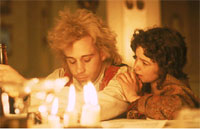 The
film also has the unsettling feeling of having a scene missing
when Stanzy leaves Mozart because he has been obsessively
working on The Magic Flute - an opera that has little
chance of financial success - as he neglects his wealthy patron's
lucrative commission of the Requiem Mass. But after her histrionic
exit, she makes an unexpected return and has inexplicably
cultivated the completely opposite conviction that the Mass
is now killing Mozart and he is never to work on it again.
In the version released in theatres, she has also acquired a sudden distrust of Solieri on her
arrival, despite his being her secret confidante in everything
leading up to that scene (the Director's Cut DVD restored an ommitted sequence where Salieri makes an aborted attempt to seduce her, explaining her dislike of him but not of the Requiem Mass). But
despite its unevenness, Amadeus has some remarkable
sequences, particularly the exciting climax where Salieri
transcribes Mozart’s dictation of the Requiem (one of
the most electrifying depictions of artistic creation in film
history) and while it may have faced an uphill battle for
the award in a stronger year, it was the deserving winner
in 1984.
The
film also has the unsettling feeling of having a scene missing
when Stanzy leaves Mozart because he has been obsessively
working on The Magic Flute - an opera that has little
chance of financial success - as he neglects his wealthy patron's
lucrative commission of the Requiem Mass. But after her histrionic
exit, she makes an unexpected return and has inexplicably
cultivated the completely opposite conviction that the Mass
is now killing Mozart and he is never to work on it again.
In the version released in theatres, she has also acquired a sudden distrust of Solieri on her
arrival, despite his being her secret confidante in everything
leading up to that scene (the Director's Cut DVD restored an ommitted sequence where Salieri makes an aborted attempt to seduce her, explaining her dislike of him but not of the Requiem Mass). But
despite its unevenness, Amadeus has some remarkable
sequences, particularly the exciting climax where Salieri
transcribes Mozart’s dictation of the Requiem (one of
the most electrifying depictions of artistic creation in film
history) and while it may have faced an uphill battle for
the award in a stronger year, it was the deserving winner
in 1984. A
trio of dramas depicting struggling farmers in the Depression
came out in 1984 featuring Oscar nominated performances by three
fine actresses: Sally Field in Places of the Heart, Jessica
Lange in Country and Sissy Spacek in The River. Places in the Heart was the most successful of the dustbowl
dramas, receiving nominations for Best Picture and Best Director
and winning the Oscars for Best Actress for Field and Best Screenplay
Written Directly for the Screen for Robert Benton's sincere
but episodic and somewhat tedious script. Benton's work, inspired
by his mother, was clearly a labor of love but it lacked the
strength and originality of nominated screenplays for Broadway
Danny Rose and Splash. Benton's had a phenomenally successful career, winning Oscars for Kramer vs. Kramer and Places in the Heart and nominations for Bonnie and Clyde (1967), The Late Show (1978) and one final piece of syrupy hokum, Nobody's Fool (1994).
A
trio of dramas depicting struggling farmers in the Depression
came out in 1984 featuring Oscar nominated performances by three
fine actresses: Sally Field in Places of the Heart, Jessica
Lange in Country and Sissy Spacek in The River. Places in the Heart was the most successful of the dustbowl
dramas, receiving nominations for Best Picture and Best Director
and winning the Oscars for Best Actress for Field and Best Screenplay
Written Directly for the Screen for Robert Benton's sincere
but episodic and somewhat tedious script. Benton's work, inspired
by his mother, was clearly a labor of love but it lacked the
strength and originality of nominated screenplays for Broadway
Danny Rose and Splash. Benton's had a phenomenally successful career, winning Oscars for Kramer vs. Kramer and Places in the Heart and nominations for Bonnie and Clyde (1967), The Late Show (1978) and one final piece of syrupy hokum, Nobody's Fool (1994). There
were a number of impressive performances by actors in supporting
roles in 1984. It’s impossible to fault the Academy for
their selection of Haing Ngor, whose performance as Cambodian
photographer Dith Pran in The Killing Fields mirrored
his own tragic experience as prisoner of the Khmer Rouge, but
they overlooked several other remarkable performances in this
category including Jeffrey Jones’ whimsical Emperor Joseph
II in Amadeus and John Candy giving the finest performance
of his tragically brief career in Splash. But
the best of this unappreciated lot was Richard Burton as O’Brien, the sinister Party insider in 1984.
Burton had been wasting his talent on atrocious movies like Exorcist II: The Heretic, The Medusa Touch and Circle
of Two in recent years, but managed to pull it together
for one last great performance in the faithful adaptation of
George Orwell’s novel that was filmed in the time period
and locations in which the story was set. Burton was spellbinding
as the tormentor of Winston Smith (memorably played by a perfectly
cast John Hurt), but failed to receive a nomination despite
the enormous sentiment towards his fine performance because
of his death prior to the film’s release. Ralph Richardson
died in 1984 as well, and it is possible that his posthumous
nomination for Greystoke may have hurt Burton’s
Oscar chances. It is doubtful that Burton would have won the
award in the face of the overwhelming sentimental support for
Ngor, but his O’Brien was a final glimpse of greatness
from a talent that never seemed to fulfill its incredible potential
and a nomination would have been a fitting tribute. Ngor, sadly,
didn’t benefit from his Oscar glory in a manner that befits
most Academy Award winners. He appeared in a handful of minor
films after The Killing Fields and was ultimately gunned
down in his own front yard by gang members who were intent on
stealing a locket containing a photograph of his late wife.
There
were a number of impressive performances by actors in supporting
roles in 1984. It’s impossible to fault the Academy for
their selection of Haing Ngor, whose performance as Cambodian
photographer Dith Pran in The Killing Fields mirrored
his own tragic experience as prisoner of the Khmer Rouge, but
they overlooked several other remarkable performances in this
category including Jeffrey Jones’ whimsical Emperor Joseph
II in Amadeus and John Candy giving the finest performance
of his tragically brief career in Splash. But
the best of this unappreciated lot was Richard Burton as O’Brien, the sinister Party insider in 1984.
Burton had been wasting his talent on atrocious movies like Exorcist II: The Heretic, The Medusa Touch and Circle
of Two in recent years, but managed to pull it together
for one last great performance in the faithful adaptation of
George Orwell’s novel that was filmed in the time period
and locations in which the story was set. Burton was spellbinding
as the tormentor of Winston Smith (memorably played by a perfectly
cast John Hurt), but failed to receive a nomination despite
the enormous sentiment towards his fine performance because
of his death prior to the film’s release. Ralph Richardson
died in 1984 as well, and it is possible that his posthumous
nomination for Greystoke may have hurt Burton’s
Oscar chances. It is doubtful that Burton would have won the
award in the face of the overwhelming sentimental support for
Ngor, but his O’Brien was a final glimpse of greatness
from a talent that never seemed to fulfill its incredible potential
and a nomination would have been a fitting tribute. Ngor, sadly,
didn’t benefit from his Oscar glory in a manner that befits
most Academy Award winners. He appeared in a handful of minor
films after The Killing Fields and was ultimately gunned
down in his own front yard by gang members who were intent on
stealing a locket containing a photograph of his late wife.
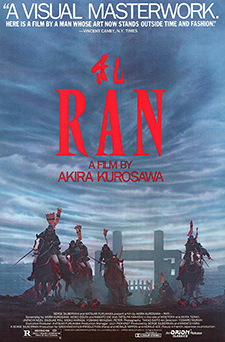 Two
austere dramas went head to head at the 1985 Academy Awards,
with eleven nominations each for Out of Africa and The Color Purple. Out of Africa was the big winner,
with seven awards to The Color Purple's zero, the latter
total a huge surprise to pundits who expected the ceremony
to turn into a show of support for Steven Spielberg (who wasn't
nominated for Best Director despite his film's popularity
in the other categories). In fact, neither film deserved the
plaudits they received, both being maudlin, overlong bores
featuring wooden performances by leading actors (Whoopi Goldberg
and Robert Redford); but they fit the Academy criterium of
self-importance to a tee. Of the two, Out of Africa (loosely based on the memoirs of Danish aristocrat Karen Dinesen)
is certainly the superior film (Meryl Streep and Klaus Maria
Brandauer both deliver excellent performances as Dinesen and
her husband), but for all its pictorial splendor it is ultimately
meaningless. It is a shame that the Academy was taken in by
such empty opulence, as 1985 contained some delightfully inventive
movies that weren't considered for the Best Picture Award: The Purple Rose of Cairo, Back to the Future, Brazil, and After Hours were quirky, original films that were
wildly entertaining with something to say about the human
condition, but perhaps not highfalutin' enough to be taken
seriously by the Academy snobs.
Two
austere dramas went head to head at the 1985 Academy Awards,
with eleven nominations each for Out of Africa and The Color Purple. Out of Africa was the big winner,
with seven awards to The Color Purple's zero, the latter
total a huge surprise to pundits who expected the ceremony
to turn into a show of support for Steven Spielberg (who wasn't
nominated for Best Director despite his film's popularity
in the other categories). In fact, neither film deserved the
plaudits they received, both being maudlin, overlong bores
featuring wooden performances by leading actors (Whoopi Goldberg
and Robert Redford); but they fit the Academy criterium of
self-importance to a tee. Of the two, Out of Africa (loosely based on the memoirs of Danish aristocrat Karen Dinesen)
is certainly the superior film (Meryl Streep and Klaus Maria
Brandauer both deliver excellent performances as Dinesen and
her husband), but for all its pictorial splendor it is ultimately
meaningless. It is a shame that the Academy was taken in by
such empty opulence, as 1985 contained some delightfully inventive
movies that weren't considered for the Best Picture Award: The Purple Rose of Cairo, Back to the Future, Brazil, and After Hours were quirky, original films that were
wildly entertaining with something to say about the human
condition, but perhaps not highfalutin' enough to be taken
seriously by the Academy snobs.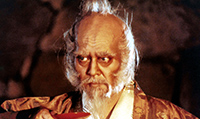 There
was one sumptuously produced epic that was so arty that it
was based on a Shakespearean tragedy, but it was ruled out
of the running because it committed the unpardonable sin of
not being spoken in English. But the fact is that Ran,
Akira Kurasawa's vision of King Lear, was not only
the finest film released in 1985, it is one of the most towering
artistic achievements of the twentieth century: Shakespeare's
most timeless masterpiece brought to breathtaking life by
the most inspired and original interpreters of his work on
film. Ran did remarkably well at the Oscars for a foreign
film, winning nominations for Director, Cinematography and
Art Direction-Set Direction and winning the Oscar for Emi
Wada's stunning costume design, but its failure to be nominated
(and win) the Best Picture award over the vastly inferior Out of Africa and The Color Purple is proof
positive that an Academy Award is not necessarily an indication
of true quality.
There
was one sumptuously produced epic that was so arty that it
was based on a Shakespearean tragedy, but it was ruled out
of the running because it committed the unpardonable sin of
not being spoken in English. But the fact is that Ran,
Akira Kurasawa's vision of King Lear, was not only
the finest film released in 1985, it is one of the most towering
artistic achievements of the twentieth century: Shakespeare's
most timeless masterpiece brought to breathtaking life by
the most inspired and original interpreters of his work on
film. Ran did remarkably well at the Oscars for a foreign
film, winning nominations for Director, Cinematography and
Art Direction-Set Direction and winning the Oscar for Emi
Wada's stunning costume design, but its failure to be nominated
(and win) the Best Picture award over the vastly inferior Out of Africa and The Color Purple is proof
positive that an Academy Award is not necessarily an indication
of true quality.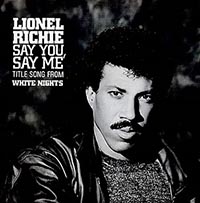 The
Academy occasionally gives their Best Song award to radio hits
that have little connection to the film that they are associated
with. The best example of this is "Say You, Say Me," whose only claim to being a film song was that it was played
over the end credits of White Knights, a god-awful mess
about an expatriate Russian dancer played by Mikhail Barishnikov
trying to escape from the Soviet Union after his plane goes
down. Lionel Richie's top 40 hit was a pleasant little ditty
played so deeply into the end of the film's final scroll that
you would have had to stick around to find out who the caterer
was to hear it and had absolutely nothing to do with the story
which had just unfolded (except that its lyrics were as nonsensical
as the film's screenplay). A far better choice would have been
"Miss Celie's Blues" from The Color Purple,
which not only had the disadvantage of not being a radio hit,
but being performed by one of the film's characters within the
course of the story.
The
Academy occasionally gives their Best Song award to radio hits
that have little connection to the film that they are associated
with. The best example of this is "Say You, Say Me," whose only claim to being a film song was that it was played
over the end credits of White Knights, a god-awful mess
about an expatriate Russian dancer played by Mikhail Barishnikov
trying to escape from the Soviet Union after his plane goes
down. Lionel Richie's top 40 hit was a pleasant little ditty
played so deeply into the end of the film's final scroll that
you would have had to stick around to find out who the caterer
was to hear it and had absolutely nothing to do with the story
which had just unfolded (except that its lyrics were as nonsensical
as the film's screenplay). A far better choice would have been
"Miss Celie's Blues" from The Color Purple,
which not only had the disadvantage of not being a radio hit,
but being performed by one of the film's characters within the
course of the story. 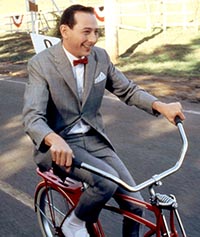 The
conventional scripts for Witness and Out of Africa won the screenplay awards this year over the far more original
nominees Back to the Future, Brazil, The Purple Rose of Cairo,
Kiss of the Spider Woman and Prizzi's Honor. With
the Academy showing such pedestrian taste, it's not surprising
that one of the most refreshing and inventive scripts of the
decade failed to make the cut. Phil Hartman and Paul Reubens'
screenplay for Pee Wee's Big Adventure made for
a wild roller coaster of a film featuring one of the most unusual
leading characters in movie history - not the type of film that
usually receives Oscar nominations, but such an inventively
original one that it's difficult to categorize it into a type
at all. Reubens returned to the character in Big Top Pee-wee (1988) when he unsuccessfully tried to present Pee-wee as a romantic leading man and again in Pee-wee's Big Holiday (2016) where at the age of 56, Pee-wee's pre-pubescent antics seemed far more creepy than amusing. Like the proverbial little girl with the curly hair, when Pee-wee was good, he was very good, but when he was bad, he was terrible.
The
conventional scripts for Witness and Out of Africa won the screenplay awards this year over the far more original
nominees Back to the Future, Brazil, The Purple Rose of Cairo,
Kiss of the Spider Woman and Prizzi's Honor. With
the Academy showing such pedestrian taste, it's not surprising
that one of the most refreshing and inventive scripts of the
decade failed to make the cut. Phil Hartman and Paul Reubens'
screenplay for Pee Wee's Big Adventure made for
a wild roller coaster of a film featuring one of the most unusual
leading characters in movie history - not the type of film that
usually receives Oscar nominations, but such an inventively
original one that it's difficult to categorize it into a type
at all. Reubens returned to the character in Big Top Pee-wee (1988) when he unsuccessfully tried to present Pee-wee as a romantic leading man and again in Pee-wee's Big Holiday (2016) where at the age of 56, Pee-wee's pre-pubescent antics seemed far more creepy than amusing. Like the proverbial little girl with the curly hair, when Pee-wee was good, he was very good, but when he was bad, he was terrible.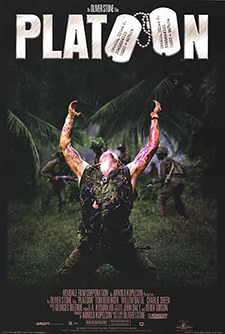 There
were three great films up for the Best Picture Oscar in 1986:
Woody Allen's Chekhovian Hannah and Her Sisters, the
seminal achievement of the Merchant/Ivory partnership A
Room With a View, and the Academy's choice, Oliver Stone's
ride down a cinematic razor blade, Platoon. Any of
these three masterpieces would have been a fine selection
for Best Picture (Hannah and Her Sisters and Room
With a View split the two screenplay awards), but Platoon is unique in being one of the few films set within the context
of the Vietnam war which seems to understand what makes that
conflict different from other wars America has fought in the
past. It is not an easy film to watch - Stone keeps his audience
constantly on edge with the same tension that the soldiers
are under so that attending a screening of Platoon seems like an ultra-concentrated tour of duty in Vietnam.
A far less pleasant experience than the elegant romance of A Room With a View or the intellectual angst of Hannah
and Her Sisters, but of all the films that set themselves
up to be about the experiences of combat soldiers in Vietnam, Platoon is the only one that completely delivers.
There
were three great films up for the Best Picture Oscar in 1986:
Woody Allen's Chekhovian Hannah and Her Sisters, the
seminal achievement of the Merchant/Ivory partnership A
Room With a View, and the Academy's choice, Oliver Stone's
ride down a cinematic razor blade, Platoon. Any of
these three masterpieces would have been a fine selection
for Best Picture (Hannah and Her Sisters and Room
With a View split the two screenplay awards), but Platoon is unique in being one of the few films set within the context
of the Vietnam war which seems to understand what makes that
conflict different from other wars America has fought in the
past. It is not an easy film to watch - Stone keeps his audience
constantly on edge with the same tension that the soldiers
are under so that attending a screening of Platoon seems like an ultra-concentrated tour of duty in Vietnam.
A far less pleasant experience than the elegant romance of A Room With a View or the intellectual angst of Hannah
and Her Sisters, but of all the films that set themselves
up to be about the experiences of combat soldiers in Vietnam, Platoon is the only one that completely delivers.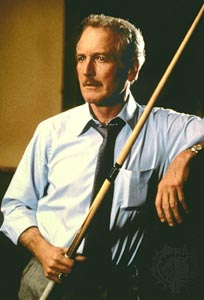 Paul Newman is one of the finest actors in movie history,
and would have deservedly walked away with the Oscar for his
nominated performances in Cat on a Hot Tin Roof, The Hustler,
Hud, Cool Hand Luke or The Verdict. But for one reason
or another other actors were honored with the award, so the
Academy - apparently feeling that they were running out of time
to honor this great talent - gave him the Oscar for one of his
least interesting performances in The Color of Money.
If Newman (who turned in another Oscar-worthy performance for Nobody's Fool in 1994, winning him his first New York
Film Critic's Award) already had a statuette to his credit it's
doubtful that he would have received a nomination for this unworthy
sequel to The Hustler, and to give him the award over
vastly superior work by Bob Hoskins in Mona Lisa and
James Woods in Salvador makes it seem all the more lamentable
that the Academy didn't always have better timing. Even Newman
wasn't that enthusiastic about his finally winning the Oscar,
choosing to be a no-show at the ceremony because it all seemed
"too little - too late." It's hard to disagree with
him.
Paul Newman is one of the finest actors in movie history,
and would have deservedly walked away with the Oscar for his
nominated performances in Cat on a Hot Tin Roof, The Hustler,
Hud, Cool Hand Luke or The Verdict. But for one reason
or another other actors were honored with the award, so the
Academy - apparently feeling that they were running out of time
to honor this great talent - gave him the Oscar for one of his
least interesting performances in The Color of Money.
If Newman (who turned in another Oscar-worthy performance for Nobody's Fool in 1994, winning him his first New York
Film Critic's Award) already had a statuette to his credit it's
doubtful that he would have received a nomination for this unworthy
sequel to The Hustler, and to give him the award over
vastly superior work by Bob Hoskins in Mona Lisa and
James Woods in Salvador makes it seem all the more lamentable
that the Academy didn't always have better timing. Even Newman
wasn't that enthusiastic about his finally winning the Oscar,
choosing to be a no-show at the ceremony because it all seemed
"too little - too late." It's hard to disagree with
him. 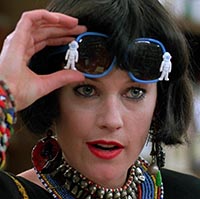 Melanie
Griffith is one of the more difficult movie actresses to
find roles for. Given the wrong part - Shining Through, The
Bonfire of the Vanities, A Stranger Among Us - the result
can be stupefyingly embarrassing, and even cast in a vehicle
that on paper should fit her like a glove (such as Born Yesterday),
there is always the chance that things can go horribly wrong.
But when she is on top of her game (Body Double, Working
Girl), Griffith can be very effective indeed. This was never
truer than her performance as the unpredictable free spirit
Audrey Hankel in Jonathan Demme's aptly-named Something Wild.
Griffith is perfectly cast in the offbeat role of a beautiful
young woman whose exhilarating nonconformity is frequently forced
and usually dangerous, and delivers not only the best performance
of her own checkered career, but the best female movie performance
of 1986. The Academy, however, chose to nominate unexceptional
work by Jane Fonda in The Morning After, Sissy Spacek
in Crimes of the Heart and Kathleen Turner in Peggy
Sue Got Married, awarding the Oscar to the sexy but ultimately
forgettable performance of Marlee Matlin in Children of a
Lesser God. Only the fifth nominee, Sigourney Weaver in her
iconic tour de force as the ill-starred Ellen Ripley in Aliens stands between Griffith and the Hindsight Award, but overlooking her challenging
achievement for a nomination is nuttier than Audrey Hankel.
Melanie
Griffith is one of the more difficult movie actresses to
find roles for. Given the wrong part - Shining Through, The
Bonfire of the Vanities, A Stranger Among Us - the result
can be stupefyingly embarrassing, and even cast in a vehicle
that on paper should fit her like a glove (such as Born Yesterday),
there is always the chance that things can go horribly wrong.
But when she is on top of her game (Body Double, Working
Girl), Griffith can be very effective indeed. This was never
truer than her performance as the unpredictable free spirit
Audrey Hankel in Jonathan Demme's aptly-named Something Wild.
Griffith is perfectly cast in the offbeat role of a beautiful
young woman whose exhilarating nonconformity is frequently forced
and usually dangerous, and delivers not only the best performance
of her own checkered career, but the best female movie performance
of 1986. The Academy, however, chose to nominate unexceptional
work by Jane Fonda in The Morning After, Sissy Spacek
in Crimes of the Heart and Kathleen Turner in Peggy
Sue Got Married, awarding the Oscar to the sexy but ultimately
forgettable performance of Marlee Matlin in Children of a
Lesser God. Only the fifth nominee, Sigourney Weaver in her
iconic tour de force as the ill-starred Ellen Ripley in Aliens stands between Griffith and the Hindsight Award, but overlooking her challenging
achievement for a nomination is nuttier than Audrey Hankel. 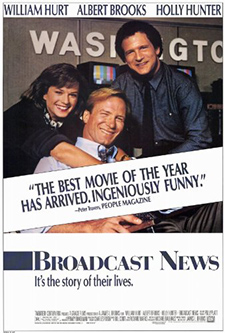 The
Academy went crazy about The Last Emperor in 1987,
awarding Bernardo Bertolucci's epic about the life of Pu Yi,
China's final emperor before the takeover of Mao Tze Tung's
Communist regime, nine Oscars including
Best Picture. The Last Emperor is a spectacularly beautiful
film featuring (strangely unnominated) committed performances
by John Lone in the title role and Joan Chen as the last empress,
a magnificent production design and the typically lyrical
Bertolucci direction. But for all these strengths, The
Last Emperor is ultimately an unsatisfying film as a whole
because its subject is a colorless figure who never accomplishes
anything or even reaches any profound conclusions about the
timing of his placement in history (Bertolucci and Mark Peploe's
Oscar for Best Screenplay Based On Material from Another Medium
was an award the film didn't deserve, even in this
weak year for that category). He is simply a relatively bland
man whose ancestral entitlement is cut off because of political
factors outside of his control or realm of understanding.
The
Academy went crazy about The Last Emperor in 1987,
awarding Bernardo Bertolucci's epic about the life of Pu Yi,
China's final emperor before the takeover of Mao Tze Tung's
Communist regime, nine Oscars including
Best Picture. The Last Emperor is a spectacularly beautiful
film featuring (strangely unnominated) committed performances
by John Lone in the title role and Joan Chen as the last empress,
a magnificent production design and the typically lyrical
Bertolucci direction. But for all these strengths, The
Last Emperor is ultimately an unsatisfying film as a whole
because its subject is a colorless figure who never accomplishes
anything or even reaches any profound conclusions about the
timing of his placement in history (Bertolucci and Mark Peploe's
Oscar for Best Screenplay Based On Material from Another Medium
was an award the film didn't deserve, even in this
weak year for that category). He is simply a relatively bland
man whose ancestral entitlement is cut off because of political
factors outside of his control or realm of understanding.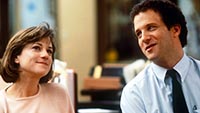 A
much more emotionally involving film is James L. Brooks' quirky
love triangle about the turbulent life of network television
newscasters, Broadcast News. Brooks' complex, entertaining
script (which should have received the Oscar over John Patrick
Shanley's comparatively conventional screenplay for Moonstruck)
is well served by compelling performances by Holly Hunter
and Albert Brooks (who was nominated in the inappropriate
Best Supporting Actor category while costar William Hurt -
whose role was no more contributive to the context of the
story but who received higher billing than Brooks - was placed
in the Best Actor division for his far weaker performance)
and Richard Marks' outstanding film editing (which was regrettably
overlooked in the Academy's tidal wave of recognition for The Last Emperor). In truth, Brooks the screenwriter
was somewhat let down by Brooks the director who provided
a characteristically flat look to the proceedings; but since
the film was about television, Brooks' television-like directorial
style seemed well-suited to the subject matter this time out.
A
much more emotionally involving film is James L. Brooks' quirky
love triangle about the turbulent life of network television
newscasters, Broadcast News. Brooks' complex, entertaining
script (which should have received the Oscar over John Patrick
Shanley's comparatively conventional screenplay for Moonstruck)
is well served by compelling performances by Holly Hunter
and Albert Brooks (who was nominated in the inappropriate
Best Supporting Actor category while costar William Hurt -
whose role was no more contributive to the context of the
story but who received higher billing than Brooks - was placed
in the Best Actor division for his far weaker performance)
and Richard Marks' outstanding film editing (which was regrettably
overlooked in the Academy's tidal wave of recognition for The Last Emperor). In truth, Brooks the screenwriter
was somewhat let down by Brooks the director who provided
a characteristically flat look to the proceedings; but since
the film was about television, Brooks' television-like directorial
style seemed well-suited to the subject matter this time out. 1987
was the year that Cher got respect from the Academy, winning
the Best Actress Oscar for the amusingly broad sitcom Moonstruck.
Playwright John Patrick Shanley wrote a very funny script
for the film and in a weaker year might have been the deserving
winner. But Shanley's generic romantic comedy lacks the insightfulness
of nominees Broadcast News, Radio Days, Hope and Glory or Au Revoir Les Enfants and should have been a distant
also-ran, were it not for the popularity of the film within
Cher's army of loyal fans. But because a film is popular does
not mean that it contains the kind of quality that the Oscars
are designed for, a philosophy that the Academy is not always
quick to embrace.
1987
was the year that Cher got respect from the Academy, winning
the Best Actress Oscar for the amusingly broad sitcom Moonstruck.
Playwright John Patrick Shanley wrote a very funny script
for the film and in a weaker year might have been the deserving
winner. But Shanley's generic romantic comedy lacks the insightfulness
of nominees Broadcast News, Radio Days, Hope and Glory or Au Revoir Les Enfants and should have been a distant
also-ran, were it not for the popularity of the film within
Cher's army of loyal fans. But because a film is popular does
not mean that it contains the kind of quality that the Oscars
are designed for, a philosophy that the Academy is not always
quick to embrace. 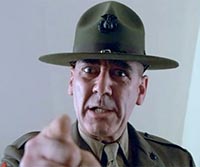 When
the fine actor Louis Gossett, Jr. won the 1982 Best Supporting
Actor Oscar for his unexceptional performance as an army drill
sergeant in the weepie melodrama An Officer and a Gentleman,
his award was apparently spurred by a desire to try and make
up past injustices to performers of color. But five years later, R. Lee Ermey showed everyone how it was supposed to be
done in Stanley Kubrick's muddled Vietnam drama Full Metal
Jacket. Ermey had served as a staff sergeant in the Marines
and was originally hired only to be the technical advisor on
the film, but was so superior to the actor who had originally
been given the role that he replaced him in the cast. Ermey
received a Golden Globe nomination and the Best Supporting Actor
award from the Boston Society of Film Critics for his career-making
performance as Gunnery Sergeant Hartman, but was overlooked
by the Academy.
When
the fine actor Louis Gossett, Jr. won the 1982 Best Supporting
Actor Oscar for his unexceptional performance as an army drill
sergeant in the weepie melodrama An Officer and a Gentleman,
his award was apparently spurred by a desire to try and make
up past injustices to performers of color. But five years later, R. Lee Ermey showed everyone how it was supposed to be
done in Stanley Kubrick's muddled Vietnam drama Full Metal
Jacket. Ermey had served as a staff sergeant in the Marines
and was originally hired only to be the technical advisor on
the film, but was so superior to the actor who had originally
been given the role that he replaced him in the cast. Ermey
received a Golden Globe nomination and the Best Supporting Actor
award from the Boston Society of Film Critics for his career-making
performance as Gunnery Sergeant Hartman, but was overlooked
by the Academy. 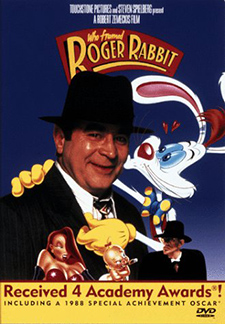 Rain
Man struck a powerful chord with the movie-going public
and the Academy in 1988 presenting the story of two brothers,
one of whom is an autistic, as they bond during a cross-country
road trip. It is a slickly made though dishonest film (It
is highly unlikely that the autistic brother - a ludicrously
overpraised performance by Dustin Hoffman - would be able
to maintain any kind of composure in the excitement of the
various episodes of their adventure, and Hoffman and Tom Cruise's
famous appearance at a casino to take advantage of Hoffman's
astonishing ability at card counting in matching suits is
simply too cute for words), although undeniably entertaining
and touching if you accept the film on its own manipulative
terms. But as slickly made as Rain Man is, it is far
too simplistic to be considered the best film of 1988 or any
other year. The year's other nominees - The Accidental
Tourist, Dangerous Liaison, Mississippi Burning and Working
Girl - are an uninspired lot that don't seem any more
deserving of singling out than Rain Man (the strongest
film of the nominees - Mississippi Burning - puts forth
the absurd contention that the civil rights movement of the
1960s was driven by J. Edgar Hoover's FBI).
Rain
Man struck a powerful chord with the movie-going public
and the Academy in 1988 presenting the story of two brothers,
one of whom is an autistic, as they bond during a cross-country
road trip. It is a slickly made though dishonest film (It
is highly unlikely that the autistic brother - a ludicrously
overpraised performance by Dustin Hoffman - would be able
to maintain any kind of composure in the excitement of the
various episodes of their adventure, and Hoffman and Tom Cruise's
famous appearance at a casino to take advantage of Hoffman's
astonishing ability at card counting in matching suits is
simply too cute for words), although undeniably entertaining
and touching if you accept the film on its own manipulative
terms. But as slickly made as Rain Man is, it is far
too simplistic to be considered the best film of 1988 or any
other year. The year's other nominees - The Accidental
Tourist, Dangerous Liaison, Mississippi Burning and Working
Girl - are an uninspired lot that don't seem any more
deserving of singling out than Rain Man (the strongest
film of the nominees - Mississippi Burning - puts forth
the absurd contention that the civil rights movement of the
1960s was driven by J. Edgar Hoover's FBI).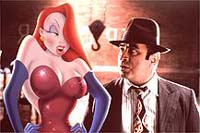 In
this weak year, the most outstanding film bordered on the
cartoonish - literally. Who Framed Roger Rabbit was
the most ambitious blending of animation and live action ever
attempted, and is a once-in-a-lifetime meeting of Warner Bros.
and Disney characters. The frantic style of the Looney Tunes
crew fits into the manic comedy of the film far better than
the gentler Disney bunch, although there is an outstanding
appearance by Donald Duck (whose piano duet with Daffy Duck
is the highlight of the film) and a surprisingly touching
scene with Betty Boop as a cigarette girl. The performance
that gives its basis in reality is the brilliant work of Bob
Hoskins as Los Angeles private eye Eddie Valient, who is forced
to travel deep into the bowels of Toon Town to disprove a
murder charge against his client, cartoon star Roger Rabbit.
Hoskins effortlessly shifts between playing with live action
actors like Christopher Lloyd and Joanna Cassidy and reacting
to his yet-to-be-drawn animated co-stars. Regretfully, he
isn't provided any help by Charles Fleischer, who supplied
one of the most obnoxious voice characterizations in cartoon
history as the insufferable title character. Fortunately,
the immortal Mel Blanc was still around to provide a master
class on how to do such voices and with a little doctoring
of the screenplay, Who Framed Bugs Bunny is one of
the more enticing "what ifs" in film history. Of
course executive producer Steven Spielberg wouldn't have enjoyed
quite such a lucrative marketing tie-in with a preexisting
character, so we'll never know how good the film might have
been if a true movie star had played its title role.
In
this weak year, the most outstanding film bordered on the
cartoonish - literally. Who Framed Roger Rabbit was
the most ambitious blending of animation and live action ever
attempted, and is a once-in-a-lifetime meeting of Warner Bros.
and Disney characters. The frantic style of the Looney Tunes
crew fits into the manic comedy of the film far better than
the gentler Disney bunch, although there is an outstanding
appearance by Donald Duck (whose piano duet with Daffy Duck
is the highlight of the film) and a surprisingly touching
scene with Betty Boop as a cigarette girl. The performance
that gives its basis in reality is the brilliant work of Bob
Hoskins as Los Angeles private eye Eddie Valient, who is forced
to travel deep into the bowels of Toon Town to disprove a
murder charge against his client, cartoon star Roger Rabbit.
Hoskins effortlessly shifts between playing with live action
actors like Christopher Lloyd and Joanna Cassidy and reacting
to his yet-to-be-drawn animated co-stars. Regretfully, he
isn't provided any help by Charles Fleischer, who supplied
one of the most obnoxious voice characterizations in cartoon
history as the insufferable title character. Fortunately,
the immortal Mel Blanc was still around to provide a master
class on how to do such voices and with a little doctoring
of the screenplay, Who Framed Bugs Bunny is one of
the more enticing "what ifs" in film history. Of
course executive producer Steven Spielberg wouldn't have enjoyed
quite such a lucrative marketing tie-in with a preexisting
character, so we'll never know how good the film might have
been if a true movie star had played its title role.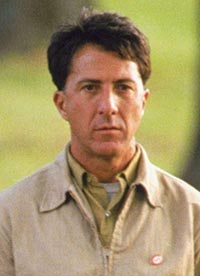 Dustin
Hoffman's Oscar for playing the autistic savant Raymond
Babbitt in Rain Man began a decade-long trend for actors
playing characters with physical or psychological disabilities
to win the Best Actor award. Some brilliant portrayals were
honored in that period to be sure, but (in large part because
of the mental limitations of the character he was playing) Hoffman's
was a one-note performance that didn't require him to interact
with the other characters in any way (Tom Cruise had a much
more difficult role as Hoffman's brother, who was tasked with
providing nuance and variety in his reactions to Raymond's mumbling).
Ironically, a far more effective performance by an actor playing
a more demanding mentally challenged character was completely
ignored in the awards race, but because Tom Hulce is not a movie
star the caliber of Hoffman and Dominick and Eugene was
not the box office hit that Rain Man was, Hulce was unfortunately
overlooked for his brilliant performance of a brain damaged
young man who is forced to deal with the limitations of his
disability in a way that Hoffman's Raymond is totally oblivious
to.
Dustin
Hoffman's Oscar for playing the autistic savant Raymond
Babbitt in Rain Man began a decade-long trend for actors
playing characters with physical or psychological disabilities
to win the Best Actor award. Some brilliant portrayals were
honored in that period to be sure, but (in large part because
of the mental limitations of the character he was playing) Hoffman's
was a one-note performance that didn't require him to interact
with the other characters in any way (Tom Cruise had a much
more difficult role as Hoffman's brother, who was tasked with
providing nuance and variety in his reactions to Raymond's mumbling).
Ironically, a far more effective performance by an actor playing
a more demanding mentally challenged character was completely
ignored in the awards race, but because Tom Hulce is not a movie
star the caliber of Hoffman and Dominick and Eugene was
not the box office hit that Rain Man was, Hulce was unfortunately
overlooked for his brilliant performance of a brain damaged
young man who is forced to deal with the limitations of his
disability in a way that Hoffman's Raymond is totally oblivious
to.  There
are invariably oversights among the Academy Award nominations,
and 1988 was no exception. Who Framed Roger Rabbit as
a Best Picture entry was a noticeable omission, as were Tom
Hulce, Bob Hoskins, John Cleese in A Fish Called Wanda and Jeremy Irons in Dead Ringers in the Best Actor category.
And with the debut of Who Framed Roger Rabbit, this would
have been the perfect time to present a lifetime achievement
award to Mel Blanc (who sadly never received such recognition,
passing away later in 1989). But the oversight that blew the
roof off the Oscars this year was the snub of The Thin
Blue Line, Errol Morris' powerful analysis
of the dubious death sentence that drifter Randall Adams received
for a murder he never committed, for Best Documentary. Morris'
film was one of the most notable achievements of the year, but
it was decreed by the Academy to be ineligbile for thr documentary
award because of some reenactments that depicted events in Adam's
case and therefore placed the film in the category of fiction,
even though it did win the documentary award from the New York
Film Critics and the National Board of Review. The failure of The Thin Blue Line to receive a nomination for Best Documentary
caused such an outcry that the Academy was forced to revamp
its guidelines for that category and reconsider its view on
reenactment scenes in documentaries. But even though the film
failed to win the Oscar, The Thin Blue Line did cause
Texas authorities to reopen Adams' case and ultimately release
him, for which the drifter repaid Morris by suing him to try
and get a piece of the film's unexpected profits.
There
are invariably oversights among the Academy Award nominations,
and 1988 was no exception. Who Framed Roger Rabbit as
a Best Picture entry was a noticeable omission, as were Tom
Hulce, Bob Hoskins, John Cleese in A Fish Called Wanda and Jeremy Irons in Dead Ringers in the Best Actor category.
And with the debut of Who Framed Roger Rabbit, this would
have been the perfect time to present a lifetime achievement
award to Mel Blanc (who sadly never received such recognition,
passing away later in 1989). But the oversight that blew the
roof off the Oscars this year was the snub of The Thin
Blue Line, Errol Morris' powerful analysis
of the dubious death sentence that drifter Randall Adams received
for a murder he never committed, for Best Documentary. Morris'
film was one of the most notable achievements of the year, but
it was decreed by the Academy to be ineligbile for thr documentary
award because of some reenactments that depicted events in Adam's
case and therefore placed the film in the category of fiction,
even though it did win the documentary award from the New York
Film Critics and the National Board of Review. The failure of The Thin Blue Line to receive a nomination for Best Documentary
caused such an outcry that the Academy was forced to revamp
its guidelines for that category and reconsider its view on
reenactment scenes in documentaries. But even though the film
failed to win the Oscar, The Thin Blue Line did cause
Texas authorities to reopen Adams' case and ultimately release
him, for which the drifter repaid Morris by suing him to try
and get a piece of the film's unexpected profits. 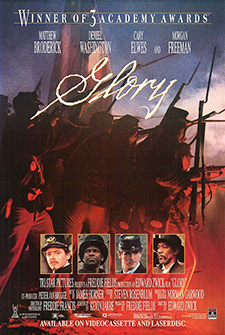 1989
saw the premiere of a lot of very good films including such
notable achievements as the brilliantly acted biography of
cerebral palsy victim Christy Brown My Left Foot, Spike
Lee's provocative racial drama Do the Right Thing, and Kenneth Branagh's only completely successful endeavor
at filmed Shakespeare Henry V. When the scrambling
for Best Picture was over, a pleasing little movie about the
relationship between a black chauffeur and his well-to-do
employer slipped through the cracks to win the top prize. Driving Miss Daisy was a exhilaratingly intimate character
study that relied more on charm than on lavish production
or high pedigree movie stars that most Oscar winners' credentials
rely on. Based on Alfred Uhry's Pulitzer Prize winning play
and expertly acted by Jessica Tandy and particularly Morgan
Freeman (who created his role in the original stage production), Driving Miss Daisy is a perfectly unobjectionable Best
Picture selection, and it is refreshing to find such an unpretentious,
simple film on the roster of Oscar fame. But the Academy didn't
seem all that enthusiastic about its top choice, denying it
the usually perquisite Best Director nomination for Bruce
Beresford that accompanies a Best Picture (Wings and Grand Hotel are the previous other Oscar winners not to
receive a Best Director nominations, but they were both released
in an era when only three directors could be nominated as
opposed to today's five; later joined by 2012's Argo), and producer Richard D. Zanuck somewhat
bitterly (and justifiably) objected to Bereford's lack of
recognition in his Oscar acceptance speech.
1989
saw the premiere of a lot of very good films including such
notable achievements as the brilliantly acted biography of
cerebral palsy victim Christy Brown My Left Foot, Spike
Lee's provocative racial drama Do the Right Thing, and Kenneth Branagh's only completely successful endeavor
at filmed Shakespeare Henry V. When the scrambling
for Best Picture was over, a pleasing little movie about the
relationship between a black chauffeur and his well-to-do
employer slipped through the cracks to win the top prize. Driving Miss Daisy was a exhilaratingly intimate character
study that relied more on charm than on lavish production
or high pedigree movie stars that most Oscar winners' credentials
rely on. Based on Alfred Uhry's Pulitzer Prize winning play
and expertly acted by Jessica Tandy and particularly Morgan
Freeman (who created his role in the original stage production), Driving Miss Daisy is a perfectly unobjectionable Best
Picture selection, and it is refreshing to find such an unpretentious,
simple film on the roster of Oscar fame. But the Academy didn't
seem all that enthusiastic about its top choice, denying it
the usually perquisite Best Director nomination for Bruce
Beresford that accompanies a Best Picture (Wings and Grand Hotel are the previous other Oscar winners not to
receive a Best Director nominations, but they were both released
in an era when only three directors could be nominated as
opposed to today's five; later joined by 2012's Argo), and producer Richard D. Zanuck somewhat
bitterly (and justifiably) objected to Bereford's lack of
recognition in his Oscar acceptance speech.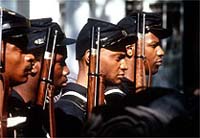 The
Academy might have saved itself the controversy by honoring
a more characteristic Best Picture contender in Glory,
director Edward Zwick's brilliant account of the first black
Union Army regiment in the Civil War. Zwick's film takes the
traditional movie cop-out of telling the black soldier's story
through the eyes of their white commander (Matthew Broderick
in a rather uncharismatic performance), but when the camera
is trained on the brilliant work of Denzel Washington, Morgan
Freeman, Jihmi Kennedy and Andre Braugher, it is an unforgettable
story about second class citizens who bask in the opportunity
to prove that they are equal to anyone and in the end become
venerated as the Honored Dead, and its serious subject matter
would seem to be right up the Academy's alley. It's surprising
that a movie with such solid Oscar credentials as Glory was overlooked in the Best Picture race, but (as Bruce
Beresford can attest) these things aren't
always that easy to predict.
The
Academy might have saved itself the controversy by honoring
a more characteristic Best Picture contender in Glory,
director Edward Zwick's brilliant account of the first black
Union Army regiment in the Civil War. Zwick's film takes the
traditional movie cop-out of telling the black soldier's story
through the eyes of their white commander (Matthew Broderick
in a rather uncharismatic performance), but when the camera
is trained on the brilliant work of Denzel Washington, Morgan
Freeman, Jihmi Kennedy and Andre Braugher, it is an unforgettable
story about second class citizens who bask in the opportunity
to prove that they are equal to anyone and in the end become
venerated as the Honored Dead, and its serious subject matter
would seem to be right up the Academy's alley. It's surprising
that a movie with such solid Oscar credentials as Glory was overlooked in the Best Picture race, but (as Bruce
Beresford can attest) these things aren't
always that easy to predict.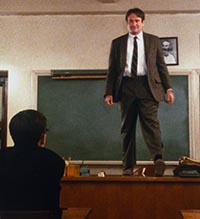 The
Academy loved Dead Poets Society, a cloying drama about a group of students at a stuffy boys school who
are influenced by a self-styled progressive poetry teacher,
nominating it for Best Picture, Best Director and the absurd
selection of Robin Williams for Best Actor in a typically schmaltzy
performance for his elongated cameo as teacher John Keating.
It actually won the Oscar for Tom Schulman's manipulative
and heavy-handed script where everyone in Williams' camp is
a sensitive, misunderstood artist and the rest of the world
are unfeeling ogres. In reality, Williams' Keating is an irresponsible
dolt who thinks that poetry is all about undisciplined self-indulgent
emotional outbursts and a dreadful teacher who refuses to even
consider points of view that don't embrace his own conceited
posing (he instructs his students to physically tear an essay
that he considers "nonsense" out of their textbooks
without ever bothering to explain why it is nonsense
or giving them the opportunity to read it and make up their
own minds about it). It is difficult to comprehend the respect
that this pompous monument to self-absorbed teenage angst engendered
when it came out, but to imply that it is the year's best anything seems to indicate that the Oscar voting was done this year by
a group of gothic teenage girls who had read too much Sylvia
Plath.
The
Academy loved Dead Poets Society, a cloying drama about a group of students at a stuffy boys school who
are influenced by a self-styled progressive poetry teacher,
nominating it for Best Picture, Best Director and the absurd
selection of Robin Williams for Best Actor in a typically schmaltzy
performance for his elongated cameo as teacher John Keating.
It actually won the Oscar for Tom Schulman's manipulative
and heavy-handed script where everyone in Williams' camp is
a sensitive, misunderstood artist and the rest of the world
are unfeeling ogres. In reality, Williams' Keating is an irresponsible
dolt who thinks that poetry is all about undisciplined self-indulgent
emotional outbursts and a dreadful teacher who refuses to even
consider points of view that don't embrace his own conceited
posing (he instructs his students to physically tear an essay
that he considers "nonsense" out of their textbooks
without ever bothering to explain why it is nonsense
or giving them the opportunity to read it and make up their
own minds about it). It is difficult to comprehend the respect
that this pompous monument to self-absorbed teenage angst engendered
when it came out, but to imply that it is the year's best anything seems to indicate that the Oscar voting was done this year by
a group of gothic teenage girls who had read too much Sylvia
Plath. 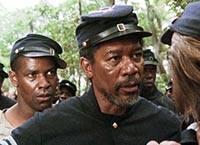 The
Academy's dismissal of the powerful Glory in the
Best Picture race is difficult to comprehend. Except for Denzel
Washington richly deserved Best Supporting Actor Oscar, the
only recognition the film received was in technical categories
(winning the Oscar for Best Sound and Best Cinematography and
receiving nominations for its art direction-set direction and
film editing) despite its brilliant humanity and finely etched
characters. But this was a year when the Academy's tastes ran
towards sickly sentimental pap like Field of Dreams and Dead Poets Society, and Glory delivered its message
in far too uncompromising a fashion to be included with the
year's best.
The
Academy's dismissal of the powerful Glory in the
Best Picture race is difficult to comprehend. Except for Denzel
Washington richly deserved Best Supporting Actor Oscar, the
only recognition the film received was in technical categories
(winning the Oscar for Best Sound and Best Cinematography and
receiving nominations for its art direction-set direction and
film editing) despite its brilliant humanity and finely etched
characters. But this was a year when the Academy's tastes ran
towards sickly sentimental pap like Field of Dreams and Dead Poets Society, and Glory delivered its message
in far too uncompromising a fashion to be included with the
year's best. 
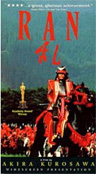
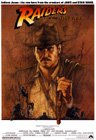
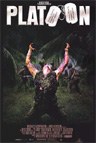
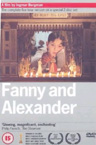
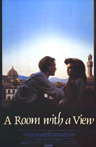
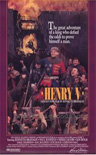
 Robert De Niro
 Meryl Streep