1940 • 1941 • 1942 • 1943 • 1944 • 1945 • 1946 • 1947 • 1948 • 1949 * Indicates that the film/performance was not nominated for an Academy Award in this category
1940
Rebecca
Actor: James Stewart (The Philadelphia
Story)
Actress: Ginger Rogers(Kitty Foyle)
Supporting Actor: Walter Brennan (The Westerner)
Supporting Actress: Jane Darwell (The Grapes of Wrath) Director: John Ford (The Grapes of Wrath)
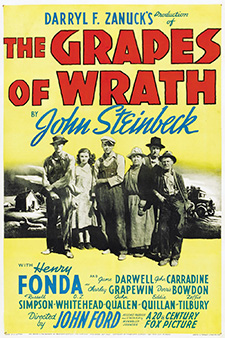
The Grapes of Wrath
Actor: Henry Fonda (The Grapes of Wrath)
Actress: Joan Fontaine (Rebecca)
Supporting Actor: Jack Oakie (The Great Dictator)
Supporting Actress: Jane Darwell (The Grapes of Wrath) Director: John Ford (The Grapes of Wrath)
Alfred
Hitchcock's film of Rebecca is considered by some film
historians as a major turning point in the evolution of Hollywood,
because it signaled the end of the reign of the producer as
the dominant force on the making of a film and the beginning
of the age of the director. Rebecca is a memorable
film that contained classic Hitchcock touches, the usual sumptuous
David O. Selznick production, and some of the most awe-inspiring
cinematography in the history of film by George Barnes (winning
the film its only other Oscar). But
Rebecca loses track in the second half as it shifts
the emphasis away from the travails of the second Mrs. DeWinter
(a magnificent performance by Joan Fontaine) and concentrates
on the far less engaging premise of what became of her predecessor.
It is hardly surprising that it was honored over most of the
more deserving nominees, because they were comedies: The
Great Dictator, The Philadelphia Story and the non-nominated
His Girl Friday and The Bank Dick never had
a chance over the dramatic histrionics of Rebecca.
But
it took all of Selznick's Oscar campaigning skills to wrestle
the Best Picture Prize over the far more deserving winner,
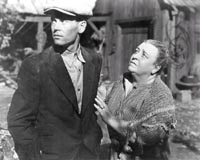
John Ford's devastating adaptation of The Grapes of Wrath.
Steinbeck's dust bowl drama came to gut wrenching life and
pulled nary a false note, even in the face of the censorial
limitations of the period. It features a remarkable cast with
staggering performances by Jane Darwell, John Carradine and
the remarkable Henry Fonda, who gives the finest performance
by an actor in a year of memorable performances in the role
that he seemed born to play (and had to sign a seven year
contract with 20th Century Fox to secure it). The Grapes
of Wrath is unique in being a film that has its finger
pressed squarely on the sensibilities and concerns of its
contemporary audience without seeming at all dated when viewed
today, because the material was handled with such unusual
skill, candor, and honesty.
Worst Award
James
Stewart is one of the greatest actors
in motion picture history, so it is frustrating that he won
his only Oscar for his weakest nominated performance in The
Philadelphia Story. It is generally thought that his Oscar
for The Philadelphia Story was awarded as a consolation
prize over his losing out the previous year for his vastly superior
work in Mr. Smith Goes to Washington. Stewart turned
in his usual fine job in The Philadelphia Story, but
his performance was not on a par with the nominated work of
Henry Fonda in The Grapes of Wrath, Charles Chaplin in
The Great Dictator, Raymond Massey in Abe Lincoln
in Illinois, or Laurence Olivier in Rebecca, nor
of such overlooked accomplishments as Edward G. Robinson in
Dr. Erlich's Magic Bullet, Tyrone Power in The Mark
of Zorro, or Cary Grant in His Girl Friday. The Oscar
pantheon would not be complete without Stewart and had the Academy
waited, they might have given him a more deserving Oscar for
his classic turn in It's a Wonderful Life, his New York
Film Critics Award winning role in Anatomy of a Murder, or
his unnominated tour de force in Vertigo.
Biggest Oversight
The
Academy's disregard of comedy has been well documented, and
no one seems to have be affected by it as much as Cary Grant.
Grant was twice nominated for his dramatic work for Penny Serenade in 1941 and None But the Lonely Heart in 1944, both excellent performances that were worthy of recognition.
But Grant was always overlooked for the sophisticated comedies
on which his reputation was based. The Academy's patronizing
attitude towards Grant's true calling was never as apparent
as it was in 1937, when his delightful comedy The Awful Truth was not only nominated for Best Picture, Best Actress, Best
Supporting Actor and Best Screenplay; but it won for Leo McCarey
the first of his two Best Director Oscars. With the high regard
the Academy held The Awful Truth in, Grant's snub in
the Best Actor race seems all the more puzzling. The
Academy's failure to recognize Grant's artistry continued this year, when thet nominated five distinguished actors in Stewart,
Fonda, Chaplin, Laurence Olivier, and Raymond Massey. Fonda
certainly gave the outstanding performance among the nominees,
with his strongest opposition coming from Grant
in what was probably his best performance, His Girl Friday.
This remake of The Front Page added a brilliant dimension
to the Hecht/MacArthur comic melodrama by switching the gender
of ace newspaperman Hildy Johnson (without bothering to change
the character's name) and having him played by the wonderful
Rosalind Russell (another glaring omission); the result being
a crackerjack screwball romantic comedy that is led in its frenetic
pace by the driving force of Grant's newspaper publisher Walter
Burns.
How Green
Was My Valley
Actor: Gary Cooper (Sergeant York)
Actress: Joan Fontaine(Suspicion)
Supporting Actor: Donald Crisp
(How Green Was My Valley)
Supporting Actress: Mary Astor (The Great Lie)
Director: John Ford (How Green Was My Valley)
Citizen Kane
Actor: Gary Cooper (Sergeant York)
Actress: Barbara Stanwyck (Ball of Fire)
Supporting Actor: Sydney Greenstreet
(The Maltese Falcon)
Supporting Actress: Mary Astor (The Maltese Falcon)*
Director: Orson Welles(Citizen Kane)
Whether
or not Citizen Kane is the greatest film ever made is
a subject of debate, but it was certainly the greatest film
made in 1941 and even the Academy knew it, anointing the masterpiece
with nine nominations including four for wunderkind Orson
Welles. It never had a chance in the Best Picture race because
of factors that had nothing to do with its qualities as a motion
picture: it was a box office flop made by an arrogant neophyte
that infuriated one of the most powerful men in Hollywood, newspaper
publisher William Randolph Hearst. Kane was not an accurate
depiction of Hearst's world, especially in its libelous characterization
of Heart's talented movie star girlfriend Marion Davies as a
no-talent wannabe opera singer. But it is unquestionably a brilliant
piece of filmmaking that was vastly superior to anything else
released that year, including the highly enjoyable albeit undeniably
sentimental winner How Green Was My Valley. In the Hindsight
Awards race, John Ford's idealized view of a Welsh mining town
wouldn't have even placed (that honor would have gone to John
Huston's brilliant remake of The Maltese Falcon), but
it is a memorable movie very much in the safe and tested Academy
Award mold.
Worst Award
The
Academy threw Citizen Kane a bone by anointing it with
the Best Original Screenplay Oscar, but the category that it
should have run away with was Best Black-and-White Cinematography.
The failure of Gregg Toland'scelebrated deep focus photography
to win the award was attributed to the petty resentment towards
Orson Welles, an unfortunate omission that is indicative of
the political infighting that frequently accompanies the Academy
Awards. In another year, Arthur Miller's work on How
Green Was My Valley would have been a deserving winner;
but in 1941 it was an embarrassing selection motivated by studio
politics.
Biggest Oversight
After
years of playing second string gangsters for Warner Bros.,
Humphrey Bogart had one of the great breakout years
in screen history with his back-to-back performances in High
Sierra and The Maltese Falcon. He deserved a nomination
for either role (and indeed might have canceled himself out
in the balloting with this impressive one-two punch), but
his Sam Spade in The Maltese Falcon was particularly
deserving of recognition. This was acting in a new vein: the
cynical anti-hero who seemed to be the selfish antithesis
of the usual movie leading man. Most actors couldn't have
gotten away with it, but Bogart's unique charisma made the
sleazy character spellbinding. Bogey was finally admitted to the pantheon of Oscar nominees two years later, for his signature role as Rick Blaine in Casablanca. It's hard to quibble with the nominees the Academy decided on in 1941: Gary Cooper in Sergeant York, Cary Grant in Penny Serenade, Walter Huston in All That Money Can Buy, Robert Montgomery in Here Comes Mr. Jordan, and Orson Welles in Citizen Kane. But Bogart's romantic cynicism seemed to personify the dark years of World War II, and his performance as Sam Spade was the first true display of the mystique that makes him as big a star now as he was at his creative height
Mrs. Miniver
Actor: James Cagney (Yankee Doodle Dandy)
Actress: Greer Garson (Mrs. Miniver) Supporting Actor: Van Heflin (Johnny Eager) Supporting Actress: Teresa Wright (Mrs. Miniver) Director: William Wyler (Mrs. Miniver)
To Be or Not to Be*
Actor: Ronald Colman (Random Harvest)
Actress: Greer Garson (Mrs. Miniver) Supporting Actor: Sig Ruman (To Be or Not to Be)* Supporting Actress: Teresa Wright (Mrs. Miniver) Director: Ernst Lubitsch (To Be or Not to Be)*
It
is hard to fault the Academy for selecting MGM's smash-hit piece
of war propaganda, Mrs. Miniver, as Best Picture. It
certainly struck a chord with its contemporary audience who
could relate to the noble struggle of a family trying to carry
on their lives in a world torn apart by war. But when watching
it today, the film seems like it is being viewed through a time
machine, and the well-heeled and attractive Miniver family are
much too idealized to carry any true dramatic resonance. Still, it boasts a magnificent performance by Greer Garson in the title role and by Teresa Wright as her daughter in law (although Wright competes with costar Richard Ney - Garson's future husband playing her son in the movie - as having two of the most unconvincing English accents in motion picture history). At its best, Mrs. Miniver is superb; especially in its memorable sequence of a German soldier briefly taking over the Miniver household, or bringing home the grim truth of the war when Wright's character is killed by enemy fire. But the film is undeniably softened by all the gloss MGM could cover it with, and its harsh realities were delivered with a hefty serving of Hollywood palatability.
1942 audiences were too close to the situation to appreciate
Ernst Lubitsch's brilliant comedy of a Polish theatre troupe
giving the Nazis fits, To Be Or Not To Be. Lines such
as the famous exchange where a disguised Jack Benny asks a Nazi
officer what he thinks of Benny's abilities as a Shakespearean
actor and the officer responding "What he does to Shakespeare,
we are doing to Poland," struck 1942 audiences as being
in very bad taste, especially when the film was released shortly
after the tragic death of star Carole Lombard. Now that time
has healed some of the wounds opened by World War II, To
Be or Not To Be can be enjoyed as the brilliant satire it
is, and Mrs. Miniver can be written off as the deftly
made although ultimately rose-colored salve for the soul that
it was.
Worst Award
MGM
head Louis B. Mayer won a Special Oscar "for its achievement in representing
the American way of life in the production of the Andy Hardy
series of films." The Andy Hardy series was a cash
cow for MGM in the 1930s and early 1940s and Louis B. Mayer's
personal pet project about his own idea of the very narrow values
the American Dream should encompass (as embodied by Mickey Rooney,
who in real life had to be taken aside by Mayer and asked to
stop posing for publicity photos at race tracks), and totally
forgotten today except as a dated period piece. What the inscription
should have read was "for its achievement in representing
MGM head Louis B. Mayer's unrealistic idealization of American
life, where people of color do not play a part in society and
where economic hardships are nonexistent."
Biggest Oversight
Ernst
Lubitsch was one of the greatest directors
in history (immortalized for giving his films a singular airy
charm that came to be known as "The Lubitsch Touch"),
and one of the few who was a success in the silents who made
an even greater mark in the talkies. Twice nominated for Best
Director for The Patriot (1928/29) and Heaven Can
Wait (1943), Lubitsch served as a mentor to the many expatriate
German filmmakers who came to Hollywood to escape the Nazis
(notably Billy Wilder who received his own first nomination
for writing Lubitsch's 1939 classic Ninotchka). Lubitsch
might have received additional recognition for Ninotchka,
The Big Parade, The Smiling Lieutenant or Trouble in
Paradise, but he should have taken the award home for his
courageous mockery of Hitler in To Be Or Not to Be. But
the film cut too close to the truth for its contemporary audience,
and prophets and satirists are not recognized in their own time.
Casablanca
Actor: Paul Lukas (Watch on the Rhine)
Actress: Jennifer Jones (The Song of Bernadette) Supporting Actor: Charles Coburn
(The More, the Merrier) Supporting Actress: Katina Paxnou
(For Whom the Bell Tolls) Director: Michael Curtiz (Casablanca)
Casablanca
Actor: Humphrey Bogart (Casablanca)
Actress: Jennifer Jones (The Song of Bernadette) Supporting Actor: Claude Rains (Casablanca) Supporting Actress: Katina Paxnou
(For Whom the Bell Tolls) Director: Michael Curtiz (Casablanca)
The
troubled shooting and on-the-spot rewriting of Casablanca
has been told and retold many times, but what many movie fans
overlook that it holds an unprecedented spot among Best Picture
winners. In our current thinking that a film must be released
after Thanksgiving to be fresh enough in the voters' minds
to be a Best Picture contender, it is surprising to discover
that the Best Picture of 1943 was actually released in New
York in November of 1942 to mixed reviews and lackluster business.
The film opened in Los Angeles in January to coincide with
the peace talks taking place in Casablanca, and finally found
the audience that has been embracing it ever since. It hardly
seems a surprise that it made such an impact that the Academy
chose to honor it fourteen months after its initial release;
Casablanca is still going strong and finding legions
of new fans in its seventieth year, when most World War II propaganda
has been consigned to time capsules or Turner Classic Movies.
1943 was a year when the Academy definitely got it right.
There
were a wealth of superior nominated films in this movie year
and had Casablanca been out of the running, Twentieth Century Fox's The
Song of Bernadette might have been the front runner for the
award. But Casablanca is such a sublime mixture of
exotic locales, romance, adventure, intrigue and even comedy
that it seems to say "the movies" more than any
film ever created. It also has the most extraordinary gathering
of characters ever assembled in Rick Blaine, Elsa Lund, Victor
Laszlo, Captain Renault, Major Strasser, Signor Ferrari, Ugarte,
Sam, et al. depicted by the most unforgettable cast of actors
ever assembled. When lists of the greatest films ever made
are drawn up, Casablanca is invariably named in the
top ten (being represented as number two on the AFI list and
number nine on IMDb). Madbeast.com places it squarely as number
one on the list.
Worst Award
Paul
Lukas first played his role of freedom
fighter Kurt Muller in Watch on the Rhine on the Broadway
stage and repeated the role in the film version of Lillian Hellman's
play to universal acclaim, winning the New York Film Critics
Award as well as the Oscar. But the choice now seems absurd.
Not because Lukas wasn't effective in the role, but that his
turn in this now-forgotten bit of hokum (Muller's children in the film are among the most insufferable characters in movie history) was selected over one
of the most memorable and beloved marriages of actor to role
in screen history: Humphrey Bogart as Rick Blaine in Casablanca.
It is difficult to imagine a better example of a performer transcending
mundane material than Bogart's cynical, world-weary Rick Blaine.
Another actor in the role would have resulted in a dull melodrama,
but Bogart's presence turned Casablanca into art. Lukas
was excellent in Watch on the Rhine; but only as good
as any number of other actors who would have been cast in the
role. Bogart was unique.
Biggest Oversight
Eric
von Stroheim got his start in films
as an assistant to D.W. Griffith on Intolerance, and
became a film legend as a brilliant but erratic director of
silent films (Greed, The Merry Widow) and as an aristocratic
and villainous actor in the talkies (La Grande Illusion,
The North Star). He should have been anointed as a Best Actor contender
for his complex depiction of Erwin Rommel in Five Graves
to Cairo, only the second film directed by Billy Wilder, but the Academy felt that Walter Pidgeon's typically staid and wooden work as Nobel Prize-winning physicist Pierre Curie in MGM's typically prim and proper Madame Curie or Gary Cooper's stiff performance in Ernest Hemingway's overwritten monument to escapist machismo For Whom The Bell Tolls (featuring blonde Swede Ingrid Bergman as a Spanish freedom fighter) was more deserving of recognition. Von Stroheim's excessive perfectionism (the trademark of his directing career) took a toll on his reputation as an actor and he worked mainly in forgettable B movies through the late 1940s before obtaining most of his work in French cinema. He made an immortal comeback in Hollywood in 1950, finally received an Oscar nomination
for his unforgettable Max von Mayerling in another Billy Wilder film, Sunset
Boulevard. He was so infuriated at being placed in the
Best Supporting Actor category that he considered suing the
Academy.
Going My Way
Actor: Bing Crosby (Going My Way)
Actress: Ingrid Bergman (Gaslight) Supporting Actor: Barry Fitzgerald (Going My Way) Supporting Actress: Ethel Barrymore (None But the Lonely Heart) Director: Leo McCarey (Going My Way)
Double Indemnity
Actor: Eddie Bracken (The Miracle of Morgan's
Creek)*
Actress:Ingrid Bergman (Gaslight) Supporting Actor: Barry Fitzgerald (Going My Way) Supporting Actress: Ethel Barrymore
(None But the Lonely Heart) Director: Alfred Hitchcock (Lifeboat)
One
of a long string of smash hit Bing Crosby vehicles for Paramount,
Going My Way seemed like a change of pace for the singer
in his role of a gentle priest who is sent to take over a poor
parish over the objections of its longtime pastor played by
Barry Fitzgerald. It was a fabulous hit with both audiences and critics, being the far-and-away top money-maker of the year and winning the New York Film Critics Award and the nascent Golden Globe. The award-givers were split on Crosby's and Fitzgerald's contributions, with the Globes naming Crosby Best Actor and Fitzgerald Best Supporting Actor, but the New York scribes awarding Fitzgerald Best Actor (they did not hand out supporting acting awards until 1969) with Crosby the runner-up. The Oscars were totally confused by the pair and, in an unprecedented move, nominated Fitzgerald for both Best Actor and Best Supporting Actor, giving him the statuette for the latter category but passing him up in the leading role category to the top-billed Crosby. The film also became the first to win the Best Picture trophy while also taking home the Best Song prize, for the snappy and memorable Swingin' on a Star (although no honors were awarded to the song Father O'Malley wrote in an attempt save the financial fortune of the church, the morose and depressing title tune).Everyone loved Going My Way so much in 1944 that if they'd thought about it, they probably would have invented a few more awards to honor it for.
But posterity often has different tastes, and the passing years have judged Going My Way to be - while still enjoyable in its dated way - a maudlin series of episodes with Crosby displaying the same
laid back performance and easy singing style that he gave in
all those Road movies with Bob Hope (he didn't show his
true dramatic chops until The Country Girl ten years
later). Going My Way's chief competition at the time
was thought to be Darryl F. Zanuck's ponderous biography of
Woodrow Wilson (which Zanuck bitterly complained about losing the award three years later, when he won the Oscar for another pretentious piece of "social commentary," Gentleman's Agreement), but the most enduring film of 1944 is certainly
Billy Wilder's chilling tale of betrayal, Double Indemnity, co-written with Raymond Chandler from James M. Cain's novel. The filming of the movie was not a happy experience; Wilder and Chandler hated each other so much that at one point Chandler walked off the movie, refusing to return unless a series of demands were met, and Wilder determined that a month into shooting, the blonde wig he had Stanwyck wear looked terrible and back-peddled in interviews by claiming that the fake-looking tresses were intended as a window into the character's artificial soul. The leading lady's hair was the only false note in an otherwise flawless and nail-biting thriller which packs as much punch today as when it was first released, winning seven Oscar nominations (including Wilder's first in the Best Director category, although not, surprisingly, for the stunning
performances of Fred MacMurray or Edward G. Robinson, neither of whom received a single Oscar nomination throughout the course of their stellar careers), walking
away with a grand total of zero statuettes. The whirligigs of
time would have raised that number significantly.
Worst Award
When
Leo McCarey won the Best Director Oscar for Going
My Way, Billy Wilder was said to have tripped him as he
made his way to the podium to accept the award. Wilder can be
forgiven for the minor act of assault since he (or fellow nominee
Alfred Hitchcock for Lifeboat) were more deserving of
the award, but an even worse choice was McCarey for Best Original
Story for Going My Way. It's not that Going My Way
isn't an entertaining or well written film (its win for
Best Screenplay is undeserved compared with Double Indemnity,
Gaslight or Laura, but certainly a creditable pick),
but its loosely-strung series of episodes doesn't constitute
a story at all. McCarey was one of the seminal comedy directors of the 1930s and 1940s, helming such classics as Duck Soup (1933) with the Marx Bros., Ruggles of Red Gap (1935) The Awful Truth (1937, for which he won his first Best Director Oscar), An Affair to Remember (1939) and The Bells of St. Marys (1945) as well as winning immortality as the man who first teamed Stan Laurel with Oliver Hardy. So while we aren't giving him any Hindsight Awards in 1944, we hold him in very high regard indeed.
Biggest Oversight
Preston
Sturges was nominated for Best Original Screenplay for both
The Miracle of Morgan's Creek and Hail the Conquering
Hero, losing the award twice to Lamarr Trotti's tedious
script for Wilson. Morgan's Creek was added to
the National Film Registry in 2001, an honor that Wilson
(or Best Picture Going My Way) has yet to attain, a solid
indication that Sturges' delightful comedy about a ditzy small
town girl in trouble (wonderfully played by Betty Hutton) may
not have been as highly regarded when it came out, but it is
a film for the ages. The Miracle of Morgan's Creek was
grossly unrewarded at the Oscars, deserving nominations for
Best Picture, Sturges as Best Director, Hutton as Best Actress,
William Demarest as Best Supporting Actor,andwinning
the awardfor Eddie Bracken's manic yet touching
performance as the gentle soul who worships Hutton, displaying
a depth and sensitivity lacking in winner Bing Crosby's popular
though undemanding turn in Going My Way. The Academy
loved Going My Way so much that they not only gave the
Oscar to Crosby but nominated Barry Fitzgerald for Best Actor
as well as voting him Best Supporting Actor for the film, but
it is Bracken (who was also excellent in Hail the Conquering
Hero) who displays the most humanity, if you can stop laughing
long enough to notice.
The Lost Weekend
Actor: Ray Milland (The Lost Weekend)
Actress: Joan Crawford (Mildred Pierce) Supporting Actor: James Dunne
(A Trees Grows in Brooklyn) Supporting Actress: Anne Revere (National Velvet) Director: Billy Wilder (The Lost Weekend)
The Bells of St. Mary's
Actor: Ray Milland (The Lost Weekend)
Actress: Joan Bennett (Scarlett Street)* Supporting Actor: Robert Mitchum
(The Story of G.I. Joe) Supporting Actress: Anne Revere (National Velvet) Director: Jean Renoir (The Southerner)
The
Lost Weekend was Billy Wilder's indictment
of alcoholism, the first major feature film of the sound era
to take on the subject. It caused a sensation at the time, with
the alcohol industry going so far as to attempt to buy the negative
from Paramount to keep anyone from seeing it and was honored as the year's best not only by the Oscars, but the Cannes Film Festival and the New York Film Critis. But viewed today,
The Lost Weekend seems badly dated, with its
unrealistic happy ending tacked on in order to pander to its
audience (the central character is more hopeful as the credits roll, but he really has the same problems that he did at the beginning of the film). The famous scene of a DT-stricken Ray Milland being
terrorized by a bat flying around his bedroom and a mouse crawling out of an imaginary hole
in his wall doesn't have quite the impact it did in 1945 and the same can be said of Miklós Rózsa's Oscar-nominated, theramin-centered score, which now seems more appropriate for a low-budget 1950s horror movie. But there's is no doubting the effectiveness of Milland's performance and the power of Wilder's direction. It probably was the Best Picture in 1945 but the Hindsight Awards are based on timelessness rather than timlieness so while we respect The Lost Weekend, we'll look elsewhere to give out our top prize.
There were a few movies which had legitimate claims for the Hindsight Award for the best film of the year. Of the nominated films, Mildred Pierce, Joan Crawford's comeback vehicle after being released by MGM, was an effective soap opera that still packs a powerful dramatic punch, and Anchors Aweigh was possibly the most entertaining teaming of Gene Kelly and Frank Sinatra in an MGM musical (if only for the classic dance number between Kelly and Jerry, the cartoon mouse from the studio's Tom and Jerry franchise). Non-nominated legitimate contenders for the top prize were the horror classic The Body Snatchers; the finest film of French director Jean Renoir's brief Hollywood career, the poetic The Southerner; and the perennial classic National Velvet. But the best
film of this weak year was Leo McCarey and Bing Crosby's smash
hit follow-up to Going My Way, The Bells of St. Mary's; in which Crosby reprised his Oscar winning role as compassionate priest Chuck O'Malley, this time locking horns with a slightly implausibly beautiful nun in the person of Ingrid Bergman (who is isn't so strict that she's above teaching one of the boys in her care how to defend himself in a fist fight).
While no less sappy or manipulative than its predecessor, The
Bells of St. Mary's was equally entertaining; containing
the usual Crosby charm and an endearing performance by Bergman as a kind, but no-nonsense Bride of Christ and featured a far-bettered structured story than the episodic Going My Way. The Crosby/Bergman pairing
lacked the chemistry or tension of Crosby and Fitzgerald (who strangely
appeared in only two other films together - the 1947 smash Welcome
Stranger and theforgettable 1949 entry Top O'
the Morning), but this feel-good piece of hokum is more
memorable than any other film released this year.
Worst Award
It's
hard to gather any enthusiasm (positive or negative) for any
selection made in this forgettable year, but the most lamentable
choice is probably Charles G. Booth's Oscar for Best
Original Story for the cliché-ridden The House on
92nd Street, a forgotten film about a double agent for the
FBI in a Nazi spy ring. A far superior choice would have been
Richard Flournoy and László Görög for
the frothy Joan Fontaine comedy The Affair of Susan; but
given the Academy's distaste towards froth or comedy, it's not
surprising that it was overlooked.
Biggest Oversight
Producer
Val Lewton produced a series of superb psychological horror
films in the mid-1940's, the best of which was The Body Snatcher,
loosely based on a tale by Robert Louis Stevenson. It boasted
a superior screenplay by Lewton and Philip MacDonald, and intense
direction by future Oscar winner Robert Wise; but what truly
made the film stand out was Boris Karloff's finest performance
since Frankenstein. Karloff was respected for his stage
work (he gave legendary Broadway performances as Jonathan Brewster
in Arsenic and Old Lace and as Captain Hook in Peter
Pan, and received a Tony nomination for The Lark)
but failed to be taken seriously in Hollywood because of the
genre in which he worked, even after memorable "straight"
performances in The House of Rothchild and The Lost
Patrol. Regrettably, he was never nominated for an Oscar.
The Best Years
of Our Lives
Actor: Fredric March (The Best Years of
Our Lives)
Actress: Olivia deHavilland (To Each His Own) Supporting Actor: Harold Russell
(The Best Years of Our Lives) Supporting Actress: Anne Baxter
(The Razor's Edge) Director: William Wyler
(The Best Years of Our Lives)
It's a Wonderful
Life
Actor: Laurence Olivier (Henry V)
Actress: Celia Johnson (Brief Encounter) Supporting Actor: Lionel Barrymore
(It's a Wonderful Life)* Supporting Actress: Myrna Loy (The Best Years of Our Lives)* Director: Laurence Olivier(Henry V)*
1946 was a magnificent movie-going year, with bona-fide
masterpieces It's a Wonderful Life, Henry V and The
Yearling up for Best Picture against winner The Best
Years of Our Lives (fifth nominee The Razor's Edge
was just rounding out the field), and major classics like Brief
Encounter, The Killers, Anna and the King of Siam, and Open
City hot on their heels. It's impossible to fault the Academy
for selecting the moving and timely The Best Years of Our
Lives - one of the greatest movies ever made - as its depiction
of soldiers returning home from World War II to an America trying
to adjust to a new peacetime has its finger on its contemporary
America more accurately than any other Hollywood film (with
the possible exception of The Grapes of Wrath). But that
is both the glory and the irritation of the film: it is so firmly
rooted in the world and challenges of 1946 that it sometimes
feels like a relic from a time capsule when watched now. But it is an undeniably great film and a creitable choice for the top film of the year. 1946 was one of those incredibly rare
years when there were so many great films made that it's really
a coin toss to determine what was the "best" among
so many memorable achievements, and if you prefer The Best
Years of Our Lives (or Henry V, or Brief Encounter,
or any of the other miraculous works of art of this watershed
year) as your final choice, we can't really disagree with you.
It is therefore with some hesitation that we submit Frank Capra's beloved fable of
a man reclaiming his seemingly wasted life, It's a Wonderful
Life, for the mantel of 1946's top film. To be sure, this idealized vision of small town life
is "Capra Corn" at its most saccharine; but if you
were to scan most movie fans list of favorite films from this watershed year, the tale
of George Bailey and his guardian angel would probably be listed
more than any other. James Stewart presents a startling contrast to the "aw, shucks" roles he specialized in before the war and depicts Bailey's descent into desperate despair with moving honesty while never becoming so morose that the audience loses its connection with him. And as the film juxtaposes the Mayberry-esque cosiness of Bedford Falls at the beginning of the story with Bailey's dark vision of life without him, the actors are allowed to create a truly disturbing society in which every individual living in it seems alienated, even in the midst of a crowd of other people. Yet the story's darkness is always buoyed by the encouraging theme that it only takes the presence of one inspring individual to change everything. It's a message that still packs an emotional punch even after a million viewings, so we're going to call it the best film of a remarkable year.
Worst Award
Director
William Wyler discovered double amputee Harold Russell while
watching a documentary chronicling the rehabilitation of a permanently
injured soldier during his research for The Best Years of
Our Lives. Wyler was so impressed with Russell that he decided
to change a character in the film from a spastic to a double
amputee in order to cast the war veteran. Russell responded
with an earnest though awkward performance which the Academy
rewarded with a Special Oscar "for bringing hope and courage
to his fellow veterans." Russell clearly deserved that
award, but the Academy went overboard by also giving Russell
the Oscar for Best Supporting Actor, making him the only actor
in history to receive two Oscars for a single performance. One
admires Russell's courage in the film, but he was obviously
an amateur among professionals and it clear that he never would
have been cast save for his war injury (he did not act in another
film until 1980). He ran a nonprofit organization that specialized
in finding jobs for people with disabilities and wrote two autobiographies
after his appearance in The Best Years of Our Lives,
and was forced to sell his acting Oscar late in life because
he needed money to pay his wife’s medical bills. He said
nothing could induce him to sell the Honorary Oscar though,
because it would be disrespectful to his fellow veterans. That
special award was one of the more insightful selections in Oscar
history. The acting trophy is another story.
Biggest Oversight
With so many great cinematic achievements
to choose from, it's inevitable that a few would slip through
the cracks. The never-nominated Myrna Loy delivered the finest
performance of her brilliant career as Fredric March's wife
trying to adjust to The Best Years of Our Lives. Lionel
Barrymore was overlooked for his most memorable performance
as the evil Mr. Potter in It's a Wonderful Life. But
the greatest single achievement of 1946 was Laurence Olivier's
inspired performance and direction of Shakespeare's Henry
V. Prior to Olivier, Shakespeare was infrequently attempted
on film and on the rare occasions that it was (Romeo &
Juliet, A Midsummer Night's Dream or the disastrous Taming
of the Shrew with Douglas Fairbanks and Mary Pickford),
the result was usually an insipid travesty that relied more
on pageantry and star-casting than on Shakespeare's poetry.
The first film that seemed to indicate the plays could be presented
cinematically was Paul Czinner's 1937 film of As You Like
It, which featured Olivier as Orlando. But it took Olivier's
wildly imaginative Henry V, whicheffortlessly
takes the narrative back-and-forth between an imagined performance
at Shakespeare's Globe Playhouse and the historical period of
Henry's reign, to show the world that Shakespeare was every
bit the writer that the geniuses who cranked out the screenplays
for the Bowery Boys films or Deanna Durbin musicals were. Yet
despite his success as a director, Olivier failed to make the
cut in the nominations, receiving nods only for his performance
and production. Olivier certainly should have been the hands-down
winner of the Best Actor prize (he won Best Actor from both
the New York Film Critics and the National Board of Review),
but the Academy effectively took him out the running by presenting
him with a Special Award "for his outstanding achievement
as actor, producer and director in bringing Henry V to
the screen," an honor that Olivier bitterly resented because
he felt it was merely a tactical move to take his English-produced
masterpiece out of competition against Hollywood product. Olivier
did finally win competitive Oscars two years later for his comparatively
inferior film of Hamlet (and received his only Best Director
nomination in the process), but Henry V represented not
only the high water mark of his film career, but of the production
of a Shakespearean work on screen, and should have been recognized
as the outstanding directorial achievement that it was.
Gentleman's Agreement
Actor: Ronald Colman (A Double Life)
Actress: Loretta Young (The Farmer's Daughter) Supporting Actor: Edmund Gwenn
(Miracle on 34th Street) Supporting Actress: Celeste Holm
(Gentleman's Agreement) Director: Elia Kazan (Gentleman's Agreement)
Miracle on
34th Street
Actor: William Powell (Life with Father)
Actress: Irene Dunne (Life with Father)* Supporting Actor: Edmund Gwenn
(Miracle on 34th Street) Supporting Actress: Celeste Holm
(Gentleman's Agreement) Director: George Cukor (A Double Life)
Darryl F. Zanuck felt that he was robbed of the Best Picture
Oscar for Wilson, his excruciatingly self-important
drone of a film that pretended to be a tribute to the the
twenty-eighth President but was really just a monument to
Zanuck's ego. When Zanuck failed to win the top prize for
what he considered his finest achievement, he went back to
the well of pretension and came up with Gentleman's Agreement,
which told the story of a gentile writer posing as a Jew in
order to experience anti-Semitism first hand; starting a much
imitated (Glory, Tootsie, Dances With Wolves) Hollywood
trend of pretending to tell the story of an oppressed group,
but doing it from the point of view of a white male. Some
effective films were made using this device, but at times
it is hard to get past the hypocrisy of the enterprise. If
the story were about a Jew writing about anti-Semitism played
by, say, Everett Sloan, the film would have opened and disappeared
without notice. But because it is WASP-ish Gregory Peck suffering
the indignities, contemporary audiences didn't mind sensing
outrage at the treatment he received. Zanuck finally won the
award he coveted,and when he took the podium to accept it,
he used the occasion to comment that he was still bitter that
Wilson hadn't won the Best Picture Oscar three years
before.
Zanuck
should have had to keep waiting to vent his frustrations over
Wilson, because a much more memorable and unpretentious
film was a far more deserving winner of the award. Miracle
on 34th Street, the beloved classic of a department store
Santa who may be the real thing, is so familiar that it does
have the air of a chestnut roasting on an open fire after
too many viewings over a lifetime of Decembers. But watched
with fresh eyes, it is a revelation to appreciate not only
how charming and clever the story is, but how laugh-out-loud
funny the Oscar winning screenplay by George Seaton is. With
the Academy's well-documented distaste for comedy, it is a
telling indication of the film's quality that it won two Oscars
for writing (for Best Screenplay as well as for the original
story by Valentine Davies) and for the touching and hilarious
performance by Edmund Gwenn as Kris Kringle (matched every
step of the way by Maureen O'Hara, John Payne and Natalie
Wood).
Worst Award
The
Academy nominated four enduring masterpieces for Best Original
Screenplay in 1947: Body and Soul, A Double Life, Monsieur
Verdoux and Shoeshine. Honoring any of these films
would have done credit to the awards, but the script they selected
to receive the trophy is a stunning puzzlement indeed: The
Bachelor and the Bobby-Soxer. Sidney Sheldon produced
an amusing script for this entertaining Cary Grant/Myna Loy
comedy, but to say it surpasses the best work of Charles Chaplin
or Abraham Polonsky makes one wonder what the Academy was smoking
when they were voting for the awards.
Biggest Oversight
1947
was the first year that the Academy awarded the Best Foreign
Film award, with Vittorio De Sica's Shoeshine deservedly
being anointed a Special Oscar for the honor (it would not become
a competitive category until 1956) as well as a nomination for
its screenplay. But completely overlooked in the nominations
was La Belle et la bête,
French director Jean Cocteau's lyrically beautiful version of
Beauty and the Beast, one of the
most remarkably original films ever made.
Had the categories been given awards in 1947, the surrealist
masterpiece certainly should have won Oscars for Antonio Castillo
and Marcel Escoffier's lavish costume design and especially
Best Makeup for Hagop Arakelian's magnificent conception of
the Beast's lion head. But those categories weren't instituted
until 1948 and 1981 respectively, so those wonderful achievements
were overlooked for recognition. But La Belle
et la bête also deserved nominations for Christian
Bérard's surreal art direction, Henri Alékan's
haunting cinematography, Cocteau's sublime vision as director, and if we're going to be honest about it, Best Picture;
categories that were all in effect at the time. The Walt Disney Company ultimately took ownership of the
Beauty and the Beast story for a cartoon, Broadway musical and live-action film, all of which were wonderful in their own way. But none came close to matching the poetic beauty of Cocteau's masterpiece.
Hamlet
Actor: Laurence Olivier (Hamlet)
Actress: Jane Wyman (Johnny Belinda) Supporting Actor: Walter Huston (Treasure of the Sierra Madre) Supporting Actress: Claire Trevor (Key Largo) Director: John Huston (Treasure of the Sierra Madre)
Treasure of the Sierra
Madre
Actor:Humphrey Bogart
(Treasure of the Sierra Madre)*
Actress: Barbara Stanwyck (Sorry, Wrong Number) Supporting Actor: Walter Huston
(Treasure of the Sierra Madre) Supporting Actress: Claire Trevor (Key Largo)
Director: John Huston (Treasure of the Sierra Madre)
Laurence
Olivier followed up his magnificent film of Henry V
with Hamlet, and was immediately anointed as the greatest
interpreter of Shakespeare's work in film history. That, he
surely was (based on Henry V and his superlative performance in his otherwise hit-and-miss 1956
film of Richard III); but Hamlet was never Olivier's
role and his 1937 stage performance was universally panned
by critics. By 1948 he was impervious to criticism, so no
one dared point out that the film, while a decided improvement
over Hollywood's earlier attempts to film the Bard's work,
is a badly butchered and only tolerably performed adaptation
of Shakespeare's play. Olivier and text editor Alan Dent cut
the script to the bone, eliminating not only the character
of Fortinbras (who is a common casualty of the editor's pen),
but Rosencrantz and Guildestern (who are indispensable to
depicting a complete version of the story). Olivier said that
he was not initially keen to make a film of Hamlet
(he would have preferred Macbeth, but Orson Welles
was making a film of that play at the same time which would
have reached theatres first) and when he did decide to do
it, claimed that he would have preferred to cast another actor
in the lead but was unable to find a suitable performer who
would play the role according to his interpretation (when
he did direct another actor in the part, Peter O'Toole in
the premiere production of the National Theatre, the result
was a notable disappointment). It is unfortunate that Olivier
was unable to cast someone else as Hamlet, as he is frankly
wooden in the role for which he received such acclaim at the
time, and the rest of the cast (with the exception of Jean
Simmons as a memorable Ophelia) are forgettable in their various
generic characterizations. The resulting film is only a mildly
engrossing collection of the play's most famous scenes; Hamlet's
Greatest Hits, salvaged only by a truly magnificent rendering
of the duel in Act V.
Far
more memorable and entertaining was John Huston's immortal
film of what greed can do to the human soul,Treasure of
the Sierra Madre. The Academy appeared to think so too
in the end, giving Huston Best Director over Olivier (despite
the fact that Olivier's real achievement was as a director
more than anything else), and awarding Treasure the
Oscars for best Screenplay and Best Supporting Actor for Walter
Huston's immortal performance as a grizzled prospector. It
is somewhat surprising that Hamlet won the Best Picture
Oscar because there was a backlash against the success of
British films in Hollywood, to the point of the major studios
pulling out their financial backing of the awards that year.
But the garment most closely associated with the Oscars isn't
black tie and floor-length evening gowns as much as it the
Emperor's New Clothes, and Hamlet is decked to the
nines.
Worst Award
1948
was the first year the Oscar was awarded for costume design,
with the awards going predictably to elaborately produced period
pieces. Hamlet deservedly took home the award for black
and white film, but the award for color surprisingly went to
the sackcloth and armor Dorothy Jeakins and Karinska pulled
out of the RKO Radio costume warehouse for the tedious Joan
of Arc over the Viennese finery Edith Head and Gile
Stele designed for The Emperor Waltz. Head later admitted
that she was stunned by the snub. Producer Walter Wanger wanted
Joan of Arc to be the crowning glory of his career even
after its lackluster reception, and when the film failed to
receive nominations for Best Picture and Best Director Wanger
embarrassed himself by throwing such a public tantrum over the
imagined snub that the Academy gave him an Honorary award for
producing it, not unlike giving an unruly two year old a lollipop
to make it shut up.
Biggest Oversight
Humphrey
Bogart gave his greatest performance as Fred C. Dobbs, an
honest man destroyed by greed in Treasure of the Sierra Madre.
The Academy chose to overlook Bogart's brilliant work so that
they could nominate Dan Dailey for Best Actor as an alcoholic
Vaudevillian in the Betty Grable musical When My Baby Smiles
at Me. Anyone who looks to the Oscars as the final word
on what constitutes superior artistry in film is welcome to
try to explain this bizarre behavior any time they want to, but Bogart was curiously snubbed by the Academy throughout the 1940s (save for an inevitable nomination for Casablanca in 1943) despite the great respect for his talent within the industry. He finally ascended to the Oscar pantheon for his immortal performance in The African Queen, a selection that was judged to be heavily influenced by sentimentality as it was made in favor of Marlon Brando's altogether superior work in A Streetcar Named Desire. Bogie received only one more nomination, for his flashy turn as Captain Queeg in The Caine Mutiny, despite turning in award-caliber work in The Desperate Hours and The Harder They Fall. His death from cancer at the relatively youthful age of 56 robbed the screen of one of its greatest talents.
All the King's Men
Actor: Broderick Crawford (All the King's
Men)
Actress: Olivia de Havilland (The Heiress) Supporting Actor: Dean Jagger (Twelve O'Clock High) Supporting Actress: Mercedes McCambridge
(All the King's Men) Director: Joseph L. Mankiewitz
(A Letter to Three Wives)
The Bicycle Thief*
Actor: Kirk Douglas (Champion)
Actress: Olivia de Havilland (The Heiress) Supporting Actor:Ralph Richardson (The Heiress) Supporting Actress: Margaret Rutherford
(Passport to Pimlico)* Director: Vittorio De Sica (The Bicycle Thief)*
The
Academy has nominated only eight foreign language films for
the Best Picture Oscar: La Grande Illusion (1938),
Z (1969), The Emigrants (1972), Cries and
Whispers (1973), Il Postino/The Postman (1995),
Life is Beautiful (1998), Crouching Tiger, Hidden
Dragon (2000), and Amour (2012) until South Korea's Parasite finally won the award in 2019. During the late forties, the finest films were
being produced in Europe, and even Hollywood recognized it;
creating the Best Foreign Film Oscar in 1947 and handing out
a trickle of nominations to non-American films, although any film with dialogue other than English seemed to be a non-starter in the Best Picture category. In 1949, the
American film industry was on the offensive from invasion
not only from foreign films, but from the coming onslaught
of an even bigger menace: television. The idea that Hollywood
would give its top prize to anything that wasn't home grown
was unthinkable.
It's unfortunate that this nationalistic sentiment
was so prevalent at the time, because the most memorable film
of 1949 didn't come from Hollywood, but from Italian director
Vittorio De Sica. The Bicycle Thief, with its story
of a man in a desperate hunt to retrieve the stolen bicycle
that is vital to his livelihood, is frequently listed second
to Citizen Kane as the greatest film ever made.
The
film the Academy chose for Best Picture is surprisingly weak:
All the King's Men, Robert Rossen's adaptation of Robert
Penn Warren's Pulitzer Prize novel based upon the reign of
Louisiana governor Huey Long, is an annoyingly one-note affair
featuring a typically bombastic Broderick Crawford as a bombastic
politician who is so transparently corrupt that he might as
well be twirling a cape and tying virginal young girls to
railroad tracks. There were a wealth of superior films from
among the nominees (A Letter to Three Wives, Battleground,
The Heiress) and the non-nominees (On the Town, The
Fallen Idol, White Heat). But nothing Hollywood created
in 1949 was on a par with De Sica's masterpiece, and it would
have been a bold statement for the Academy to recognize that.
Worst Award
The
concept of "Best Actor" usually falls into two distinct
groups: performers of great skill who submerge themselves so
deeply into a role that actor and character become one (Robert
DeNiro in Raging Bull, John Barrymore in Twentieth
Century), and movie stars of limited range who are fortunate
to be cast in a role that shows off their strengths more effectively
than usual (Clark Gable in It Happened One Night, John
Wayne in True Grit). Broderick Crawford definitely
falls into the latter category, having the good fortune of being
cast in two great roles that showed off his overbearing, blustery
shtick (Willie Stark in All the King's Men and Harry
Brock in Born Yesterday) before falling back into the
comparative anonymity of Highway Patrol. Crawford was
brilliantly cast in All the King's Men, but because an
actor is well cast does not mean that he is delivering a
great performance. He did have the good timing (like Sylvestor
Stallone in Rocky) of giving his award-winning performance
at a point in his career where no one knew he wasn't capable
of doing anything else.
Biggest Oversight
The
failure of The Bicycle Thief to receive nominations
for Best Picture or Best Director can hardly be described
as an oversight in view of the Academy's fiercely nationalistic
sentiments of the time. But Hollywood had a bona fide star
who delivered one of his greatest performances in this year,
only to be overlooked for a nomination. James Cagney
made a return to the gangster film genre in White Heat,
and delivered one of his most famous performances in the
complex role of a sadistic mobster with a mother complex.
That the Academy would nominate the limited Crawford or
the third-billed Richard Todd for the tearjerker The
Hasty Heart over this screen legend in one of his greatest
roles continues to be a head-scratcher. The Academy tried to make it up to him with one final Best Actor nomination for a much more run-of-the-mill entry on his gangster résumé in the 1955 Doris Day musical Love Me or Leave Me. I guess after the blazing intensity of White Heat, they were just grateful for a chance to site back and relax for a little while.
BEST PICTURE *The Grapes of Wrath The Great Dictator
His Girl Friday
Pinocchio
The Philadelphia Story
BEST DIRECTOR *John Ford for The Grapes of Wrath
George Cukor for The Philadelphia Story
Howard Hawks for His Girl Friday
Alfred Hitchcock for Rebecca
William Wyler for The Letter
BEST ACTOR *Henry Fonda in The Grapes of Wrath
Charles Chaplin in The Great Dictator
Cary Grant in His Girl Friday
Raymond Massey in Abe Lincoln in Illinois
Laurence Olivier in Rebecca
BEST ACTRESS *Joan Fontaine in Rebecca
Bette Davis in The Letter
Katharine Hepburn in The Philadelphia Story
Vivien Leigh in Waterloo Bridge
Rosalind Russell in His Girl Friday
BEST SUPPORTING ACTOR *Jack Oakie in The Great Dictator
Albert Basserman in Foreign Correspondent
Walter Brennan in The Westerner
John Carradine in The Grapes of Wrath
James Stephenson in The Letter
BEST SUPPORTING ACTRESS *Jane Darwell in The Grapes of Wrath
Judith Anderson in Rebecca
Paulette Goddard in TheGreat Dictator
Ida Lupino in They Drive By Night
Gale Sondergaard in The Letter
BEST PICTURE *Citizen Kane How Green Was My Valley
The Little Foxes
The Maltese Falcon
Sergeant York
BEST DIRECTOR *Orson Welles for Citizen Kane
William Dieterle for All That Money Can Buy
John Ford for How Green Was My Valley
Howard Hawks for Sergeant York
John Huston for The Maltese Falcon
BEST ACTOR *Gary Cooper in Segeant York
Humphrey Bogart in The Maltese Falcon
Cary Grant in Penny Serenade
Edward G. Robinson in The Sea Wolf
Orson Welles in Citizen Kane
BEST ACTRESS *Barbara Stanwyck in Ball of Fire
Bette Davis in The Little Foxes
Joan Fontaine in Suspicion
Olivia de Havilland in Hold Back the Dawn Vivien Leigh in That Hamilton Woman
BEST SUPPORTING ACTOR *Sydney Greenstreet in The Maltese Falcon
Donald Crisp in How Green Was My Valley
Walter Huston in All That Money Can Buy
Peter Lorre in The Maltese Falcon
Everett Sloan in Citizen Kane
BEST SUPPORTING ACTRESS *Mary Astor in The Maltese Falcon
Sara Allgood in How Green Was My Valley
Patricia Collinge in The Little Foxes
Teresa Wright in The Little Foxes
Margaret Wycherly in Sergeant York
BEST PICTURE *To Be Or Not To Be Mrs. Miniver
The Pride of the Yankees
Random Harvest Yankee Doodle Dandy
BEST DIRECTOR *Ernst Lubitsch for To Be Or Not To Be
Michael Curtiz for Yankee Doodle Dandy
Mervyn LeRoy for Random Harvest
Preston Sturges for Sullivan's Travels
William Wyler for Mrs. Miniver
BEST ACTOR *Roanld Colman in Random Harvest
Jack Benny in To Be Or Not To Be
James Cagney in Yankee Doodle Dandy
Gary Cooper in Pride of the Yankees
Monty Wooley in The Pied Piper
BEST ACTRESS *Greer Garson in Mrs. Miniver
Bette Davis in Now, Voyager
Katharine Hepburn in Woman of the Year
Carole Lombard in To Be Or Not To Be
Rosalind Russell in My Sister Eileen
BEST SUPPORTING ACTOR *Sig Rumann in To Be Or Not To Be
William Bendix in Wake Island
Van Heflin in Johnny Eager
Walter Huston in Yankee Doodle Dandy
Henry Travers in Mrs. Miniver
BEST SUPPORTING ACTRESS *Teresa Wright in Mrs. Miniver Glady Cooper in Now, Voyager
Agnes Moorehead in The Magnificent Ambersons
Susan Peters in Random Harvest
Dame May Whitty in Mrs. Miniver
BEST PICTURE *Casablanca Heaven Can Wait
The Human Comedy
The Ox-Bow Incident
The Song of Bernadette
BEST DIRECTOR *Michael Curtiz for Casablanca
Clarence Brown for The Human Comedy
Henry King for The Song of Bernadette
Ernst Lubitsch for Heaven Can Wait
Billy Wilder for Five Graves to Cairo
BEST ACTOR *Humphrey Bogart in Casablanca
Paul Lukas in Watch on the Rhine
Mickey Rooney in The Human Comedy
Erich von Stroheim in Five Graves to Cairo
Monty Wooley in Holy Matrimony
BEST ACTRESS *Jennifer Jones in The Song of Bernadette
Jean Arthur in The More, the Merrier
Ingrid Bergman in Casablanca
Gracie Fields in Holy Matrimony
Ida Lupino in The Hard Way
BEST SUPPORTING ACTOR *Claude Rains in Casablanca
Charles Bickford in The Song of Bernadette
Charles Coburn in The More, The Merrier
Vincent Price in The Song of Bernadette
Akim Tamiroff in For Whom The Bell Tolls
BEST SUPPORTING ACTRESS *Katina Paxnou in For Whom the Bell Tolls
Gladys Cooper in The Song of Bernadette
Paulette Goddard in So Proudly We Hail
Anne Revere in The Song of Bernadette
Lucille Watson in Watch on the Rhine
BEST PICTURE *Double Indemnity Gaslight
Going My Way
Meet Me in St. Louis
The Miracle of Morgan's Creek
BEST DIRECTOR *Alfred Hitchcock for Lifeboat
Leo McCarey for Going My Way
Otto Preminger for Laura
Preston Sturges for The Miracle of Morgan's Creek
Billy Wilder for Double Indemnity
BEST ACTOR *Eddie Bracken in The Miracle of Morgan's Creek
Charles Boyer in Gaslight
Fred MacMurray in Double Indemnity
Edward G. Robinson in Woman in the Window
Spencer Tracy in The Seventh Cross
BEST ACTRESS *Ingrid Bergman in Gaslight
Tallulah Bankhead in Lifeboat
Betty Hutton in The Miracle of Morgan's Creek
Judy Garland in Meet Me in St. Louis
Barbara Stanwyck in Double Indemnity
BEST SUPPORTING ACTOR *Barry Fitzgerald in Going My Way
William Demarest in The Miracle of Morgan's Creek
Peter Lorre in Arsenic and Old Lace
Edward G. Robinson in Double Indemnity
Clifton Webb in Laura
BEST SUPPORTING ACTRESS *Ethel Barrymore in None But the Lonely Heart
Jennifer Jones in Since You Went Away
Angela Lansbury in Gaslight
Diana Lynn in The Miracle of Morgan's Creek
Agnes Moorehead in Mrs. Parkington
BEST PICTURE *The Bells of St. Mary's The Body Snatcher
The Lost Weekend
National Velvet The Southerner
BEST DIRECTOR *Jean Renoir for The Southerner
Clarence Brown for National Velvet
Leo McCarey for The Bells of St. Mary's
Billy Wilder for The Lost Weekend
Robert Wise for The Body Snatcher
BEST ACTOR *Ray Milland in The Lost Weekend
Bing Crosby in The Bells of St. Mary's
Boris Karloff for The Body Snatcher
Gregory Peck in The Keys to the Kingdom
Edward G. Robinson in Scarlet Street
BEST ACTRESS *Joan Bennett in Scarlet Street
Ingrid Bergman in The Bells of St. Mary's
Joan Crawford in Mildred Pierce
Greer Garson in The Valley of Decision
Gene Tierney in Leave Her to Heaven
BEST SUPPORTING ACTOR *Robert Mitchum in The Story of G.I. Joe
Walter Brennan in To Have and Have Not
Michael Chekhov in Spellbound
James Dunn in A Tree Grows in Brooklyn Roland Young in And Then There Were None
BEST SUPPORTING ACTRESS *Anne Revere in National Velvet
Eve Arden in Mildred Pierce
Lauren Bacall in To Have and Have Not Ann Blyth in Mildred Pierce Angela Lansbury in The Picture of Dorian Grey
BEST PICTURE *It's a Wonderful Life The Best Years of Our Lives
Brief Encounter
Henry V
The Yearling
BEST DIRECTOR * Laurence Olivier for Henry V
Clarence Brown for The Yearling
Frank Capra for It's a Wonderful Life
David Lean for Brief Encounter
William Wyler for The Best Years of Our Lives
BEST ACTOR *Laurence Olivier in Henry V
Dana Andrews in The Best Years of Our Lives
Rex Harrison in Anna and the King of Siam
Fredric March in The Best Years of Our Lives
James Stewart in It's a Wonderful Life
BEST ACTRESS *Celia Johnson in Brief Encounter
Olivia de Havilland for To Each His Own
Irene Dunne in Anna and the King of Siam
Jennifer Jones in Duel in the Sun
Jane Wyman in The Yearling
BEST SUPPORTING ACTOR *Lionel Barrymore in It's a Wonderful Life
Walter Brennan in My Darling Clementine
William Demarest in The Jolson Story Claude Rains in Notorious
Clifton Webb in The Razor's Edge
BEST SUPPORTING ACTRESS *Myrna Loy in The Best Years of Our Lives
Anne Baxter in The Razor's Edge
Lillian Gish in Duel in the Sun
Gale Sondergaard in Anna and the King of Siam Teresa Wright in The Best Years of Our Lives
BEST PICTURE *Miracle on 34th Street A Double Life
Great Expectations
La bete et la belle
Life With Father
BEST DIRECTOR *George Cukor for A Double Life
Jean Cocteau for La bete et la belle
Michael Curtiz for Life with Father
Edward Dmytryck for Crossfire
David Lean for Great Expectations
BEST ACTOR *William Powell in Life With Father
Charles Chaplin in Monsieur Verdoux
Ronald Colman in A Double Life
John Garfield in Body and Soul
Jean Marais in La bete et la belle
BEST ACTRESS *Irene Dunne in Life With Father
Susan Hayward in Smash Up - The Story of a Woman
Dorothy McGuire in Gentleman's Agreement Maureen O'Hara in Miracle on 34th Street Loretta Young in The Farmer's Daughter
BEST SUPPORTING ACTOR *Edmund Gwenn in Miracle on 34th Street
Finlay Currie in Great Expectations
Percy Kilbride in The Egg and I
Robert Ryan in Crossfire
Richard Widmark in Kiss of Death
BEST SUPPORTING ACTRESS *Celeste Holm in Gentleman's Agreement
Gloria Grahame in Crossfire
Marjorie Main in The Egg and I
Anne Revere in Gentleman's Agreement
Shelley Winters in A Double Life
BEST PICTURE *Treasure of the Sierra Madre Johnny Belinda
Red River
The Red Shoes
The Snake Pit
BEST DIRECTOR *John Huston for Treasure of the Sierra Madre
Anatole Litvak for The Snake Pit
Jean Negulesco for Johnny Belinda Laurence Olivier for Hamlet
Michael Powell and Emeric Pressburger for The Red Shoes
BEST ACTOR *Humphrey Bogart in Treasure of the Sierra Madre
Montgomery Clift in The Search
Anton Walbrook in The Red Shoes
John Wayne in Red River
Clifton Webb in Sitting Pretty
BEST ACTRESS *Barbara Stanwyck in Sorry, Wrong Number
Olivia de Havilland in The Snake Pit
Irene Dunne in I Remember Mama
Joan Fontaine in Letter from an Unknown Woman
Jane Wyman in Johnny Belinda
BEST SUPPORTING ACTOR *Walter Huston in Treasure of the Sierra Madre
Charles Bickford in Johnny Belinda
Walter Brennan in Red River
José Ferrer in Joan of Arc
Edward G. Robinson in Key Largo
BEST SUPPORTING ACTRESS *Claire Trevor in Key Largo
Barbara Bel Geddes in I Remember Mama
Ellen Corby in I Remember Mama
Agnes Moorehead in Johnny Belinda
Jean Simmons in Hamlet
BEST PICTURE *The Bicycle Thief Battleground
The Heiress
A Letter to Three Wives
Twelve O'Clock High
BEST DIRECTOR *Vittorio De Sica for The Bicycle Thief
Joseph L. Mankiewicz for A Letter to Three Wives
Carol Reed for The Fallen Idol
William A. Wellman for Battleground
William Wyler for The Heiress
BEST ACTOR *Kirk Douglas in Champion
James Cagney in White Heat
Ralph Richardson in The Fallen Idol
Gregory Peck in Twelve O'Clock High
John Wayne in The Sands of Iwo Jima
BEST ACTRESS *Olivia de Havilland in The Heiress Jeanne Crain in Pinky
Deborah Kerr in Edward, My Son
Susan Hayward in My Foolish Heart
Katharine Hepburn in Adam's Rib
BEST SUPPORTING ACTOR *Ralph Richardson in The Heiress
John Ireland in All the King's Men
Dean Jagger in Twelve O'Clock High
Arthur Kennedy in Champion
James Whitmore in Battleground
BEST SUPPORTING ACTRESS *Margaret Rutherford in Passport to Pimlico
Ethel Barrymore in Pinky
Judy Holliday in Adam's Rib
Mercedes McCambridge in All the King's Men
Ethel Waters in Pinky




 Alfred
Hitchcock's film of Rebecca is considered by some film
historians as a major turning point in the evolution of Hollywood,
because it signaled the end of the reign of the producer as
the dominant force on the making of a film and the beginning
of the age of the director. Rebecca is a memorable
film that contained classic Hitchcock touches, the usual sumptuous
David O. Selznick production, and some of the most awe-inspiring
cinematography in the history of film by George Barnes (winning
the film its only other Oscar). But
Rebecca loses track in the second half as it shifts
the emphasis away from the travails of the second Mrs. DeWinter
(a magnificent performance by Joan Fontaine) and concentrates
on the far less engaging premise of what became of her predecessor.
It is hardly surprising that it was honored over most of the
more deserving nominees, because they were comedies: The
Great Dictator, The Philadelphia Story and the non-nominated
His Girl Friday and The Bank Dick never had
a chance over the dramatic histrionics of Rebecca.
Alfred
Hitchcock's film of Rebecca is considered by some film
historians as a major turning point in the evolution of Hollywood,
because it signaled the end of the reign of the producer as
the dominant force on the making of a film and the beginning
of the age of the director. Rebecca is a memorable
film that contained classic Hitchcock touches, the usual sumptuous
David O. Selznick production, and some of the most awe-inspiring
cinematography in the history of film by George Barnes (winning
the film its only other Oscar). But
Rebecca loses track in the second half as it shifts
the emphasis away from the travails of the second Mrs. DeWinter
(a magnificent performance by Joan Fontaine) and concentrates
on the far less engaging premise of what became of her predecessor.
It is hardly surprising that it was honored over most of the
more deserving nominees, because they were comedies: The
Great Dictator, The Philadelphia Story and the non-nominated
His Girl Friday and The Bank Dick never had
a chance over the dramatic histrionics of Rebecca.
 But
it took all of Selznick's Oscar campaigning skills to wrestle
the Best Picture Prize over the far more deserving winner,
John Ford's devastating adaptation of The Grapes of Wrath.
Steinbeck's dust bowl drama came to gut wrenching life and
pulled nary a false note, even in the face of the censorial
limitations of the period. It features a remarkable cast with
staggering performances by Jane Darwell, John Carradine and
the remarkable Henry Fonda, who gives the finest performance
by an actor in a year of memorable performances in the role
that he seemed born to play (and had to sign a seven year
contract with 20th Century Fox to secure it). The Grapes
of Wrath is unique in being a film that has its finger
pressed squarely on the sensibilities and concerns of its
contemporary audience without seeming at all dated when viewed
today, because the material was handled with such unusual
skill, candor, and honesty.
But
it took all of Selznick's Oscar campaigning skills to wrestle
the Best Picture Prize over the far more deserving winner,
John Ford's devastating adaptation of The Grapes of Wrath.
Steinbeck's dust bowl drama came to gut wrenching life and
pulled nary a false note, even in the face of the censorial
limitations of the period. It features a remarkable cast with
staggering performances by Jane Darwell, John Carradine and
the remarkable Henry Fonda, who gives the finest performance
by an actor in a year of memorable performances in the role
that he seemed born to play (and had to sign a seven year
contract with 20th Century Fox to secure it). The Grapes
of Wrath is unique in being a film that has its finger
pressed squarely on the sensibilities and concerns of its
contemporary audience without seeming at all dated when viewed
today, because the material was handled with such unusual
skill, candor, and honesty.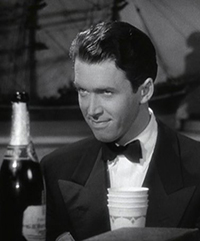 James
Stewart is one of the greatest actors
in motion picture history, so it is frustrating that he won
his only Oscar for his weakest nominated performance in The
Philadelphia Story. It is generally thought that his Oscar
for The Philadelphia Story was awarded as a consolation
prize over his losing out the previous year for his vastly superior
work in Mr. Smith Goes to Washington. Stewart turned
in his usual fine job in The Philadelphia Story, but
his performance was not on a par with the nominated work of
Henry Fonda in The Grapes of Wrath, Charles Chaplin in
The Great Dictator, Raymond Massey in Abe Lincoln
in Illinois, or Laurence Olivier in Rebecca, nor
of such overlooked accomplishments as Edward G. Robinson in
Dr. Erlich's Magic Bullet, Tyrone Power in The Mark
of Zorro, or Cary Grant in His Girl Friday. The Oscar
pantheon would not be complete without Stewart and had the Academy
waited, they might have given him a more deserving Oscar for
his classic turn in It's a Wonderful Life, his New York
Film Critics Award winning role in Anatomy of a Murder, or
his unnominated tour de force in Vertigo.
James
Stewart is one of the greatest actors
in motion picture history, so it is frustrating that he won
his only Oscar for his weakest nominated performance in The
Philadelphia Story. It is generally thought that his Oscar
for The Philadelphia Story was awarded as a consolation
prize over his losing out the previous year for his vastly superior
work in Mr. Smith Goes to Washington. Stewart turned
in his usual fine job in The Philadelphia Story, but
his performance was not on a par with the nominated work of
Henry Fonda in The Grapes of Wrath, Charles Chaplin in
The Great Dictator, Raymond Massey in Abe Lincoln
in Illinois, or Laurence Olivier in Rebecca, nor
of such overlooked accomplishments as Edward G. Robinson in
Dr. Erlich's Magic Bullet, Tyrone Power in The Mark
of Zorro, or Cary Grant in His Girl Friday. The Oscar
pantheon would not be complete without Stewart and had the Academy
waited, they might have given him a more deserving Oscar for
his classic turn in It's a Wonderful Life, his New York
Film Critics Award winning role in Anatomy of a Murder, or
his unnominated tour de force in Vertigo. 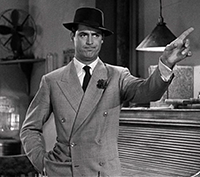 The
Academy's disregard of comedy has been well documented, and
no one seems to have be affected by it as much as Cary Grant.
Grant was twice nominated for his dramatic work for Penny Serenade in 1941 and None But the Lonely Heart in 1944, both excellent performances that were worthy of recognition.
But Grant was always overlooked for the sophisticated comedies
on which his reputation was based. The Academy's patronizing
attitude towards Grant's true calling was never as apparent
as it was in 1937, when his delightful comedy The Awful Truth was not only nominated for Best Picture, Best Actress, Best
Supporting Actor and Best Screenplay; but it won for Leo McCarey
the first of his two Best Director Oscars. With the high regard
the Academy held The Awful Truth in, Grant's snub in
the Best Actor race seems all the more puzzling. The
Academy's failure to recognize Grant's artistry continued this year, when thet nominated five distinguished actors in Stewart,
Fonda, Chaplin, Laurence Olivier, and Raymond Massey. Fonda
certainly gave the outstanding performance among the nominees,
with his strongest opposition coming from Grant
in what was probably his best performance, His Girl Friday.
This remake of The Front Page added a brilliant dimension
to the Hecht/MacArthur comic melodrama by switching the gender
of ace newspaperman Hildy Johnson (without bothering to change
the character's name) and having him played by the wonderful
Rosalind Russell (another glaring omission); the result being
a crackerjack screwball romantic comedy that is led in its frenetic
pace by the driving force of Grant's newspaper publisher Walter
Burns.
The
Academy's disregard of comedy has been well documented, and
no one seems to have be affected by it as much as Cary Grant.
Grant was twice nominated for his dramatic work for Penny Serenade in 1941 and None But the Lonely Heart in 1944, both excellent performances that were worthy of recognition.
But Grant was always overlooked for the sophisticated comedies
on which his reputation was based. The Academy's patronizing
attitude towards Grant's true calling was never as apparent
as it was in 1937, when his delightful comedy The Awful Truth was not only nominated for Best Picture, Best Actress, Best
Supporting Actor and Best Screenplay; but it won for Leo McCarey
the first of his two Best Director Oscars. With the high regard
the Academy held The Awful Truth in, Grant's snub in
the Best Actor race seems all the more puzzling. The
Academy's failure to recognize Grant's artistry continued this year, when thet nominated five distinguished actors in Stewart,
Fonda, Chaplin, Laurence Olivier, and Raymond Massey. Fonda
certainly gave the outstanding performance among the nominees,
with his strongest opposition coming from Grant
in what was probably his best performance, His Girl Friday.
This remake of The Front Page added a brilliant dimension
to the Hecht/MacArthur comic melodrama by switching the gender
of ace newspaperman Hildy Johnson (without bothering to change
the character's name) and having him played by the wonderful
Rosalind Russell (another glaring omission); the result being
a crackerjack screwball romantic comedy that is led in its frenetic
pace by the driving force of Grant's newspaper publisher Walter
Burns.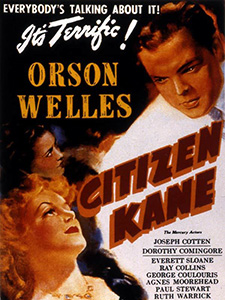 Whether
or not Citizen Kane is the greatest film ever made is
a subject of debate, but it was certainly the greatest film
made in 1941 and even the Academy knew it, anointing the masterpiece
with nine nominations including four for wunderkind Orson
Welles. It never had a chance in the Best Picture race because
of factors that had nothing to do with its qualities as a motion
picture: it was a box office flop made by an arrogant neophyte
that infuriated one of the most powerful men in Hollywood, newspaper
publisher William Randolph Hearst. Kane was not an accurate
depiction of Hearst's world, especially in its libelous characterization
of Heart's talented movie star girlfriend Marion Davies as a
no-talent wannabe opera singer. But it is unquestionably a brilliant
piece of filmmaking that was vastly superior to anything else
released that year, including the highly enjoyable albeit undeniably
sentimental winner How Green Was My Valley. In the Hindsight
Awards race, John Ford's idealized view of a Welsh mining town
wouldn't have even placed (that honor would have gone to John
Huston's brilliant remake of The Maltese Falcon), but
it is a memorable movie very much in the safe and tested Academy
Award mold.
Whether
or not Citizen Kane is the greatest film ever made is
a subject of debate, but it was certainly the greatest film
made in 1941 and even the Academy knew it, anointing the masterpiece
with nine nominations including four for wunderkind Orson
Welles. It never had a chance in the Best Picture race because
of factors that had nothing to do with its qualities as a motion
picture: it was a box office flop made by an arrogant neophyte
that infuriated one of the most powerful men in Hollywood, newspaper
publisher William Randolph Hearst. Kane was not an accurate
depiction of Hearst's world, especially in its libelous characterization
of Heart's talented movie star girlfriend Marion Davies as a
no-talent wannabe opera singer. But it is unquestionably a brilliant
piece of filmmaking that was vastly superior to anything else
released that year, including the highly enjoyable albeit undeniably
sentimental winner How Green Was My Valley. In the Hindsight
Awards race, John Ford's idealized view of a Welsh mining town
wouldn't have even placed (that honor would have gone to John
Huston's brilliant remake of The Maltese Falcon), but
it is a memorable movie very much in the safe and tested Academy
Award mold.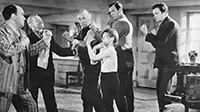 The
Academy threw Citizen Kane a bone by anointing it with
the Best Original Screenplay Oscar, but the category that it
should have run away with was Best Black-and-White Cinematography.
The failure of Gregg Toland's celebrated deep focus photography
to win the award was attributed to the petty resentment towards
Orson Welles, an unfortunate omission that is indicative of
the political infighting that frequently accompanies the Academy
Awards. In another year, Arthur Miller's work on How
Green Was My Valley would have been a deserving winner;
but in 1941 it was an embarrassing selection motivated by studio
politics.
The
Academy threw Citizen Kane a bone by anointing it with
the Best Original Screenplay Oscar, but the category that it
should have run away with was Best Black-and-White Cinematography.
The failure of Gregg Toland's celebrated deep focus photography
to win the award was attributed to the petty resentment towards
Orson Welles, an unfortunate omission that is indicative of
the political infighting that frequently accompanies the Academy
Awards. In another year, Arthur Miller's work on How
Green Was My Valley would have been a deserving winner;
but in 1941 it was an embarrassing selection motivated by studio
politics. 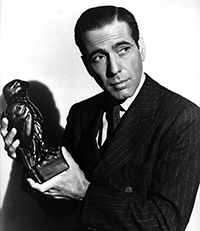 After
years of playing second string gangsters for Warner Bros.,
Humphrey Bogart had one of the great breakout years
in screen history with his back-to-back performances in High
Sierra and The Maltese Falcon. He deserved a nomination
for either role (and indeed might have canceled himself out
in the balloting with this impressive one-two punch), but
his Sam Spade in The Maltese Falcon was particularly
deserving of recognition. This was acting in a new vein: the
cynical anti-hero who seemed to be the selfish antithesis
of the usual movie leading man. Most actors couldn't have
gotten away with it, but Bogart's unique charisma made the
sleazy character spellbinding. Bogey was finally admitted to the pantheon of Oscar nominees two years later, for his signature role as Rick Blaine in Casablanca. It's hard to quibble with the nominees the Academy decided on in 1941: Gary Cooper in Sergeant York, Cary Grant in Penny Serenade, Walter Huston in All That Money Can Buy, Robert Montgomery in Here Comes Mr. Jordan, and Orson Welles in Citizen Kane. But Bogart's romantic cynicism seemed to personify the dark years of World War II, and his performance as Sam Spade was the first true display of the mystique that makes him as big a star now as he was at his creative height
After
years of playing second string gangsters for Warner Bros.,
Humphrey Bogart had one of the great breakout years
in screen history with his back-to-back performances in High
Sierra and The Maltese Falcon. He deserved a nomination
for either role (and indeed might have canceled himself out
in the balloting with this impressive one-two punch), but
his Sam Spade in The Maltese Falcon was particularly
deserving of recognition. This was acting in a new vein: the
cynical anti-hero who seemed to be the selfish antithesis
of the usual movie leading man. Most actors couldn't have
gotten away with it, but Bogart's unique charisma made the
sleazy character spellbinding. Bogey was finally admitted to the pantheon of Oscar nominees two years later, for his signature role as Rick Blaine in Casablanca. It's hard to quibble with the nominees the Academy decided on in 1941: Gary Cooper in Sergeant York, Cary Grant in Penny Serenade, Walter Huston in All That Money Can Buy, Robert Montgomery in Here Comes Mr. Jordan, and Orson Welles in Citizen Kane. But Bogart's romantic cynicism seemed to personify the dark years of World War II, and his performance as Sam Spade was the first true display of the mystique that makes him as big a star now as he was at his creative height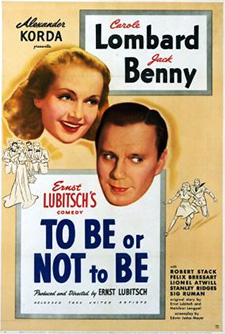 It
is hard to fault the Academy for selecting MGM's smash-hit piece
of war propaganda, Mrs. Miniver, as Best Picture. It
certainly struck a chord with its contemporary audience who
could relate to the noble struggle of a family trying to carry
on their lives in a world torn apart by war. But when watching
it today, the film seems like it is being viewed through a time
machine, and the well-heeled and attractive Miniver family are
much too idealized to carry any true dramatic resonance. Still, it boasts a magnificent performance by Greer Garson in the title role and by Teresa Wright as her daughter in law (although Wright competes with costar Richard Ney - Garson's future husband playing her son in the movie - as having two of the most unconvincing English accents in motion picture history). At its best, Mrs. Miniver is superb; especially in its memorable sequence of a German soldier briefly taking over the Miniver household, or bringing home the grim truth of the war when Wright's character is killed by enemy fire. But the film is undeniably softened by all the gloss MGM could cover it with, and its harsh realities were delivered with a hefty serving of Hollywood palatability.
It
is hard to fault the Academy for selecting MGM's smash-hit piece
of war propaganda, Mrs. Miniver, as Best Picture. It
certainly struck a chord with its contemporary audience who
could relate to the noble struggle of a family trying to carry
on their lives in a world torn apart by war. But when watching
it today, the film seems like it is being viewed through a time
machine, and the well-heeled and attractive Miniver family are
much too idealized to carry any true dramatic resonance. Still, it boasts a magnificent performance by Greer Garson in the title role and by Teresa Wright as her daughter in law (although Wright competes with costar Richard Ney - Garson's future husband playing her son in the movie - as having two of the most unconvincing English accents in motion picture history). At its best, Mrs. Miniver is superb; especially in its memorable sequence of a German soldier briefly taking over the Miniver household, or bringing home the grim truth of the war when Wright's character is killed by enemy fire. But the film is undeniably softened by all the gloss MGM could cover it with, and its harsh realities were delivered with a hefty serving of Hollywood palatability.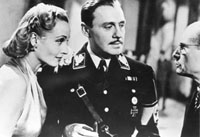 1942 audiences were too close to the situation to appreciate
Ernst Lubitsch's brilliant comedy of a Polish theatre troupe
giving the Nazis fits, To Be Or Not To Be. Lines such
as the famous exchange where a disguised Jack Benny asks a Nazi
officer what he thinks of Benny's abilities as a Shakespearean
actor and the officer responding "What he does to Shakespeare,
we are doing to Poland," struck 1942 audiences as being
in very bad taste, especially when the film was released shortly
after the tragic death of star Carole Lombard. Now that time
has healed some of the wounds opened by World War II, To
Be or Not To Be can be enjoyed as the brilliant satire it
is, and Mrs. Miniver can be written off as the deftly
made although ultimately rose-colored salve for the soul that
it was.
1942 audiences were too close to the situation to appreciate
Ernst Lubitsch's brilliant comedy of a Polish theatre troupe
giving the Nazis fits, To Be Or Not To Be. Lines such
as the famous exchange where a disguised Jack Benny asks a Nazi
officer what he thinks of Benny's abilities as a Shakespearean
actor and the officer responding "What he does to Shakespeare,
we are doing to Poland," struck 1942 audiences as being
in very bad taste, especially when the film was released shortly
after the tragic death of star Carole Lombard. Now that time
has healed some of the wounds opened by World War II, To
Be or Not To Be can be enjoyed as the brilliant satire it
is, and Mrs. Miniver can be written off as the deftly
made although ultimately rose-colored salve for the soul that
it was. 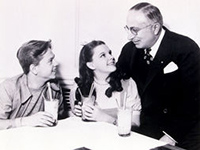 MGM
head Louis B. Mayer won a Special Oscar "for its achievement in representing
the American way of life in the production of the Andy Hardy
series of films." The Andy Hardy series was a cash
cow for MGM in the 1930s and early 1940s and Louis B. Mayer's
personal pet project about his own idea of the very narrow values
the American Dream should encompass (as embodied by Mickey Rooney,
who in real life had to be taken aside by Mayer and asked to
stop posing for publicity photos at race tracks), and totally
forgotten today except as a dated period piece. What the inscription
should have read was "for its achievement in representing
MGM head Louis B. Mayer's unrealistic idealization of American
life, where people of color do not play a part in society and
where economic hardships are nonexistent."
MGM
head Louis B. Mayer won a Special Oscar "for its achievement in representing
the American way of life in the production of the Andy Hardy
series of films." The Andy Hardy series was a cash
cow for MGM in the 1930s and early 1940s and Louis B. Mayer's
personal pet project about his own idea of the very narrow values
the American Dream should encompass (as embodied by Mickey Rooney,
who in real life had to be taken aside by Mayer and asked to
stop posing for publicity photos at race tracks), and totally
forgotten today except as a dated period piece. What the inscription
should have read was "for its achievement in representing
MGM head Louis B. Mayer's unrealistic idealization of American
life, where people of color do not play a part in society and
where economic hardships are nonexistent." Ernst
Lubitsch was one of the greatest directors
in history (immortalized for giving his films a singular airy
charm that came to be known as "The Lubitsch Touch"),
and one of the few who was a success in the silents who made
an even greater mark in the talkies. Twice nominated for Best
Director for The Patriot (1928/29) and Heaven Can
Wait (1943), Lubitsch served as a mentor to the many expatriate
German filmmakers who came to Hollywood to escape the Nazis
(notably Billy Wilder who received his own first nomination
for writing Lubitsch's 1939 classic Ninotchka). Lubitsch
might have received additional recognition for Ninotchka,
The Big Parade, The Smiling Lieutenant or Trouble in
Paradise, but he should have taken the award home for his
courageous mockery of Hitler in To Be Or Not to Be. But
the film cut too close to the truth for its contemporary audience,
and prophets and satirists are not recognized in their own time.
Ernst
Lubitsch was one of the greatest directors
in history (immortalized for giving his films a singular airy
charm that came to be known as "The Lubitsch Touch"),
and one of the few who was a success in the silents who made
an even greater mark in the talkies. Twice nominated for Best
Director for The Patriot (1928/29) and Heaven Can
Wait (1943), Lubitsch served as a mentor to the many expatriate
German filmmakers who came to Hollywood to escape the Nazis
(notably Billy Wilder who received his own first nomination
for writing Lubitsch's 1939 classic Ninotchka). Lubitsch
might have received additional recognition for Ninotchka,
The Big Parade, The Smiling Lieutenant or Trouble in
Paradise, but he should have taken the award home for his
courageous mockery of Hitler in To Be Or Not to Be. But
the film cut too close to the truth for its contemporary audience,
and prophets and satirists are not recognized in their own time.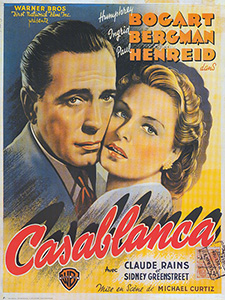 The
troubled shooting and on-the-spot rewriting of Casablanca
has been told and retold many times, but what many movie fans
overlook that it holds an unprecedented spot among Best Picture
winners. In our current thinking that a film must be released
after Thanksgiving to be fresh enough in the voters' minds
to be a Best Picture contender, it is surprising to discover
that the Best Picture of 1943 was actually released in New
York in November of 1942 to mixed reviews and lackluster business.
The film opened in Los Angeles in January to coincide with
the peace talks taking place in Casablanca, and finally found
the audience that has been embracing it ever since. It hardly
seems a surprise that it made such an impact that the Academy
chose to honor it fourteen months after its initial release;
Casablanca is still going strong and finding legions
of new fans in its seventieth year, when most World War II propaganda
has been consigned to time capsules or Turner Classic Movies.
1943 was a year when the Academy definitely got it right.
The
troubled shooting and on-the-spot rewriting of Casablanca
has been told and retold many times, but what many movie fans
overlook that it holds an unprecedented spot among Best Picture
winners. In our current thinking that a film must be released
after Thanksgiving to be fresh enough in the voters' minds
to be a Best Picture contender, it is surprising to discover
that the Best Picture of 1943 was actually released in New
York in November of 1942 to mixed reviews and lackluster business.
The film opened in Los Angeles in January to coincide with
the peace talks taking place in Casablanca, and finally found
the audience that has been embracing it ever since. It hardly
seems a surprise that it made such an impact that the Academy
chose to honor it fourteen months after its initial release;
Casablanca is still going strong and finding legions
of new fans in its seventieth year, when most World War II propaganda
has been consigned to time capsules or Turner Classic Movies.
1943 was a year when the Academy definitely got it right.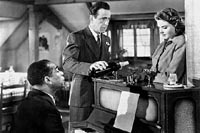 There
were a wealth of superior nominated films in this movie year
and had Casablanca been out of the running, Twentieth Century Fox's The
Song of Bernadette might have been the front runner for the
award. But Casablanca is such a sublime mixture of
exotic locales, romance, adventure, intrigue and even comedy
that it seems to say "the movies" more than any
film ever created. It also has the most extraordinary gathering
of characters ever assembled in Rick Blaine, Elsa Lund, Victor
Laszlo, Captain Renault, Major Strasser, Signor Ferrari, Ugarte,
Sam, et al. depicted by the most unforgettable cast of actors
ever assembled. When lists of the greatest films ever made
are drawn up, Casablanca is invariably named in the
top ten (being represented as number two on the AFI list and
number nine on IMDb). Madbeast.com places it squarely as number
one on the list.
There
were a wealth of superior nominated films in this movie year
and had Casablanca been out of the running, Twentieth Century Fox's The
Song of Bernadette might have been the front runner for the
award. But Casablanca is such a sublime mixture of
exotic locales, romance, adventure, intrigue and even comedy
that it seems to say "the movies" more than any
film ever created. It also has the most extraordinary gathering
of characters ever assembled in Rick Blaine, Elsa Lund, Victor
Laszlo, Captain Renault, Major Strasser, Signor Ferrari, Ugarte,
Sam, et al. depicted by the most unforgettable cast of actors
ever assembled. When lists of the greatest films ever made
are drawn up, Casablanca is invariably named in the
top ten (being represented as number two on the AFI list and
number nine on IMDb). Madbeast.com places it squarely as number
one on the list.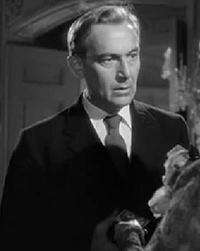 Paul
Lukas first played his role of freedom
fighter Kurt Muller in Watch on the Rhine on the Broadway
stage and repeated the role in the film version of Lillian Hellman's
play to universal acclaim, winning the New York Film Critics
Award as well as the Oscar. But the choice now seems absurd.
Not because Lukas wasn't effective in the role, but that his
turn in this now-forgotten bit of hokum (Muller's children in the film are among the most insufferable characters in movie history) was selected over one
of the most memorable and beloved marriages of actor to role
in screen history: Humphrey Bogart as Rick Blaine in Casablanca.
It is difficult to imagine a better example of a performer transcending
mundane material than Bogart's cynical, world-weary Rick Blaine.
Another actor in the role would have resulted in a dull melodrama,
but Bogart's presence turned Casablanca into art. Lukas
was excellent in Watch on the Rhine; but only as good
as any number of other actors who would have been cast in the
role. Bogart was unique.
Paul
Lukas first played his role of freedom
fighter Kurt Muller in Watch on the Rhine on the Broadway
stage and repeated the role in the film version of Lillian Hellman's
play to universal acclaim, winning the New York Film Critics
Award as well as the Oscar. But the choice now seems absurd.
Not because Lukas wasn't effective in the role, but that his
turn in this now-forgotten bit of hokum (Muller's children in the film are among the most insufferable characters in movie history) was selected over one
of the most memorable and beloved marriages of actor to role
in screen history: Humphrey Bogart as Rick Blaine in Casablanca.
It is difficult to imagine a better example of a performer transcending
mundane material than Bogart's cynical, world-weary Rick Blaine.
Another actor in the role would have resulted in a dull melodrama,
but Bogart's presence turned Casablanca into art. Lukas
was excellent in Watch on the Rhine; but only as good
as any number of other actors who would have been cast in the
role. Bogart was unique.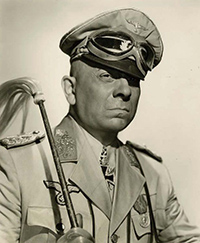 Eric
von Stroheim got his start in films
as an assistant to D.W. Griffith on Intolerance, and
became a film legend as a brilliant but erratic director of
silent films (Greed, The Merry Widow) and as an aristocratic
and villainous actor in the talkies (La Grande Illusion,
The North Star). He should have been anointed as a Best Actor contender
for his complex depiction of Erwin Rommel in Five Graves
to Cairo, only the second film directed by Billy Wilder, but the Academy felt that Walter Pidgeon's typically staid and wooden work as Nobel Prize-winning physicist Pierre Curie in MGM's typically prim and proper Madame Curie or Gary Cooper's stiff performance in Ernest Hemingway's overwritten monument to escapist machismo For Whom The Bell Tolls (featuring blonde Swede Ingrid Bergman as a Spanish freedom fighter) was more deserving of recognition. Von Stroheim's excessive perfectionism (the trademark of his directing career) took a toll on his reputation as an actor and he worked mainly in forgettable B movies through the late 1940s before obtaining most of his work in French cinema. He made an immortal comeback in Hollywood in 1950, finally received an Oscar nomination
for his unforgettable Max von Mayerling in another Billy Wilder film, Sunset
Boulevard. He was so infuriated at being placed in the
Best Supporting Actor category that he considered suing the
Academy.
Eric
von Stroheim got his start in films
as an assistant to D.W. Griffith on Intolerance, and
became a film legend as a brilliant but erratic director of
silent films (Greed, The Merry Widow) and as an aristocratic
and villainous actor in the talkies (La Grande Illusion,
The North Star). He should have been anointed as a Best Actor contender
for his complex depiction of Erwin Rommel in Five Graves
to Cairo, only the second film directed by Billy Wilder, but the Academy felt that Walter Pidgeon's typically staid and wooden work as Nobel Prize-winning physicist Pierre Curie in MGM's typically prim and proper Madame Curie or Gary Cooper's stiff performance in Ernest Hemingway's overwritten monument to escapist machismo For Whom The Bell Tolls (featuring blonde Swede Ingrid Bergman as a Spanish freedom fighter) was more deserving of recognition. Von Stroheim's excessive perfectionism (the trademark of his directing career) took a toll on his reputation as an actor and he worked mainly in forgettable B movies through the late 1940s before obtaining most of his work in French cinema. He made an immortal comeback in Hollywood in 1950, finally received an Oscar nomination
for his unforgettable Max von Mayerling in another Billy Wilder film, Sunset
Boulevard. He was so infuriated at being placed in the
Best Supporting Actor category that he considered suing the
Academy.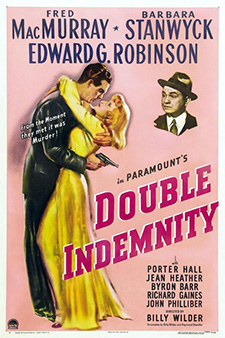 One
of a long string of smash hit Bing Crosby vehicles for Paramount,
Going My Way seemed like a change of pace for the singer
in his role of a gentle priest who is sent to take over a poor
parish over the objections of its longtime pastor played by
Barry Fitzgerald. It was a fabulous hit with both audiences and critics, being the far-and-away top money-maker of the year and winning the New York Film Critics Award and the nascent Golden Globe. The award-givers were split on Crosby's and Fitzgerald's contributions, with the Globes naming Crosby Best Actor and Fitzgerald Best Supporting Actor, but the New York scribes awarding Fitzgerald Best Actor (they did not hand out supporting acting awards until 1969) with Crosby the runner-up. The Oscars were totally confused by the pair and, in an unprecedented move, nominated Fitzgerald for both Best Actor and Best Supporting Actor, giving him the statuette for the latter category but passing him up in the leading role category to the top-billed Crosby. The film also became the first to win the Best Picture trophy while also taking home the Best Song prize, for the snappy and memorable Swingin' on a Star (although no honors were awarded to the song Father O'Malley wrote in an attempt save the financial fortune of the church, the morose and depressing title tune).Everyone loved Going My Way so much in 1944 that if they'd thought about it, they probably would have invented a few more awards to honor it for.
One
of a long string of smash hit Bing Crosby vehicles for Paramount,
Going My Way seemed like a change of pace for the singer
in his role of a gentle priest who is sent to take over a poor
parish over the objections of its longtime pastor played by
Barry Fitzgerald. It was a fabulous hit with both audiences and critics, being the far-and-away top money-maker of the year and winning the New York Film Critics Award and the nascent Golden Globe. The award-givers were split on Crosby's and Fitzgerald's contributions, with the Globes naming Crosby Best Actor and Fitzgerald Best Supporting Actor, but the New York scribes awarding Fitzgerald Best Actor (they did not hand out supporting acting awards until 1969) with Crosby the runner-up. The Oscars were totally confused by the pair and, in an unprecedented move, nominated Fitzgerald for both Best Actor and Best Supporting Actor, giving him the statuette for the latter category but passing him up in the leading role category to the top-billed Crosby. The film also became the first to win the Best Picture trophy while also taking home the Best Song prize, for the snappy and memorable Swingin' on a Star (although no honors were awarded to the song Father O'Malley wrote in an attempt save the financial fortune of the church, the morose and depressing title tune).Everyone loved Going My Way so much in 1944 that if they'd thought about it, they probably would have invented a few more awards to honor it for. 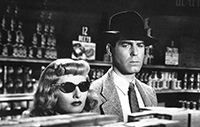 But posterity often has different tastes, and the passing years have judged Going My Way to be - while still enjoyable in its dated way - a maudlin series of episodes with Crosby displaying the same
laid back performance and easy singing style that he gave in
all those Road movies with Bob Hope (he didn't show his
true dramatic chops until The Country Girl ten years
later). Going My Way's chief competition at the time
was thought to be Darryl F. Zanuck's ponderous biography of
Woodrow Wilson (which Zanuck bitterly complained about losing the award three years later, when he won the Oscar for another pretentious piece of "social commentary," Gentleman's Agreement), but the most enduring film of 1944 is certainly
Billy Wilder's chilling tale of betrayal, Double Indemnity, co-written with Raymond Chandler from James M. Cain's novel. The filming of the movie was not a happy experience; Wilder and Chandler hated each other so much that at one point Chandler walked off the movie, refusing to return unless a series of demands were met, and Wilder determined that a month into shooting, the blonde wig he had Stanwyck wear looked terrible and back-peddled in interviews by claiming that the fake-looking tresses were intended as a window into the character's artificial soul. The leading lady's hair was the only false note in an otherwise flawless and nail-biting thriller which packs as much punch today as when it was first released, winning seven Oscar nominations (including Wilder's first in the Best Director category, although not, surprisingly, for the stunning
performances of Fred MacMurray or Edward G. Robinson, neither of whom received a single Oscar nomination throughout the course of their stellar careers), walking
away with a grand total of zero statuettes. The whirligigs of
time would have raised that number significantly.
But posterity often has different tastes, and the passing years have judged Going My Way to be - while still enjoyable in its dated way - a maudlin series of episodes with Crosby displaying the same
laid back performance and easy singing style that he gave in
all those Road movies with Bob Hope (he didn't show his
true dramatic chops until The Country Girl ten years
later). Going My Way's chief competition at the time
was thought to be Darryl F. Zanuck's ponderous biography of
Woodrow Wilson (which Zanuck bitterly complained about losing the award three years later, when he won the Oscar for another pretentious piece of "social commentary," Gentleman's Agreement), but the most enduring film of 1944 is certainly
Billy Wilder's chilling tale of betrayal, Double Indemnity, co-written with Raymond Chandler from James M. Cain's novel. The filming of the movie was not a happy experience; Wilder and Chandler hated each other so much that at one point Chandler walked off the movie, refusing to return unless a series of demands were met, and Wilder determined that a month into shooting, the blonde wig he had Stanwyck wear looked terrible and back-peddled in interviews by claiming that the fake-looking tresses were intended as a window into the character's artificial soul. The leading lady's hair was the only false note in an otherwise flawless and nail-biting thriller which packs as much punch today as when it was first released, winning seven Oscar nominations (including Wilder's first in the Best Director category, although not, surprisingly, for the stunning
performances of Fred MacMurray or Edward G. Robinson, neither of whom received a single Oscar nomination throughout the course of their stellar careers), walking
away with a grand total of zero statuettes. The whirligigs of
time would have raised that number significantly. When
Leo McCarey won the Best Director Oscar for Going
My Way, Billy Wilder was said to have tripped him as he
made his way to the podium to accept the award. Wilder can be
forgiven for the minor act of assault since he (or fellow nominee
Alfred Hitchcock for Lifeboat) were more deserving of
the award, but an even worse choice was McCarey for Best Original
Story for Going My Way. It's not that Going My Way
isn't an entertaining or well written film (its win for
Best Screenplay is undeserved compared with Double Indemnity,
Gaslight or Laura, but certainly a creditable pick),
but its loosely-strung series of episodes doesn't constitute
a story at all. McCarey was one of the seminal comedy directors of the 1930s and 1940s, helming such classics as Duck Soup (1933) with the Marx Bros., Ruggles of Red Gap (1935) The Awful Truth (1937, for which he won his first Best Director Oscar), An Affair to Remember (1939) and The Bells of St. Marys (1945) as well as winning immortality as the man who first teamed Stan Laurel with Oliver Hardy. So while we aren't giving him any Hindsight Awards in 1944, we hold him in very high regard indeed.
When
Leo McCarey won the Best Director Oscar for Going
My Way, Billy Wilder was said to have tripped him as he
made his way to the podium to accept the award. Wilder can be
forgiven for the minor act of assault since he (or fellow nominee
Alfred Hitchcock for Lifeboat) were more deserving of
the award, but an even worse choice was McCarey for Best Original
Story for Going My Way. It's not that Going My Way
isn't an entertaining or well written film (its win for
Best Screenplay is undeserved compared with Double Indemnity,
Gaslight or Laura, but certainly a creditable pick),
but its loosely-strung series of episodes doesn't constitute
a story at all. McCarey was one of the seminal comedy directors of the 1930s and 1940s, helming such classics as Duck Soup (1933) with the Marx Bros., Ruggles of Red Gap (1935) The Awful Truth (1937, for which he won his first Best Director Oscar), An Affair to Remember (1939) and The Bells of St. Marys (1945) as well as winning immortality as the man who first teamed Stan Laurel with Oliver Hardy. So while we aren't giving him any Hindsight Awards in 1944, we hold him in very high regard indeed.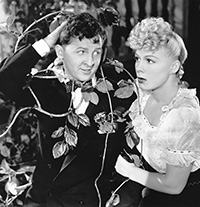 Preston
Sturges was nominated for Best Original Screenplay for both
The Miracle of Morgan's Creek and Hail the Conquering
Hero, losing the award twice to Lamarr Trotti's tedious
script for Wilson. Morgan's Creek was added to
the National Film Registry in 2001, an honor that Wilson
(or Best Picture Going My Way) has yet to attain, a solid
indication that Sturges' delightful comedy about a ditzy small
town girl in trouble (wonderfully played by Betty Hutton) may
not have been as highly regarded when it came out, but it is
a film for the ages. The Miracle of Morgan's Creek was
grossly unrewarded at the Oscars, deserving nominations for
Best Picture, Sturges as Best Director, Hutton as Best Actress,
William Demarest as Best Supporting Actor, and winning
the award for Eddie Bracken's manic yet touching
performance as the gentle soul who worships Hutton, displaying
a depth and sensitivity lacking in winner Bing Crosby's popular
though undemanding turn in Going My Way. The Academy
loved Going My Way so much that they not only gave the
Oscar to Crosby but nominated Barry Fitzgerald for Best Actor
as well as voting him Best Supporting Actor for the film, but
it is Bracken (who was also excellent in Hail the Conquering
Hero) who displays the most humanity, if you can stop laughing
long enough to notice.
Preston
Sturges was nominated for Best Original Screenplay for both
The Miracle of Morgan's Creek and Hail the Conquering
Hero, losing the award twice to Lamarr Trotti's tedious
script for Wilson. Morgan's Creek was added to
the National Film Registry in 2001, an honor that Wilson
(or Best Picture Going My Way) has yet to attain, a solid
indication that Sturges' delightful comedy about a ditzy small
town girl in trouble (wonderfully played by Betty Hutton) may
not have been as highly regarded when it came out, but it is
a film for the ages. The Miracle of Morgan's Creek was
grossly unrewarded at the Oscars, deserving nominations for
Best Picture, Sturges as Best Director, Hutton as Best Actress,
William Demarest as Best Supporting Actor, and winning
the award for Eddie Bracken's manic yet touching
performance as the gentle soul who worships Hutton, displaying
a depth and sensitivity lacking in winner Bing Crosby's popular
though undemanding turn in Going My Way. The Academy
loved Going My Way so much that they not only gave the
Oscar to Crosby but nominated Barry Fitzgerald for Best Actor
as well as voting him Best Supporting Actor for the film, but
it is Bracken (who was also excellent in Hail the Conquering
Hero) who displays the most humanity, if you can stop laughing
long enough to notice. 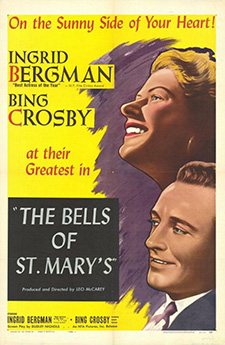 The
Lost Weekend was Billy Wilder's indictment
of alcoholism, the first major feature film of the sound era
to take on the subject. It caused a sensation at the time, with
the alcohol industry going so far as to attempt to buy the negative
from Paramount to keep anyone from seeing it and was honored as the year's best not only by the Oscars, but the Cannes Film Festival and the New York Film Critis. But viewed today,
The Lost Weekend seems badly dated, with its
unrealistic happy ending tacked on in order to pander to its
audience (the central character is more hopeful as the credits roll, but he really has the same problems that he did at the beginning of the film). The famous scene of a DT-stricken Ray Milland being
terrorized by a bat flying around his bedroom and a mouse crawling out of an imaginary hole
in his wall doesn't have quite the impact it did in 1945 and the same can be said of Miklós Rózsa's Oscar-nominated, theramin-centered score, which now seems more appropriate for a low-budget 1950s horror movie. But there's is no doubting the effectiveness of Milland's performance and the power of Wilder's direction. It probably was the Best Picture in 1945 but the Hindsight Awards are based on timelessness rather than timlieness so while we respect The Lost Weekend, we'll look elsewhere to give out our top prize.
The
Lost Weekend was Billy Wilder's indictment
of alcoholism, the first major feature film of the sound era
to take on the subject. It caused a sensation at the time, with
the alcohol industry going so far as to attempt to buy the negative
from Paramount to keep anyone from seeing it and was honored as the year's best not only by the Oscars, but the Cannes Film Festival and the New York Film Critis. But viewed today,
The Lost Weekend seems badly dated, with its
unrealistic happy ending tacked on in order to pander to its
audience (the central character is more hopeful as the credits roll, but he really has the same problems that he did at the beginning of the film). The famous scene of a DT-stricken Ray Milland being
terrorized by a bat flying around his bedroom and a mouse crawling out of an imaginary hole
in his wall doesn't have quite the impact it did in 1945 and the same can be said of Miklós Rózsa's Oscar-nominated, theramin-centered score, which now seems more appropriate for a low-budget 1950s horror movie. But there's is no doubting the effectiveness of Milland's performance and the power of Wilder's direction. It probably was the Best Picture in 1945 but the Hindsight Awards are based on timelessness rather than timlieness so while we respect The Lost Weekend, we'll look elsewhere to give out our top prize.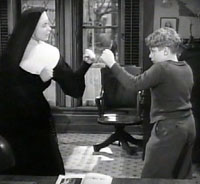 There were a few movies which had legitimate claims for the Hindsight Award for the best film of the year. Of the nominated films, Mildred Pierce, Joan Crawford's comeback vehicle after being released by MGM, was an effective soap opera that still packs a powerful dramatic punch, and Anchors Aweigh was possibly the most entertaining teaming of Gene Kelly and Frank Sinatra in an MGM musical (if only for the classic dance number between Kelly and Jerry, the cartoon mouse from the studio's Tom and Jerry franchise). Non-nominated legitimate contenders for the top prize were the horror classic The Body Snatchers; the finest film of French director Jean Renoir's brief Hollywood career, the poetic The Southerner; and the perennial classic National Velvet. But the best
film of this weak year was Leo McCarey and Bing Crosby's smash
hit follow-up to Going My Way, The Bells of St. Mary's; in which Crosby reprised his Oscar winning role as compassionate priest Chuck O'Malley, this time locking horns with a slightly implausibly beautiful nun in the person of Ingrid Bergman (who is isn't so strict that she's above teaching one of the boys in her care how to defend himself in a fist fight).
While no less sappy or manipulative than its predecessor, The
Bells of St. Mary's was equally entertaining; containing
the usual Crosby charm and an endearing performance by Bergman as a kind, but no-nonsense Bride of Christ and featured a far-bettered structured story than the episodic Going My Way. The Crosby/Bergman pairing
lacked the chemistry or tension of Crosby and Fitzgerald (who strangely
appeared in only two other films together - the 1947 smash Welcome
Stranger and the forgettable 1949 entry Top O'
the Morning), but this feel-good piece of hokum is more
memorable than any other film released this year.
There were a few movies which had legitimate claims for the Hindsight Award for the best film of the year. Of the nominated films, Mildred Pierce, Joan Crawford's comeback vehicle after being released by MGM, was an effective soap opera that still packs a powerful dramatic punch, and Anchors Aweigh was possibly the most entertaining teaming of Gene Kelly and Frank Sinatra in an MGM musical (if only for the classic dance number between Kelly and Jerry, the cartoon mouse from the studio's Tom and Jerry franchise). Non-nominated legitimate contenders for the top prize were the horror classic The Body Snatchers; the finest film of French director Jean Renoir's brief Hollywood career, the poetic The Southerner; and the perennial classic National Velvet. But the best
film of this weak year was Leo McCarey and Bing Crosby's smash
hit follow-up to Going My Way, The Bells of St. Mary's; in which Crosby reprised his Oscar winning role as compassionate priest Chuck O'Malley, this time locking horns with a slightly implausibly beautiful nun in the person of Ingrid Bergman (who is isn't so strict that she's above teaching one of the boys in her care how to defend himself in a fist fight).
While no less sappy or manipulative than its predecessor, The
Bells of St. Mary's was equally entertaining; containing
the usual Crosby charm and an endearing performance by Bergman as a kind, but no-nonsense Bride of Christ and featured a far-bettered structured story than the episodic Going My Way. The Crosby/Bergman pairing
lacked the chemistry or tension of Crosby and Fitzgerald (who strangely
appeared in only two other films together - the 1947 smash Welcome
Stranger and the forgettable 1949 entry Top O'
the Morning), but this feel-good piece of hokum is more
memorable than any other film released this year.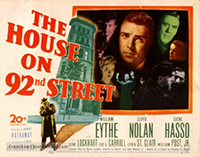 It's
hard to gather any enthusiasm (positive or negative) for any
selection made in this forgettable year, but the most lamentable
choice is probably Charles G. Booth's Oscar for Best
Original Story for the cliché-ridden The House on
92nd Street, a forgotten film about a double agent for the
FBI in a Nazi spy ring. A far superior choice would have been
Richard Flournoy and László Görög for
the frothy Joan Fontaine comedy The Affair of Susan; but
given the Academy's distaste towards froth or comedy, it's not
surprising that it was overlooked.
It's
hard to gather any enthusiasm (positive or negative) for any
selection made in this forgettable year, but the most lamentable
choice is probably Charles G. Booth's Oscar for Best
Original Story for the cliché-ridden The House on
92nd Street, a forgotten film about a double agent for the
FBI in a Nazi spy ring. A far superior choice would have been
Richard Flournoy and László Görög for
the frothy Joan Fontaine comedy The Affair of Susan; but
given the Academy's distaste towards froth or comedy, it's not
surprising that it was overlooked.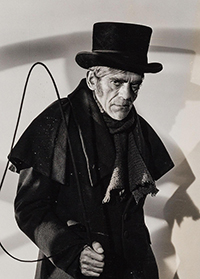 Producer
Val Lewton produced a series of superb psychological horror
films in the mid-1940's, the best of which was The Body Snatcher,
loosely based on a tale by Robert Louis Stevenson. It boasted
a superior screenplay by Lewton and Philip MacDonald, and intense
direction by future Oscar winner Robert Wise; but what truly
made the film stand out was Boris Karloff's finest performance
since Frankenstein. Karloff was respected for his stage
work (he gave legendary Broadway performances as Jonathan Brewster
in Arsenic and Old Lace and as Captain Hook in Peter
Pan, and received a Tony nomination for The Lark)
but failed to be taken seriously in Hollywood because of the
genre in which he worked, even after memorable "straight"
performances in The House of Rothchild and The Lost
Patrol. Regrettably, he was never nominated for an Oscar.
Producer
Val Lewton produced a series of superb psychological horror
films in the mid-1940's, the best of which was The Body Snatcher,
loosely based on a tale by Robert Louis Stevenson. It boasted
a superior screenplay by Lewton and Philip MacDonald, and intense
direction by future Oscar winner Robert Wise; but what truly
made the film stand out was Boris Karloff's finest performance
since Frankenstein. Karloff was respected for his stage
work (he gave legendary Broadway performances as Jonathan Brewster
in Arsenic and Old Lace and as Captain Hook in Peter
Pan, and received a Tony nomination for The Lark)
but failed to be taken seriously in Hollywood because of the
genre in which he worked, even after memorable "straight"
performances in The House of Rothchild and The Lost
Patrol. Regrettably, he was never nominated for an Oscar.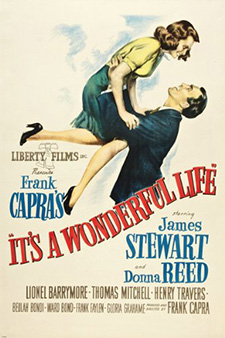 1946 was a magnificent movie-going year, with bona-fide
masterpieces It's a Wonderful Life, Henry V and The
Yearling up for Best Picture against winner The Best
Years of Our Lives (fifth nominee The Razor's Edge
was just rounding out the field), and major classics like Brief
Encounter, The Killers, Anna and the King of Siam, and Open
City hot on their heels. It's impossible to fault the Academy
for selecting the moving and timely The Best Years of Our
Lives - one of the greatest movies ever made - as its depiction
of soldiers returning home from World War II to an America trying
to adjust to a new peacetime has its finger on its contemporary
America more accurately than any other Hollywood film (with
the possible exception of The Grapes of Wrath). But that
is both the glory and the irritation of the film: it is so firmly
rooted in the world and challenges of 1946 that it sometimes
feels like a relic from a time capsule when watched now. But it is an undeniably great film and a creitable choice for the top film of the year. 1946 was one of those incredibly rare
years when there were so many great films made that it's really
a coin toss to determine what was the "best" among
so many memorable achievements, and if you prefer The Best
Years of Our Lives (or Henry V, or Brief Encounter,
or any of the other miraculous works of art of this watershed
year) as your final choice, we can't really disagree with you.
1946 was a magnificent movie-going year, with bona-fide
masterpieces It's a Wonderful Life, Henry V and The
Yearling up for Best Picture against winner The Best
Years of Our Lives (fifth nominee The Razor's Edge
was just rounding out the field), and major classics like Brief
Encounter, The Killers, Anna and the King of Siam, and Open
City hot on their heels. It's impossible to fault the Academy
for selecting the moving and timely The Best Years of Our
Lives - one of the greatest movies ever made - as its depiction
of soldiers returning home from World War II to an America trying
to adjust to a new peacetime has its finger on its contemporary
America more accurately than any other Hollywood film (with
the possible exception of The Grapes of Wrath). But that
is both the glory and the irritation of the film: it is so firmly
rooted in the world and challenges of 1946 that it sometimes
feels like a relic from a time capsule when watched now. But it is an undeniably great film and a creitable choice for the top film of the year. 1946 was one of those incredibly rare
years when there were so many great films made that it's really
a coin toss to determine what was the "best" among
so many memorable achievements, and if you prefer The Best
Years of Our Lives (or Henry V, or Brief Encounter,
or any of the other miraculous works of art of this watershed
year) as your final choice, we can't really disagree with you.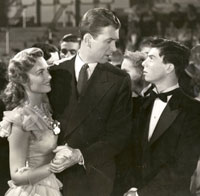 It is therefore with some hesitation that we submit Frank Capra's beloved fable of
a man reclaiming his seemingly wasted life, It's a Wonderful
Life, for the mantel of 1946's top film. To be sure, this idealized vision of small town life
is "Capra Corn" at its most saccharine; but if you
were to scan most movie fans list of favorite films from this watershed year, the tale
of George Bailey and his guardian angel would probably be listed
more than any other. James Stewart presents a startling contrast to the "aw, shucks" roles he specialized in before the war and depicts Bailey's descent into desperate despair with moving honesty while never becoming so morose that the audience loses its connection with him. And as the film juxtaposes the Mayberry-esque cosiness of Bedford Falls at the beginning of the story with Bailey's dark vision of life without him, the actors are allowed to create a truly disturbing society in which every individual living in it seems alienated, even in the midst of a crowd of other people. Yet the story's darkness is always buoyed by the encouraging theme that it only takes the presence of one inspring individual to change everything. It's a message that still packs an emotional punch even after a million viewings, so we're going to call it the best film of a remarkable year.
It is therefore with some hesitation that we submit Frank Capra's beloved fable of
a man reclaiming his seemingly wasted life, It's a Wonderful
Life, for the mantel of 1946's top film. To be sure, this idealized vision of small town life
is "Capra Corn" at its most saccharine; but if you
were to scan most movie fans list of favorite films from this watershed year, the tale
of George Bailey and his guardian angel would probably be listed
more than any other. James Stewart presents a startling contrast to the "aw, shucks" roles he specialized in before the war and depicts Bailey's descent into desperate despair with moving honesty while never becoming so morose that the audience loses its connection with him. And as the film juxtaposes the Mayberry-esque cosiness of Bedford Falls at the beginning of the story with Bailey's dark vision of life without him, the actors are allowed to create a truly disturbing society in which every individual living in it seems alienated, even in the midst of a crowd of other people. Yet the story's darkness is always buoyed by the encouraging theme that it only takes the presence of one inspring individual to change everything. It's a message that still packs an emotional punch even after a million viewings, so we're going to call it the best film of a remarkable year.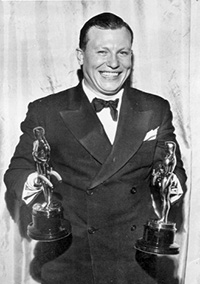 Director
William Wyler discovered double amputee Harold Russell while
watching a documentary chronicling the rehabilitation of a permanently
injured soldier during his research for The Best Years of
Our Lives. Wyler was so impressed with Russell that he decided
to change a character in the film from a spastic to a double
amputee in order to cast the war veteran. Russell responded
with an earnest though awkward performance which the Academy
rewarded with a Special Oscar "for bringing hope and courage
to his fellow veterans." Russell clearly deserved that
award, but the Academy went overboard by also giving Russell
the Oscar for Best Supporting Actor, making him the only actor
in history to receive two Oscars for a single performance. One
admires Russell's courage in the film, but he was obviously
an amateur among professionals and it clear that he never would
have been cast save for his war injury (he did not act in another
film until 1980). He ran a nonprofit organization that specialized
in finding jobs for people with disabilities and wrote two autobiographies
after his appearance in The Best Years of Our Lives,
and was forced to sell his acting Oscar late in life because
he needed money to pay his wife’s medical bills. He said
nothing could induce him to sell the Honorary Oscar though,
because it would be disrespectful to his fellow veterans. That
special award was one of the more insightful selections in Oscar
history. The acting trophy is another story.
Director
William Wyler discovered double amputee Harold Russell while
watching a documentary chronicling the rehabilitation of a permanently
injured soldier during his research for The Best Years of
Our Lives. Wyler was so impressed with Russell that he decided
to change a character in the film from a spastic to a double
amputee in order to cast the war veteran. Russell responded
with an earnest though awkward performance which the Academy
rewarded with a Special Oscar "for bringing hope and courage
to his fellow veterans." Russell clearly deserved that
award, but the Academy went overboard by also giving Russell
the Oscar for Best Supporting Actor, making him the only actor
in history to receive two Oscars for a single performance. One
admires Russell's courage in the film, but he was obviously
an amateur among professionals and it clear that he never would
have been cast save for his war injury (he did not act in another
film until 1980). He ran a nonprofit organization that specialized
in finding jobs for people with disabilities and wrote two autobiographies
after his appearance in The Best Years of Our Lives,
and was forced to sell his acting Oscar late in life because
he needed money to pay his wife’s medical bills. He said
nothing could induce him to sell the Honorary Oscar though,
because it would be disrespectful to his fellow veterans. That
special award was one of the more insightful selections in Oscar
history. The acting trophy is another story.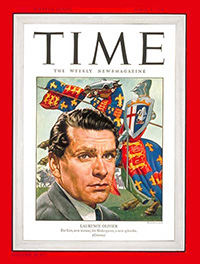 With so many great cinematic achievements
to choose from, it's inevitable that a few would slip through
the cracks. The never-nominated Myrna Loy delivered the finest
performance of her brilliant career as Fredric March's wife
trying to adjust to The Best Years of Our Lives. Lionel
Barrymore was overlooked for his most memorable performance
as the evil Mr. Potter in It's a Wonderful Life. But
the greatest single achievement of 1946 was Laurence Olivier's
inspired performance and direction of Shakespeare's Henry
V. Prior to Olivier, Shakespeare was infrequently attempted
on film and on the rare occasions that it was (Romeo &
Juliet, A Midsummer Night's Dream or the disastrous Taming
of the Shrew with Douglas Fairbanks and Mary Pickford),
the result was usually an insipid travesty that relied more
on pageantry and star-casting than on Shakespeare's poetry.
The first film that seemed to indicate the plays could be presented
cinematically was Paul Czinner's 1937 film of As You Like
It, which featured Olivier as Orlando. But it took Olivier's
wildly imaginative Henry V, which effortlessly
takes the narrative back-and-forth between an imagined performance
at Shakespeare's Globe Playhouse and the historical period of
Henry's reign, to show the world that Shakespeare was every
bit the writer that the geniuses who cranked out the screenplays
for the Bowery Boys films or Deanna Durbin musicals were. Yet
despite his success as a director, Olivier failed to make the
cut in the nominations, receiving nods only for his performance
and production. Olivier certainly should have been the hands-down
winner of the Best Actor prize (he won Best Actor from both
the New York Film Critics and the National Board of Review),
but the Academy effectively took him out the running by presenting
him with a Special Award "for his outstanding achievement
as actor, producer and director in bringing Henry V to
the screen," an honor that Olivier bitterly resented because
he felt it was merely a tactical move to take his English-produced
masterpiece out of competition against Hollywood product. Olivier
did finally win competitive Oscars two years later for his comparatively
inferior film of Hamlet (and received his only Best Director
nomination in the process), but Henry V represented not
only the high water mark of his film career, but of the production
of a Shakespearean work on screen, and should have been recognized
as the outstanding directorial achievement that it was.
With so many great cinematic achievements
to choose from, it's inevitable that a few would slip through
the cracks. The never-nominated Myrna Loy delivered the finest
performance of her brilliant career as Fredric March's wife
trying to adjust to The Best Years of Our Lives. Lionel
Barrymore was overlooked for his most memorable performance
as the evil Mr. Potter in It's a Wonderful Life. But
the greatest single achievement of 1946 was Laurence Olivier's
inspired performance and direction of Shakespeare's Henry
V. Prior to Olivier, Shakespeare was infrequently attempted
on film and on the rare occasions that it was (Romeo &
Juliet, A Midsummer Night's Dream or the disastrous Taming
of the Shrew with Douglas Fairbanks and Mary Pickford),
the result was usually an insipid travesty that relied more
on pageantry and star-casting than on Shakespeare's poetry.
The first film that seemed to indicate the plays could be presented
cinematically was Paul Czinner's 1937 film of As You Like
It, which featured Olivier as Orlando. But it took Olivier's
wildly imaginative Henry V, which effortlessly
takes the narrative back-and-forth between an imagined performance
at Shakespeare's Globe Playhouse and the historical period of
Henry's reign, to show the world that Shakespeare was every
bit the writer that the geniuses who cranked out the screenplays
for the Bowery Boys films or Deanna Durbin musicals were. Yet
despite his success as a director, Olivier failed to make the
cut in the nominations, receiving nods only for his performance
and production. Olivier certainly should have been the hands-down
winner of the Best Actor prize (he won Best Actor from both
the New York Film Critics and the National Board of Review),
but the Academy effectively took him out the running by presenting
him with a Special Award "for his outstanding achievement
as actor, producer and director in bringing Henry V to
the screen," an honor that Olivier bitterly resented because
he felt it was merely a tactical move to take his English-produced
masterpiece out of competition against Hollywood product. Olivier
did finally win competitive Oscars two years later for his comparatively
inferior film of Hamlet (and received his only Best Director
nomination in the process), but Henry V represented not
only the high water mark of his film career, but of the production
of a Shakespearean work on screen, and should have been recognized
as the outstanding directorial achievement that it was.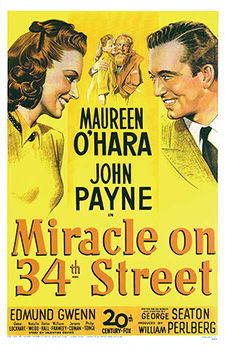 Darryl F. Zanuck felt that he was robbed of the Best Picture
Oscar for Wilson, his excruciatingly self-important
drone of a film that pretended to be a tribute to the the
twenty-eighth President but was really just a monument to
Zanuck's ego. When Zanuck failed to win the top prize for
what he considered his finest achievement, he went back to
the well of pretension and came up with Gentleman's Agreement,
which told the story of a gentile writer posing as a Jew in
order to experience anti-Semitism first hand; starting a much
imitated (Glory, Tootsie, Dances With Wolves) Hollywood
trend of pretending to tell the story of an oppressed group,
but doing it from the point of view of a white male. Some
effective films were made using this device, but at times
it is hard to get past the hypocrisy of the enterprise. If
the story were about a Jew writing about anti-Semitism played
by, say, Everett Sloan, the film would have opened and disappeared
without notice. But because it is WASP-ish Gregory Peck suffering
the indignities, contemporary audiences didn't mind sensing
outrage at the treatment he received. Zanuck finally won the
award he coveted,and when he took the podium to accept it,
he used the occasion to comment that he was still bitter that
Wilson hadn't won the Best Picture Oscar three years
before.
Darryl F. Zanuck felt that he was robbed of the Best Picture
Oscar for Wilson, his excruciatingly self-important
drone of a film that pretended to be a tribute to the the
twenty-eighth President but was really just a monument to
Zanuck's ego. When Zanuck failed to win the top prize for
what he considered his finest achievement, he went back to
the well of pretension and came up with Gentleman's Agreement,
which told the story of a gentile writer posing as a Jew in
order to experience anti-Semitism first hand; starting a much
imitated (Glory, Tootsie, Dances With Wolves) Hollywood
trend of pretending to tell the story of an oppressed group,
but doing it from the point of view of a white male. Some
effective films were made using this device, but at times
it is hard to get past the hypocrisy of the enterprise. If
the story were about a Jew writing about anti-Semitism played
by, say, Everett Sloan, the film would have opened and disappeared
without notice. But because it is WASP-ish Gregory Peck suffering
the indignities, contemporary audiences didn't mind sensing
outrage at the treatment he received. Zanuck finally won the
award he coveted,and when he took the podium to accept it,
he used the occasion to comment that he was still bitter that
Wilson hadn't won the Best Picture Oscar three years
before. 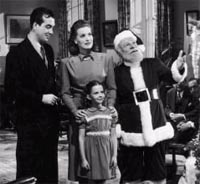 Zanuck
should have had to keep waiting to vent his frustrations over
Wilson, because a much more memorable and unpretentious
film was a far more deserving winner of the award. Miracle
on 34th Street, the beloved classic of a department store
Santa who may be the real thing, is so familiar that it does
have the air of a chestnut roasting on an open fire after
too many viewings over a lifetime of Decembers. But watched
with fresh eyes, it is a revelation to appreciate not only
how charming and clever the story is, but how laugh-out-loud
funny the Oscar winning screenplay by George Seaton is. With
the Academy's well-documented distaste for comedy, it is a
telling indication of the film's quality that it won two Oscars
for writing (for Best Screenplay as well as for the original
story by Valentine Davies) and for the touching and hilarious
performance by Edmund Gwenn as Kris Kringle (matched every
step of the way by Maureen O'Hara, John Payne and Natalie
Wood).
Zanuck
should have had to keep waiting to vent his frustrations over
Wilson, because a much more memorable and unpretentious
film was a far more deserving winner of the award. Miracle
on 34th Street, the beloved classic of a department store
Santa who may be the real thing, is so familiar that it does
have the air of a chestnut roasting on an open fire after
too many viewings over a lifetime of Decembers. But watched
with fresh eyes, it is a revelation to appreciate not only
how charming and clever the story is, but how laugh-out-loud
funny the Oscar winning screenplay by George Seaton is. With
the Academy's well-documented distaste for comedy, it is a
telling indication of the film's quality that it won two Oscars
for writing (for Best Screenplay as well as for the original
story by Valentine Davies) and for the touching and hilarious
performance by Edmund Gwenn as Kris Kringle (matched every
step of the way by Maureen O'Hara, John Payne and Natalie
Wood). 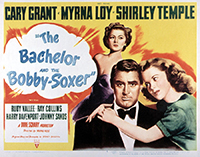 The
Academy nominated four enduring masterpieces for Best Original
Screenplay in 1947: Body and Soul, A Double Life, Monsieur
Verdoux and Shoeshine. Honoring any of these films
would have done credit to the awards, but the script they selected
to receive the trophy is a stunning puzzlement indeed: The
Bachelor and the Bobby-Soxer. Sidney Sheldon produced
an amusing script for this entertaining Cary Grant/Myna Loy
comedy, but to say it surpasses the best work of Charles Chaplin
or Abraham Polonsky makes one wonder what the Academy was smoking
when they were voting for the awards.
The
Academy nominated four enduring masterpieces for Best Original
Screenplay in 1947: Body and Soul, A Double Life, Monsieur
Verdoux and Shoeshine. Honoring any of these films
would have done credit to the awards, but the script they selected
to receive the trophy is a stunning puzzlement indeed: The
Bachelor and the Bobby-Soxer. Sidney Sheldon produced
an amusing script for this entertaining Cary Grant/Myna Loy
comedy, but to say it surpasses the best work of Charles Chaplin
or Abraham Polonsky makes one wonder what the Academy was smoking
when they were voting for the awards.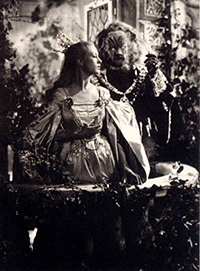 1947
was the first year that the Academy awarded the Best Foreign
Film award, with Vittorio De Sica's Shoeshine deservedly
being anointed a Special Oscar for the honor (it would not become
a competitive category until 1956) as well as a nomination for
its screenplay. But completely overlooked in the nominations
was La Belle et la bête,
French director Jean Cocteau's lyrically beautiful version of
Beauty and the Beast, one of the
most remarkably original films ever made.
Had the categories been given awards in 1947, the surrealist
masterpiece certainly should have won Oscars for Antonio Castillo
and Marcel Escoffier's lavish costume design and especially
Best Makeup for Hagop Arakelian's magnificent conception of
the Beast's lion head. But those categories weren't instituted
until 1948 and 1981 respectively, so those wonderful achievements
were overlooked for recognition. But La Belle
et la bête also deserved nominations for Christian
Bérard's surreal art direction, Henri Alékan's
haunting cinematography, Cocteau's sublime vision as director, and if we're going to be honest about it, Best Picture;
categories that were all in effect at the time. The Walt Disney Company ultimately took ownership of the
Beauty and the Beast story for a cartoon, Broadway musical and live-action film, all of which were wonderful in their own way. But none came close to matching the poetic beauty of Cocteau's masterpiece.
1947
was the first year that the Academy awarded the Best Foreign
Film award, with Vittorio De Sica's Shoeshine deservedly
being anointed a Special Oscar for the honor (it would not become
a competitive category until 1956) as well as a nomination for
its screenplay. But completely overlooked in the nominations
was La Belle et la bête,
French director Jean Cocteau's lyrically beautiful version of
Beauty and the Beast, one of the
most remarkably original films ever made.
Had the categories been given awards in 1947, the surrealist
masterpiece certainly should have won Oscars for Antonio Castillo
and Marcel Escoffier's lavish costume design and especially
Best Makeup for Hagop Arakelian's magnificent conception of
the Beast's lion head. But those categories weren't instituted
until 1948 and 1981 respectively, so those wonderful achievements
were overlooked for recognition. But La Belle
et la bête also deserved nominations for Christian
Bérard's surreal art direction, Henri Alékan's
haunting cinematography, Cocteau's sublime vision as director, and if we're going to be honest about it, Best Picture;
categories that were all in effect at the time. The Walt Disney Company ultimately took ownership of the
Beauty and the Beast story for a cartoon, Broadway musical and live-action film, all of which were wonderful in their own way. But none came close to matching the poetic beauty of Cocteau's masterpiece.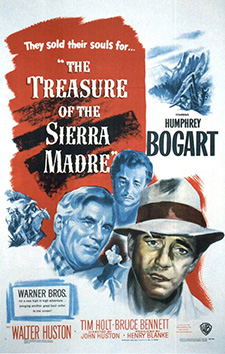 Laurence
Olivier followed up his magnificent film of Henry V
with Hamlet, and was immediately anointed as the greatest
interpreter of Shakespeare's work in film history. That, he
surely was (based on Henry V and his superlative performance in his otherwise hit-and-miss 1956
film of Richard III); but Hamlet was never Olivier's
role and his 1937 stage performance was universally panned
by critics. By 1948 he was impervious to criticism, so no
one dared point out that the film, while a decided improvement
over Hollywood's earlier attempts to film the Bard's work,
is a badly butchered and only tolerably performed adaptation
of Shakespeare's play. Olivier and text editor Alan Dent cut
the script to the bone, eliminating not only the character
of Fortinbras (who is a common casualty of the editor's pen),
but Rosencrantz and Guildestern (who are indispensable to
depicting a complete version of the story). Olivier said that
he was not initially keen to make a film of Hamlet
(he would have preferred Macbeth, but Orson Welles
was making a film of that play at the same time which would
have reached theatres first) and when he did decide to do
it, claimed that he would have preferred to cast another actor
in the lead but was unable to find a suitable performer who
would play the role according to his interpretation (when
he did direct another actor in the part, Peter O'Toole in
the premiere production of the National Theatre, the result
was a notable disappointment). It is unfortunate that Olivier
was unable to cast someone else as Hamlet, as he is frankly
wooden in the role for which he received such acclaim at the
time, and the rest of the cast (with the exception of Jean
Simmons as a memorable Ophelia) are forgettable in their various
generic characterizations. The resulting film is only a mildly
engrossing collection of the play's most famous scenes; Hamlet's
Greatest Hits, salvaged only by a truly magnificent rendering
of the duel in Act V.
Laurence
Olivier followed up his magnificent film of Henry V
with Hamlet, and was immediately anointed as the greatest
interpreter of Shakespeare's work in film history. That, he
surely was (based on Henry V and his superlative performance in his otherwise hit-and-miss 1956
film of Richard III); but Hamlet was never Olivier's
role and his 1937 stage performance was universally panned
by critics. By 1948 he was impervious to criticism, so no
one dared point out that the film, while a decided improvement
over Hollywood's earlier attempts to film the Bard's work,
is a badly butchered and only tolerably performed adaptation
of Shakespeare's play. Olivier and text editor Alan Dent cut
the script to the bone, eliminating not only the character
of Fortinbras (who is a common casualty of the editor's pen),
but Rosencrantz and Guildestern (who are indispensable to
depicting a complete version of the story). Olivier said that
he was not initially keen to make a film of Hamlet
(he would have preferred Macbeth, but Orson Welles
was making a film of that play at the same time which would
have reached theatres first) and when he did decide to do
it, claimed that he would have preferred to cast another actor
in the lead but was unable to find a suitable performer who
would play the role according to his interpretation (when
he did direct another actor in the part, Peter O'Toole in
the premiere production of the National Theatre, the result
was a notable disappointment). It is unfortunate that Olivier
was unable to cast someone else as Hamlet, as he is frankly
wooden in the role for which he received such acclaim at the
time, and the rest of the cast (with the exception of Jean
Simmons as a memorable Ophelia) are forgettable in their various
generic characterizations. The resulting film is only a mildly
engrossing collection of the play's most famous scenes; Hamlet's
Greatest Hits, salvaged only by a truly magnificent rendering
of the duel in Act V.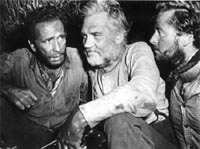 Far
more memorable and entertaining was John Huston's immortal
film of what greed can do to the human soul,Treasure of
the Sierra Madre. The Academy appeared to think so too
in the end, giving Huston Best Director over Olivier (despite
the fact that Olivier's real achievement was as a director
more than anything else), and awarding Treasure the
Oscars for best Screenplay and Best Supporting Actor for Walter
Huston's immortal performance as a grizzled prospector. It
is somewhat surprising that Hamlet won the Best Picture
Oscar because there was a backlash against the success of
British films in Hollywood, to the point of the major studios
pulling out their financial backing of the awards that year.
But the garment most closely associated with the Oscars isn't
black tie and floor-length evening gowns as much as it the
Emperor's New Clothes, and Hamlet is decked to the
nines.
Far
more memorable and entertaining was John Huston's immortal
film of what greed can do to the human soul,Treasure of
the Sierra Madre. The Academy appeared to think so too
in the end, giving Huston Best Director over Olivier (despite
the fact that Olivier's real achievement was as a director
more than anything else), and awarding Treasure the
Oscars for best Screenplay and Best Supporting Actor for Walter
Huston's immortal performance as a grizzled prospector. It
is somewhat surprising that Hamlet won the Best Picture
Oscar because there was a backlash against the success of
British films in Hollywood, to the point of the major studios
pulling out their financial backing of the awards that year.
But the garment most closely associated with the Oscars isn't
black tie and floor-length evening gowns as much as it the
Emperor's New Clothes, and Hamlet is decked to the
nines.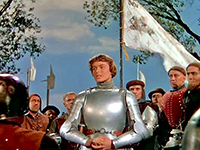 1948
was the first year the Oscar was awarded for costume design,
with the awards going predictably to elaborately produced period
pieces. Hamlet deservedly took home the award for black
and white film, but the award for color surprisingly went to
the sackcloth and armor Dorothy Jeakins and Karinska pulled
out of the RKO Radio costume warehouse for the tedious Joan
of Arc over the Viennese finery Edith Head and Gile
Stele designed for The Emperor Waltz. Head later admitted
that she was stunned by the snub. Producer Walter Wanger wanted
Joan of Arc to be the crowning glory of his career even
after its lackluster reception, and when the film failed to
receive nominations for Best Picture and Best Director Wanger
embarrassed himself by throwing such a public tantrum over the
imagined snub that the Academy gave him an Honorary award for
producing it, not unlike giving an unruly two year old a lollipop
to make it shut up.
1948
was the first year the Oscar was awarded for costume design,
with the awards going predictably to elaborately produced period
pieces. Hamlet deservedly took home the award for black
and white film, but the award for color surprisingly went to
the sackcloth and armor Dorothy Jeakins and Karinska pulled
out of the RKO Radio costume warehouse for the tedious Joan
of Arc over the Viennese finery Edith Head and Gile
Stele designed for The Emperor Waltz. Head later admitted
that she was stunned by the snub. Producer Walter Wanger wanted
Joan of Arc to be the crowning glory of his career even
after its lackluster reception, and when the film failed to
receive nominations for Best Picture and Best Director Wanger
embarrassed himself by throwing such a public tantrum over the
imagined snub that the Academy gave him an Honorary award for
producing it, not unlike giving an unruly two year old a lollipop
to make it shut up.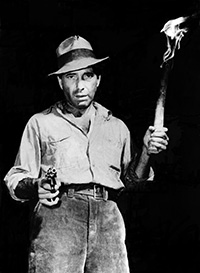 Humphrey
Bogart gave his greatest performance as Fred C. Dobbs, an
honest man destroyed by greed in Treasure of the Sierra Madre.
The Academy chose to overlook Bogart's brilliant work so that
they could nominate Dan Dailey for Best Actor as an alcoholic
Vaudevillian in the Betty Grable musical When My Baby Smiles
at Me. Anyone who looks to the Oscars as the final word
on what constitutes superior artistry in film is welcome to
try to explain this bizarre behavior any time they want to, but Bogart was curiously snubbed by the Academy throughout the 1940s (save for an inevitable nomination for Casablanca in 1943) despite the great respect for his talent within the industry. He finally ascended to the Oscar pantheon for his immortal performance in The African Queen, a selection that was judged to be heavily influenced by sentimentality as it was made in favor of Marlon Brando's altogether superior work in A Streetcar Named Desire. Bogie received only one more nomination, for his flashy turn as Captain Queeg in The Caine Mutiny, despite turning in award-caliber work in The Desperate Hours and The Harder They Fall. His death from cancer at the relatively youthful age of 56 robbed the screen of one of its greatest talents.
Humphrey
Bogart gave his greatest performance as Fred C. Dobbs, an
honest man destroyed by greed in Treasure of the Sierra Madre.
The Academy chose to overlook Bogart's brilliant work so that
they could nominate Dan Dailey for Best Actor as an alcoholic
Vaudevillian in the Betty Grable musical When My Baby Smiles
at Me. Anyone who looks to the Oscars as the final word
on what constitutes superior artistry in film is welcome to
try to explain this bizarre behavior any time they want to, but Bogart was curiously snubbed by the Academy throughout the 1940s (save for an inevitable nomination for Casablanca in 1943) despite the great respect for his talent within the industry. He finally ascended to the Oscar pantheon for his immortal performance in The African Queen, a selection that was judged to be heavily influenced by sentimentality as it was made in favor of Marlon Brando's altogether superior work in A Streetcar Named Desire. Bogie received only one more nomination, for his flashy turn as Captain Queeg in The Caine Mutiny, despite turning in award-caliber work in The Desperate Hours and The Harder They Fall. His death from cancer at the relatively youthful age of 56 robbed the screen of one of its greatest talents.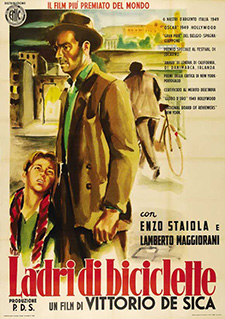 The
Academy has nominated only eight foreign language films for
the Best Picture Oscar: La Grande Illusion (1938),
Z (1969), The Emigrants (1972), Cries and
Whispers (1973), Il Postino/The Postman (1995),
Life is Beautiful (1998), Crouching Tiger, Hidden
Dragon (2000), and Amour (2012) until South Korea's Parasite finally won the award in 2019. During the late forties, the finest films were
being produced in Europe, and even Hollywood recognized it;
creating the Best Foreign Film Oscar in 1947 and handing out
a trickle of nominations to non-American films, although any film with dialogue other than English seemed to be a non-starter in the Best Picture category. In 1949, the
American film industry was on the offensive from invasion
not only from foreign films, but from the coming onslaught
of an even bigger menace: television. The idea that Hollywood
would give its top prize to anything that wasn't home grown
was unthinkable.
The
Academy has nominated only eight foreign language films for
the Best Picture Oscar: La Grande Illusion (1938),
Z (1969), The Emigrants (1972), Cries and
Whispers (1973), Il Postino/The Postman (1995),
Life is Beautiful (1998), Crouching Tiger, Hidden
Dragon (2000), and Amour (2012) until South Korea's Parasite finally won the award in 2019. During the late forties, the finest films were
being produced in Europe, and even Hollywood recognized it;
creating the Best Foreign Film Oscar in 1947 and handing out
a trickle of nominations to non-American films, although any film with dialogue other than English seemed to be a non-starter in the Best Picture category. In 1949, the
American film industry was on the offensive from invasion
not only from foreign films, but from the coming onslaught
of an even bigger menace: television. The idea that Hollywood
would give its top prize to anything that wasn't home grown
was unthinkable.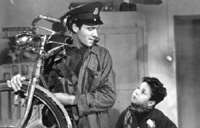 The
film the Academy chose for Best Picture is surprisingly weak:
All the King's Men, Robert Rossen's adaptation of Robert
Penn Warren's Pulitzer Prize novel based upon the reign of
Louisiana governor Huey Long, is an annoyingly one-note affair
featuring a typically bombastic Broderick Crawford as a bombastic
politician who is so transparently corrupt that he might as
well be twirling a cape and tying virginal young girls to
railroad tracks. There were a wealth of superior films from
among the nominees (A Letter to Three Wives, Battleground,
The Heiress) and the non-nominees (On the Town, The
Fallen Idol, White Heat). But nothing Hollywood created
in 1949 was on a par with De Sica's masterpiece, and it would
have been a bold statement for the Academy to recognize that.
The
film the Academy chose for Best Picture is surprisingly weak:
All the King's Men, Robert Rossen's adaptation of Robert
Penn Warren's Pulitzer Prize novel based upon the reign of
Louisiana governor Huey Long, is an annoyingly one-note affair
featuring a typically bombastic Broderick Crawford as a bombastic
politician who is so transparently corrupt that he might as
well be twirling a cape and tying virginal young girls to
railroad tracks. There were a wealth of superior films from
among the nominees (A Letter to Three Wives, Battleground,
The Heiress) and the non-nominees (On the Town, The
Fallen Idol, White Heat). But nothing Hollywood created
in 1949 was on a par with De Sica's masterpiece, and it would
have been a bold statement for the Academy to recognize that. The
concept of "Best Actor" usually falls into two distinct
groups: performers of great skill who submerge themselves so
deeply into a role that actor and character become one (Robert
DeNiro in Raging Bull, John Barrymore in Twentieth
Century), and movie stars of limited range who are fortunate
to be cast in a role that shows off their strengths more effectively
than usual (Clark Gable in It Happened One Night, John
Wayne in True Grit). Broderick Crawford definitely
falls into the latter category, having the good fortune of being
cast in two great roles that showed off his overbearing, blustery
shtick (Willie Stark in All the King's Men and Harry
Brock in Born Yesterday) before falling back into the
comparative anonymity of Highway Patrol. Crawford was
brilliantly cast in All the King's Men, but because an
actor is well cast does not mean that he is delivering a
great performance. He did have the good timing (like Sylvestor
Stallone in Rocky) of giving his award-winning performance
at a point in his career where no one knew he wasn't capable
of doing anything else.
The
concept of "Best Actor" usually falls into two distinct
groups: performers of great skill who submerge themselves so
deeply into a role that actor and character become one (Robert
DeNiro in Raging Bull, John Barrymore in Twentieth
Century), and movie stars of limited range who are fortunate
to be cast in a role that shows off their strengths more effectively
than usual (Clark Gable in It Happened One Night, John
Wayne in True Grit). Broderick Crawford definitely
falls into the latter category, having the good fortune of being
cast in two great roles that showed off his overbearing, blustery
shtick (Willie Stark in All the King's Men and Harry
Brock in Born Yesterday) before falling back into the
comparative anonymity of Highway Patrol. Crawford was
brilliantly cast in All the King's Men, but because an
actor is well cast does not mean that he is delivering a
great performance. He did have the good timing (like Sylvestor
Stallone in Rocky) of giving his award-winning performance
at a point in his career where no one knew he wasn't capable
of doing anything else. The
failure of The Bicycle Thief to receive nominations
for Best Picture or Best Director can hardly be described
as an oversight in view of the Academy's fiercely nationalistic
sentiments of the time. But Hollywood had a bona fide star
who delivered one of his greatest performances in this year,
only to be overlooked for a nomination. James Cagney
made a return to the gangster film genre in White Heat,
and delivered one of his most famous performances in the
complex role of a sadistic mobster with a mother complex.
That the Academy would nominate the limited Crawford or
the third-billed Richard Todd for the tearjerker The
Hasty Heart over this screen legend in one of his greatest
roles continues to be a head-scratcher. The Academy tried to make it up to him with one final Best Actor nomination for a much more run-of-the-mill entry on his gangster résumé in the 1955 Doris Day musical Love Me or Leave Me. I guess after the blazing intensity of White Heat, they were just grateful for a chance to site back and relax for a little while.
The
failure of The Bicycle Thief to receive nominations
for Best Picture or Best Director can hardly be described
as an oversight in view of the Academy's fiercely nationalistic
sentiments of the time. But Hollywood had a bona fide star
who delivered one of his greatest performances in this year,
only to be overlooked for a nomination. James Cagney
made a return to the gangster film genre in White Heat,
and delivered one of his most famous performances in the
complex role of a sadistic mobster with a mother complex.
That the Academy would nominate the limited Crawford or
the third-billed Richard Todd for the tearjerker The
Hasty Heart over this screen legend in one of his greatest
roles continues to be a head-scratcher. The Academy tried to make it up to him with one final Best Actor nomination for a much more run-of-the-mill entry on his gangster résumé in the 1955 Doris Day musical Love Me or Leave Me. I guess after the blazing intensity of White Heat, they were just grateful for a chance to site back and relax for a little while.
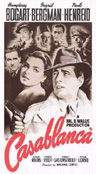
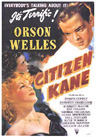
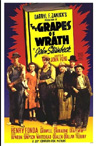
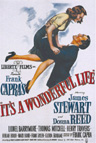
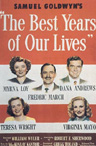
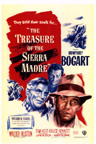
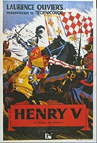
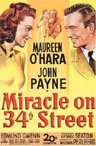
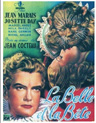
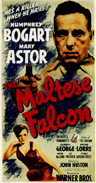
 Laurence Olivier
 Olivia