
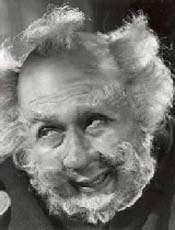
 Anthony
Quayle (1913-1989) was one of the seminal figures of the Royal Shakespeare
Company, serving as the artistic director of the Shakespeare Memorial Theatre
in Stratford-upon-Avon from 1948 to 1956 and taking it in that time from a respected
local company to an internationally acclaimed regional theatre, ultimately becoming
the RSC in 1960. Quayle's method was to build his seasons around the appearances
of major stars like Laurence Olivier, Vivien Leigh, John Gielgud, and Peggy
Ashcroft, giving the company box office clout with the popularity of the famous
names appearing there as well as critical notoriety through such legendary productions
as Peter Brook's remarkable stagings of Measure for Measure and Titus
Anronicus, Gielgud's long-running Much Ado About Nothing, and Glen
Byam Shaw's Macbeth featuring Olivier's historic performance of the title
role.
Anthony
Quayle (1913-1989) was one of the seminal figures of the Royal Shakespeare
Company, serving as the artistic director of the Shakespeare Memorial Theatre
in Stratford-upon-Avon from 1948 to 1956 and taking it in that time from a respected
local company to an internationally acclaimed regional theatre, ultimately becoming
the RSC in 1960. Quayle's method was to build his seasons around the appearances
of major stars like Laurence Olivier, Vivien Leigh, John Gielgud, and Peggy
Ashcroft, giving the company box office clout with the popularity of the famous
names appearing there as well as critical notoriety through such legendary productions
as Peter Brook's remarkable stagings of Measure for Measure and Titus
Anronicus, Gielgud's long-running Much Ado About Nothing, and Glen
Byam Shaw's Macbeth featuring Olivier's historic performance of the title
role.
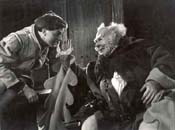 The
down side for Quayle was that he was often forced to give up roles to major
stars that he would have preferred to play himself. But even with these compromises
he appeared often at Stratford, playing Benedick in Much Ado About Nothing
in 1949 (with Gielgud taking over the role the following year), Othello, and
Aaron in Titus Andronicus. His most famous Stratford role was Falstaff,
which he played to coincide with the Festival of Britain in 1951 in the historical
tetralogy of Richard II and the two parts of Henry IV. Quayle
also co-directed the cycle with John Kidd and Michael Redgrave, casting the
rising young matinee idol Richard Burton (pictured) as Prince Hal, in a lavish
presentation that climaxed with Hal's coronation in which he humiliates Falstaff
with a terse rejection - the most opulent staging of the ceremony since Charles
Kemble was crowned Henry V in a spectacular pageant in 1821, a tribute to the
actual coronation of George IV. Quayle's Falstaff was a sensation in Stratford,
as well as on a company tour of Australia and New Zealand. John Barber wrote
"With a large body, deep voice, and winning smile, he is obviously cast
for Falstaff...not even a Halloween turnip makeup could disguise the electric
quality without which Falstaff must seem a heartless poltroon." Quayle
returned to the role at Stratford in The Merry Wives of Windsor in 1955.
The
down side for Quayle was that he was often forced to give up roles to major
stars that he would have preferred to play himself. But even with these compromises
he appeared often at Stratford, playing Benedick in Much Ado About Nothing
in 1949 (with Gielgud taking over the role the following year), Othello, and
Aaron in Titus Andronicus. His most famous Stratford role was Falstaff,
which he played to coincide with the Festival of Britain in 1951 in the historical
tetralogy of Richard II and the two parts of Henry IV. Quayle
also co-directed the cycle with John Kidd and Michael Redgrave, casting the
rising young matinee idol Richard Burton (pictured) as Prince Hal, in a lavish
presentation that climaxed with Hal's coronation in which he humiliates Falstaff
with a terse rejection - the most opulent staging of the ceremony since Charles
Kemble was crowned Henry V in a spectacular pageant in 1821, a tribute to the
actual coronation of George IV. Quayle's Falstaff was a sensation in Stratford,
as well as on a company tour of Australia and New Zealand. John Barber wrote
"With a large body, deep voice, and winning smile, he is obviously cast
for Falstaff...not even a Halloween turnip makeup could disguise the electric
quality without which Falstaff must seem a heartless poltroon." Quayle
returned to the role at Stratford in The Merry Wives of Windsor in 1955.
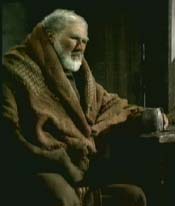 Quayle
immortalized his Falstaff on television on several occasions. He first played
the role in a BBC telecast of Henry IV, Part I in 1951, and also telecast
his performance in The Merry Wives of Windsor in 1955. His most famous
depiction of the role was in the BBC's The Complete Dramatic Works of William
Shakespeare series in both Henry IV Part I and II. Quayle's
brilliant performance emphasized the darker aspects of the character, with an
eye on Falstaff's alcoholism and selfish scheming as opposed to the harmless,
jolly rogue that the character is generally thought of.
Quayle
immortalized his Falstaff on television on several occasions. He first played
the role in a BBC telecast of Henry IV, Part I in 1951, and also telecast
his performance in The Merry Wives of Windsor in 1955. His most famous
depiction of the role was in the BBC's The Complete Dramatic Works of William
Shakespeare series in both Henry IV Part I and II. Quayle's
brilliant performance emphasized the darker aspects of the character, with an
eye on Falstaff's alcoholism and selfish scheming as opposed to the harmless,
jolly rogue that the character is generally thought of.